Showing posts with label Japan. Show all posts

Saturday, August 6, 2016

Sisters of Heart and Snow

Sisters of Heart and SnowBy Margaret Dilloway 

This is the second Margaret Dilloway novel I've read this year, and I was drawn to this book because I looked up books about female samurai warrior Tomoe Gozen. This novel intersperses stories about Gozen with two Japanese-American women, Rachel and Drew Snow, whose Japanese mom has Alzheimer's and who are estranged from their American father.

I was far more interested in the story about Tomoe Gozen than the modern-day women, but Dilloway does illustrate the often-complicated relationships between sisters. I enjoyed this book, but I think I would have preferred an in-depth historical novel about Tomoe Gozen. It seemed like we were only skimming the surface of her story.

Sunday, July 31, 2016

How to Be an American Housewife

How to Be an American HousewifeHow to Be an American Housewife, by Margaret Dilloway

Give me any book about Japan or Japanese people, and the author already has a head start toward my liking it. I enjoyed this novel about a Japanese woman who made a difficult choice in Japan and then moved to the U.S., determined to be the perfect American housewife. As she has children and ages, she realizes how difficult this prospect is. This novel captures the stress many Asian-American parents and children feel, as one generation places a much higher value on hard work than the other, and the younger generation adapts better than the older one.

Wednesday, November 11, 2015

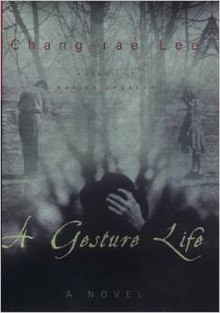
A Gesture Life

A Gesture Life, by Chang-Rae Lee

A Gesture Life is another book that was really hard to get into, but the patience paid off. If it hadn't been a book group selection, I might not have stuck with it.

Franklin Hata was a man who was difficult to admire or respect, because he seemed cold and heartless. His stilted relationship with his adopted daughter Sunny just made me sad. He had a chronic difficulty in relating to anyone on a deep, true level.

Presumably, this was because of his difficult experiences in the war and his obsession with K, a Korean "comfort woman." The storyline about the comfort women made me truly sick to my stomach. Apparently when Chang-Rae Lee began writing this novel, it was going to be all about comfort women, but he found that to be too heavy of a subject. His obsession with K reminded me of the foreign men I knew in Japan who were obsessed with Japanese women...many of them ended up marrying them and staying in Japan. They were drawn to them because they were less likely to challenge them than western women. They liked the way the Japanese women looked up to them. Often, these men would not have been classified as "catches" in the US or UK. These relationships were not very equal.

That is the relationship between Franklin and K. He thinks he loves her, but she only views him as one more man who is taking advantage of her. In his case, perhaps he can help her a little. But he means nothing to her.

I appreciated this book more after discussing it with my book group. Some of them liked it better than I did, and one of my friends observed that perhaps it was the way she had been raised, with more distant parenting. That could be.

It was beautifully written, but a little bit disappointing for me. I expected more, and I found it to be really sad.

Friday, January 2, 2015

The Kizuna Coast

The Kizuna Coast (Rei Shimura Mystery, #11)The Kizuna Coast, by Sujata Massey

Hooray! Rei Shimura is back!

I've been reading Sujata Massey's Rei Shimura detective series since the late 1990s, captivated by these books because the main protagonist is a Japanese-American antiques dealer turned detective, living and working in Japan. I still remember my joy in first discovering this series! Sujata Massey is part Indian, part German, like a friend of mine, and lived in Japan for several years.

A fascinating character who I've always felt I could relate to more than most detectives, Rei Shimura led me through ten adventures, mostly set in Japan, before she retired in 2008 to live with her new husband Michael in Hawaii (Shimura Trouble). You can find the other Rei Shimura titles in chronological order on Sujata Massey's Web site, in case you want to start at the beginning (which I always prefer to do). It was a little odd, reading this one, because Rei had aged only a few years even though the series spans over 17 years, but I understand why Massey chose to keep her young.

Since Rei Shimura retired (and I sadly accepted there would be no more books in the series), I've begun following Sujata Massey online and became Facebook friends with her. She is delightful, and we have much in common (including the fact that we both turned 50 in 2014). I hope to meet her in person one day.

Fortunately, she's continued to stay busy, last year publishing The Sleeping Dictionary, a historical novel set in India, which was my second-top pick for fiction in 2013. (My parents' book group recently read The Sleeping Dictionary on my recommendation, and it was a popular pick!) She also published a beautiful little novella, The Ayah's Tale, about the relationship between an Indian ayah and the English children under her care.

My first week in Japan, befriending the neighbor kids, Fall 1986
But back to The Kizuna Coast! I was supremely lucky to be able to read an Advanced Reader Copy of this soon-to-be-published novel, which will be out in February.

I could relate so well to Rei Shimura's great angst when she saw news coverage of the 2011 Tohoku earthquake and tsunami and subsequent Fukushima nuclear disaster. Even though I don't have relatives in Japan, it's where I met my husband and spent three of the most adventurous years of my life, and I have so many fond memories of the kindness of so many Japanese people. During those first few harrowing days, I was glued to the Internet and couldn't keep myself from watching that devastating wave destroy whole towns...my heart ached for Japan.
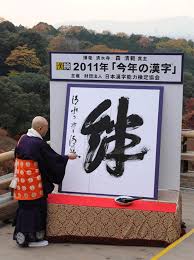
Soon after the tsunami hit, Rei's mentor Mr. Ishida calls her, asking for help. She gets to Japan as soon as she can and gets embroiled in a mystery...to find out what happened to Mr. Ishida's young apprentice, Mayumi, who has disappeared. She goes to Tohoku as part of a relief effort and is touched by people who have lost their loved ones and livelihoods. She experiences  絆 (kizuna, or bonds of love), which the Japanese show for each other during this difficult period. The Japanese public chose as the kanji of 2011 after they witnessed an unprecedented outpouring of assistance after the earthquake and tsunami. 

While not as literary as her last book (The Sleeping Dictionary), The Kizuna Coast was a quicker read and compelling just the same. Rei Shimura remains cemented as my favorite detective series, and I hope the series continues.

I'm so glad Rei is back! I read this book over the Christmas holidays while I had family visiting from England and Australia, and it was hard to put down. The only other book I've read about the Japanese tsunami was Ruth Ozeki's A Tale for the Time Being, which was my top fiction pick last year. I would love to read more, and I hope one day to return to Japan myself. In the meantime, I'm grateful that my favorite authors are making the trips, doing the research, and telling the stories themselves.


Sunday, September 14, 2014

Japanese Women Don't Get Old or Fat

Japanese Women Don't Get Old or Fat: Secrets of My Mother's Tokyo Kitchen
Japanese Women Don't Get Old or Fat: Secrets of My Mother's Tokyo Kitchen, by Naomi Moriyama with William Doyle

Naomi Moriyama grew up in Tokyo with a typical Japanese mom provided attractive, nourishing food for her daughter.,.on the strict orders of Naomi's school!
(On the first day of school, a teacher made a speech: "We request that every mother make lunch for your daughter every day. Our main theme at this school is to help our students learn how to be giving and loving. One of the ways your daughter learns this is from your love-packed lunch box.") Can you imagine hearing this kind of a message in an American school???
Moriyama ended up moving to the U.S. to attend college and subsequently met and married her American husband. But she also came to miss and appreciate her mom's Japanese home cooking.

This book is a combination health book and cookbook. Moriyama includes statistics about how Japanese people live longer and have the lowest obesity rates in the world. They are also extremely active (few Japanese people use their cars every day, especially city residents)--instead they use mass transit, walk, or bicycle. I walked more during the three years I lived in Japan than I've ever walked in my life.

Moriyama also shares her own personal experiences--for example, when she arrived in the American Midwest to attend college, she gained a great deal of weight right away. When she moved back to Tokyo for awhile, she lost it all without dieting or exercising. The Japanese lifestyle, combined with fresh ingredients and home cooking, is the secret sauce!

Picking mikan (mandarin oranges)
As I was reading Moriyama's stories, I kept thinking of my wonderful stay in an old, traditional Japanese farmhouse on the western coast of Honshu (the most populated island in Japan), where we picked fresh persimmons, mountain potatoes, and mandarin oranges. My friend Debbie and I learned how to make gyoza (potstickers) and sushi, and the family had a brazier-fired kotatsu where they ate dinner each day. (A kotatsu is a wonderful table with a heater underneath it--we had one in our apartment with an electric heater, and the heat was kept under the table with a blanket...I loved that kotatsu as we didn't have central heating!) That weekend was the most traditional Japanese of any time I spent in Japan--it was fantastic.
Picking Japanese mountain potatoes (which taste amazing!)
Grandma on her tractor
Debbie and me with Grandma and Mama
(who was the mom of one of our businessmen students)

At the kotatsu at dinner--puzzled by the American Almond Roca we brought as a gift
(I don't think they liked it very much!)
Japanese home cooking is so much more than sushi and sashimi...you can find more of it at American Japanese restaurants than when we first returned from Japan. I loved delicacies such as spinach soaked in ground sesame seeds, okonomiyaki (Japanese-style pizza), takoyaki (octopus balls), yaki soba (fried noodles), ramen (noodle soup), gyoza, zaru soba (cold soba noodles with a dipping sauce), oyakodonburi (chicken and egg over rice), clams in sake broth, anything cooked with miso, rice balls with pickled plum seasoning, mochi with red bean paste, broiled mackerel or salmon, nabe (a soup that consists of each person dipping his or her own meat and veggies into a broth), traditional Japanese breakfasts, and edamame (steamed soybeans, now readily available in the U.S.).

Japanese roasted sweet potato street cart
Moriyama also enfolds some priceless Japanese history in her pages, including the stories of some kick-ass Japanese women in ancient times: Queen Himiko and Tomoe Gozen. (I need to learn more about these two!)

This book made me miss Japan and Japanese food so much! I love the way Moriyama gives tribute to her mom's own Tokyo kitchen...and I definitely want to incorporate more Japanese cooking into our own kitchen. But the truth is that cooking Japanese does take a great deal more time, and we don't all have Japanese housewives in our families!

I made one of the recipes in the book the other night--Eggplant Sauteed with Miso--and it was oishii (delicious)! This book inspired me to do more Japanese cooking and think more about what I'm eating--is it fresh? Is it processed? Has it been made with love? And I'm longing for Japan!

Monday, July 15, 2013

The Street of a Thousand Blossoms

The Street of a Thousand Blossoms, by Gail Tsukiyama

In this WWII- and post-war-era story that takes place in Japan, two orphaned brothers were growing up with their grandparents. Tall, strong Hiroshi is drawn to the tradition of sumo, while younger, sensitive Kenji wants to be an artisan and create masks for the Noh theater. When the war hits, their plans are put on hold.

This sweeping saga covers 30 years and several parts of Kenji and Hiroshi's eventual families. Gail Tsukiyama, who is part Japanese and part Chinese, paints a clear picture of what it was like to live in Japan during the war. For example, I wasn't aware that Japan had a brutal military police similar to the Stazi, called the Kempeitai. During the bombing raids, all the Japanese had to protect themselves were hand-dug, flimsy bomb shelters in their yards, which were highly ineffective and exposed them to the constant bombings. At the same time that the Japanese military was carrying out horrific abuses and terror throughout Asia, the everyday Japanese people, many of whom did not support the war but could not say so publicly, were suffering as well.

Eventually after the war, Japan began to rebuild itself, and Kenji and Hiroshi were able to pursue their personal passions. They both got married, and Kenji rebuilds his relationship with his Noh mask sensei, who had escaped to the mountains during the war. Much of this book is very sad, as war-time stories often are. Because of my fondness for Japan, I enjoyed learning more about sumo and Noh theater, and perhaps might have a greater appreciation than other readers for the Japanese language and culture woven so artistically through this book.

It doesn't move particularly quickly, but it's beautifully told. It's more of an artistic story than a gripping tale. Kenji and Hiroshi's grandparents are fascinating characters, although I would have liked to have better understood Haru and Aki, daughters of Hiroshi's sumo master. Aki, in particular, was an enigma...both girls were traumatized by what they saw in the war, and Aki never really recovered from this trauma. I also would have liked to know modern, independent Mika (Kenji's wife) better...she was another mystery. She represented a new type of woman in Japan, but how did she come to be that way? We never find out.

For someone who usually writes such strong female characters (I greatly enjoyed Tsukiyama's Women of the Silk and The Language of Threads), I'm surprised that her female characters were lacking substance.

The Street of a Thousand Blossoms is about a changing Japan, and tells stories of how the Japanese were forced to adopt new ways of life and new forms of culture (such as western dress). In spite of modernization, Japan still clings to many forms of its traditional culture, more than most industrialized countries, in fact. For example, women are still not allowed to enter the sumo ring, for fear that the "unclean" women would pollute it with their presence.

I enjoyed this book, but it was not my favorite of Tsukiyama's. I learned a lot of new information about Japan, but I think richer information about the female characters would have made it so much stronger.

Thursday, May 2, 2013

A Tale for the Time Being


A Tale for the Time Being, by Ruth Ozeki

A Tale for the Time Being is the first full-price hardcover book I remember purchasing for myself, ever. As I wrote in February, Ozeki has long been one of my favorite authors, and I was thrilled when I read that she had finally published her third novel. I went to see/hear Ozeki read from this book at Powell's, and I was enchanted. In the intervening time since she published All Over Creation, she became a Zen Buddhist priest. Clearly, this experience informs this novel.

She explained that she has always wanted to do the audio recordings of her books, but publishers prefer not to have authors read their own books. She realized that if she put enough Japanese words in the book, they would let her do her own reading. After listening to her read, I think I might like to listen to the audio book too. This is a highly unusual reaction for me, as I don't often read books twice--at least not until many years have passed. Take a look at this beautiful trailer for the book--you can see what I mean when you hear Ozeki's voice:


I found myself reading this book very slowly--it took me most of April to read, in fact. Ozeki is a poetic, lyrical writer. I am often drawn to her books because they are set in Japan or the United States (or both) and feature Japanese or Japanese-American characters. This was no different.

It's the story of 16-year-old Nao, who is living in Tokyo but spent much of her childhood in Sunnyvale, California. She is mercilessly bullied by her classmates and even her teachers. Some might find it difficult to believe, but bullying is an extreme problem in Japan, and it's even tolerated and sometimes encouraged by the adults in charge. Her father, who lost his job in California and has become unemployable back in Japan, keeps attempting suicide, which is considered an honorable out in Japan. The only bright spot in Nao's life is her 104-year-old great-grandmother, who is an anarchist, feminist, novelist Buddhist nun, who she calls Old Jiko. She decides that she's going to commit suicide, but first she wants to tell the story of Old Jiko's life in her diary.

Ruth, a Japanese-American novelist living on an island in British Columbia, finds Nao's diary washed up on the beach. The resemblance between Ruth the character and Ruth the novelist is more than just their name, ancestry, and location. Ozeki has actually put herself, and her husband Oliver, into the novel.

As Ruth begins reading the book, she becomes captivated by Nao's life and begins to care very deeply about what happens to her. Not too long after the Japanese earthquake and tsunami, initially Ruth believes that this is what has caused the diary to come into her hands.

I loved so many things about this novel...the way that Nao finds such deep solace and healing in writing down her pain, the wisdom of old Jiko and the way she connects with her young great-granddaughter, the connections between Japan and North America--present in each of Ozeki's novels, the way Ozeki describes the sparsely populated island on which she and Oliver live, the poignant reflections of Nao's great-uncle's time in the Japanese army and Nao's connections with him, and the spiritual, symbolic activities of the crow, cat, and the sea. So many things have changed since I left Japan, and so many things remain the same.

As Nao goes to visit Old Jiko up on the mountaintop, I envisioned the monastery to look something like Koya-san, where I visited while I lived in Japan. I could picture Nao riding the bus up that mountain and communing with the trees and spirits while she visited there.

So many things about this story were deeply sad, but ultimately, the novel had great redemptive power and spiritual meaning. I highly recommend it--A Tale for the Time Being will definitely be at the top of my book list for the year. It was worth the full price, as the story will stick with me for a long time.

Tuesday, October 23, 2012

Audition

Audition, by Ryu Murakami

Meh. That's my review.

My husband asked me how I had heard about this book, and I can't remember. I had it out of the library for awhile before I finally picked it up.

Audition is the story of a documentary film maker, Aoyama, who was widowed seven years before. His teenage son Shige suggests that he think about remarrying, so he decides to do just that.

He hatches a plan with his friend, Yoshikawa, to hold auditions for a movie so that he can screen dozens of women in the hopes of finding someone suitable for a wife. Through these fake film auditions, he meets Yamasaki Asami, and he becomes completely obsessed with lust. All he knows about her is that she had a difficult childhood. Of course, being Japan, the search for a wife means that he must find a docile, beautiful, elegant, obedient, and submissive woman. On the surface, Yamasaki Asami appears to fit the bill, but of course she turns out to be a sadistic murderer. This book was made into a cult film in Japan, which apparently was highly regarded as a great, creepy horror film (gets four stars on Amazon).

I was not impressed, for several reasons:
  • Shige seemed to be way too mature for a 16-year-old, in fact more mature than his father!
  • The first 3/4 of the book moves along very slowly, with seemingly unimportant details. In fact, it was boring. All of the action happens in the last two chapters, and of course you know what's going to happen. No suspense whatsoever.
  • The two male characters are completely shallow and misogynistic, which might have been part of Murakami's point...or they were just written as typical Japanese men with no irony whatsoever.
  • Yamasaki Asami compares having to give up ballet (because of an injury) to experiencing a death, and Aoyama finds this touching. I can't imagine that someone who has experienced the death of a loved one would find this comparison to be touching. On the contrary, it's heartless and clueless, like comparing the death of an animal to a death of a human child--to the grieving parent's face.
  • None of the characters were sympathetic. I didn't care what happened to any of them.
  • Aoyama was naive and disregarded all weird signs that something wasn't right. He was single-minded in his pursuit and no one could convince him to be suspicious. It just didn't seem realistic.
Ryu Murakami is called "Japan's master of the psycho-thriller," but I don't buy that. I've been disappointed in the Japanese fiction I've read recently, but even Out by Natsuo Kirino or Naoko by Keigo Higashino were stronger books than this one. Perhaps I'd prefer Murakami's other books, but I'm not rushing out to try them!

Saturday, September 8, 2012

Naoko

Naoko, by Keigo Higashino

Naoko is described as "a black comedy of hidden minds and lives" and a "critique of gender relations."  I'm not sure if I would call it either a comedy or a gender critique, but it was an interesting read.
Higashino is a best-selling, award-winning writer in Japan, but he's not very well known in the U.S.

Naoko is the story of a factory worker, Heisuke, and his  wife, Naoko, and young daughter, Monami. Naoko and Monami head up to Nagano on a ski bus to visit family, but tragically the bus drives off a cliff. Heisuke learns this information from the TV news.

Soon after he reaches the hospital, Naoko dies. When Monami wakes up from a coma, she is no longer Heisuke's daughter..Naoko has inhabited Monami's body. Sharing this information with no others (for fear of being not taken seriously or worse, ostracized or institutionalized), Heisuke and Monami/Naoko prepare to live their lives in this way...as father and daughter rather than husband and wife.

Naoko goes to school and begins to realize that she has been given a true opportunity: to live her adolescence and young adulthood all over again. She realizes that she was never truly fulfilled or happy as a housewife, and she decides to get into a top private junior high and high school to begin pursuing her dream of medical school.

Factory worker Heisuke, who has rarely entered a library much less read a book, is stunned and saddened by this turn of events. When Naoko begins attracting the attention of boys her age, he becomes obsessively jealous, nearly destroying the tenuous and strange father-daughter relationship they had been trying to build.
At the end of the book, it's hard to tell exactly what the truth is...here's the mystery. The comedy, however, was harder to find. I found this book to be sad. The story contains a wide variety of extra characters, many related to Heisuke's job or other accident victims. In the end, I'm not really sure why he included all these plot sidelines. Many of them didn't really add much to the story.

What I found most intriguing about the book was the idea of living your young adulthood all over again. If I could do so, I too would have studied harder, been more ambitious, and wasted less time. As far as the "gender critique," it's very soft. This book was truly Japanese, and I imagine better understood by someone who lived in Japan or understands Japanese culture. As the wife/daughter, Naoko was expected to wait on Heisuke hand and foot. She was not expected to have any aspirations of her own. This change in what is expected is what startled Heisuke.

Of course, it makes me wonder...when Naoko (Monami) gets married and has a family of her own, will she share the food preparation, shopping, cleaning, and other household duties with her husband? Doubtful. But at least showing a Japanese woman who is not happy with her lot as a housewife and has dreams beyond those four walls...that's a start!

This novel has also been made into a movie, Himitsu, but it doesn't seem to be easily available in the U.S.

Sunday, July 29, 2012

The Teahouse Fire

The Teahouse Fire, by Ellis Avery

"A sweeping debut novel drawn from a history shrouded in secrets about two women-one American, one Japanese-whose fates become entwined in the rapidly changing world of late-nineteenth-century Japan."

Sounds promising, doesn't it? In spite of some lukewarm Goodreads reviews, I thought the book was worth a risk. It started off interesting, with French girl Aurelia arriving in New York with her single mother to live with her priest uncle. She ends up going to Japan with her uncle to convert a "heathen" Japan. Ultimately, she becomes adopted by a Japanese family who treats her as a servant girl, but all she's ever knowin in her life is service.


Yukako, the young woman who discovers Aurelia and takes her under her wing, is the daughter of a great tea ceremony master. Much of the book is about the ancient art of tea ceremony and how it evolves, particularly with the passing of the Shogun and the ushering in of the Meiji era modernizations.

Aurelia leads a sad life...she's not only lost her mother--the only person she ever loved--but she also is shunned and misunderstood as a foreigner living in Japan in this time. Yukako comes across as a strong, stubborn woman who uses her limited place in the family to bring reforms and save the tea dynasty. But she's not incredibly likable. It's fascinating to consider how little has changed in Japan since this novel's setting. Although women have more options now than they did then, Japanese culture is still strongly rooted in patriarchy.

The Teahouse Fire, obviously meticulously researched, gets bogged down in too many details and characters. I found it difficult to get into and was looking forward to its end. So ultimately, disappointing.

Sunday, June 24, 2012

Unbroken: A World War II Story of Survival, Resilience, and Redemption

Unbroken: A World War II Story of Survival, Resilience, and Redemption, by Laura Hillenbrand

Louis Zamperini with his brother Pete
My sister and husband both read Unbroken for their respective book groups and loved it. I was looking forward to diving in, and it did not disappoint.

Unbroken is the true story of Louis Zamperini, destined to be the world's fastest miler. He spent his childhood getting into one scrape after another and seemed destined to be a failure until he discovered running. He participated in the 1936 Olympics (presided over by Hitler) but would be in his prime at the 1940 and 1944 Olympics. Sadly, the 1940 Games were cancelled, and he was otherwise occupied in 1944.
The photo that made me cry!
Zamperini greeting his mother
after returning from the war

When World War II broke out, Zamperini enlisted in the Army Air Forces and was stationed in Hawaii. While flying in a plane over the Pacific to rescue another plane that had not returned from a mission, Zamperini and his crewmates crash-landed in the ocean. Amazingly, he and the two other survivors floated on a life raft for 47 days--drinking rain water, eating raw fish and birds they caught with their hands, and telling stories to keep themselves sanee--before drifting to one of the Marshall islands, where they were captured by the Japanese.

This is nonfiction at its best: I learned about running, life in the army during World War II (and how many planes went down when they were not in combat), and survival in a brutal Japanese POW camp. Heavy on narrative and light on dialogue, the book drags for some readers (especially during the descriptions of the airplanes and combat flights), but I found the book to be completely gripping.

When Zamperini returns to the U.S., he suffers from alcoholism and post-traumatic stress disorder, which in those days was not talked about much less treated.

Of course, the most fascinating thing about the book is knowing that it's a true story and Louis Zamperini survived what seemed humanly impossible to endure...first while being lost at sea without food or water, somehow missing the circling and lunging sharks, and then while enduring brutal, horrific treatment at the hands of the Japanese guards, who believed it was shameful to be a POW and so took out their scorn in violent, inhumane ways.

After living in Japan and being welcomed by the Japanese people, it's hard to read about the brutality during the war. But Zamperini was able to forgive his Japanese captors and eventually returned to Japan, once to see his guards and extend an olive branch, and again to carry the torch at the Nagano Olympics.

Zamperini is in fact still alive and kicking, at age 95. Here is a short video about Zamperini:


Go read this book!! It will make you look at your life in new ways and stop you from taking things for granted.

Tuesday, December 20, 2011

The Wishing Trees:

The Wishing Trees, by John Shors

I'm a huge John Shors fan, having now read four out of the five novels he's published. I feel an affinity for Shors, since he got engaged to his wife while they were teaching in Japan (similar to my situation with Mike). I especially loved Beneath a Marble Sky and Beside a Burning Sea, and I've recommended those books to (and purchased them for) many friends.

When I began this book, I felt emotionally affected and a bit drained by it. Ian is an Australian businessman living in New York, and he has recently lost his beloved wife Kate to cancer. Like the author and like me, Kate and Ian met while teaching in Japan and traveled throughout Asia. Several months after Kate's death, Ian reads a letter Kate had written for his birthday, in which she urges him to take their 10-year-old daughter Mattie on a journey back to the countries where they had traveled together. It made me think about my own life and how blessed I am to have an intact, healthy family. Mike and I have always talked about returning to Japan and other Asian countries someday and hope to show our children some of our old haunts, so it felt more than a little bit eerie to read about someone who had died and never got to make the return trip with her child.

Ian and Mattie travel to Japan, Nepal, Thailand, India, Hong Kong, Vietnam, and Egypt, and open messages from Kate along the way. They meet local people, helping some along the way (such as a Thai sex worker and an Indian orphan in Varanasi). I enjoyed the descriptions of Japan, India, Hong Kong, and Thailand the most, as those were the countries we also visited. I remember visiting the picturesque, nearly abandoned island of Koh Samet and spending a few luxurious, idyllic days on a beach. (I'm sure it's changed dramatically since 1987!)

In a nutshell, here are my criticisms of the book: Ian and Mattie (and in fact, Kate) are far too perfect. They didn't seem like realistic people to me. They are absolutely soaked in grief, which I know is very real when you have lost a loved one...but at times it got excessive. Ian is furious at Kate for asking him to return to the places they'd traveled with Mattie, and he goes on and on about that. I would think he would want to honor his beloved wife's last dying wish. Also, Ian's Australian lingo was over the top. I am married to a Brit and I know a lot of Australians (including my sister-in-law), and they don't talk like this, saying "good onya," "bloody," "fancy," "ankle biter," and "walkabout" constantly. Ian's expressions got bloody annoying after awhile.

Shors is an excellent descriptive writer, and he evokes the senses as he describes each of these different countries. He also writes sensitively about profound grief, especially from a man's perspective (feeling like he took his wife for granted and spent too much time at the office). I enjoyed reading about the interactions Ian and Mattie have with the locals, such as a Japanese teacher and Peace Corps workers in Nepal. The story of Rupee (the Indian orphan) seemed a bit unresolved--why was the orphanage director not responding to Ian's e-mails?
The ending was patently predictable, so don't read this book if you like to be surprised at the end.

In conclusion, The Wishing Trees was not the best of Shors' books, but I'm glad I read it. It brought back wonderful memories of my own travel and it gave me a renewed appreciation for my own loved ones.

Tuesday, April 12, 2011

The Thousand Autumns of Jacob DeZoet: Disappointing

The Thousand Autumns of Jacob de Zoet: A NovelThe Thousand Autumns of Jacob De Zoet, by David Mitchell
My rating: 2 out of 5 stars

I had this book on hold at the library for ages and had been looking forward to reading it. It takes place in a reclusive Japan circa 1799. The Dutch are the only Europeans who trade with the Japanese, in the island port of Dejima (just outside of Nagasaki), imperial Japan's only entry and exit to the outside world. Jacob De Zoet is a Dutch clerk, who has five years to earn his fortune before returning to The Netherlands to marry his love, Anna. He forms a tenuous friendship with an interpreter, Uzaemon.

Then he meets Orito Aibagawa, a bright young midwife and daughter of a samurai, who has a disfiguring burn on her face. Jacob cannot get Orito out of his mind. Any hope of a relationship between them, though, is doomed. Soon Orito's fortunes change for the worse and she ends up being sold to a Buddhist convent with shocking secret habits. It turns out that Uzaemon was also in love with Orito, but he was forced to marry another woman. Soon Uzaemon plots a rescue attempt.

This novel contains much, much more than this basic plot, but these were the most compelling, multidimensional characters and the most interesting part of the book. As you'll see if you read through the reviews on Goodreads or Amazon, many readers find the first and third parts of the book to be deadly boring. The middle of the book, with the attempted rescue of Orito off the mountain, was the most compelling. Then she vanished off the pages and it got back to Dutch trading.

Clearly, Mitchell meticulously researched this novel. But I found the vast number of characters and subplots, not to mention the lack of depth of so many of the characters, to be tiresome. The page after page about Dutch trading and backstabbing got to be painful, and at the end, I found myself scanning the pages. As one Amazon reviewer wrote, "A thousand autumns is nine hundred ninety nine too long."

Nearly all of the characters were evil, untrustworthy, or unethical, or simply lazy and only out for themselves. Even though Jacob De Zoet did feature throughout the novel, I never felt that I really understood him. I didn't care what happened to most of the characters. Those that I did care about (the mountain herbalist, for example) just disappeared.

I know this book is packed with metaphor and symbolism, and perhaps Mitchell's brilliance is just beyond me. I've never read his other books, so I don't have any mode of comparison.

Historical fiction set in Japan is usually my cup of tea. But after those months of waiting, I was disappointed in most of this book. I was relieved to be done with it, and that's not a good sign!

Monday, December 6, 2010

Supermarket: A glimpse into 1970s Japanese business

Supermarket: A Novel3 out of 5 stars
Japanese literature in English is not easy to find. This novel is described as a Japanese modern classic (published in Japan in the 1980s), but it was only recently translated into English.

In 1970s Japan, bright, young salaryman Kojima leaves a secure banking job to help his cousin run a growing supermarket chain. Supermarkets were just beginning to become popular. He soon begins uncovering embezzlement, dishonesty, and shoddy business practices. Kojima must navigate the sensitive political landscape of owners and directors who do not want to hear bad news with the need to save the business and win over his naysayers.

It brought to mind memories of hearing about my husband's recount of office politics at Kinki University in Osaka (yes, you read that right...Kinki University). In Japanese business, when factions are formed, it's essential to declare where you stand and who you support.

Career stands above all else. When Kojima's son was born in another city, he didn't make any attempt to visit his wife or son (because he was dealing with a business crisis). He didn't even call his wife to congratulate her or see how she was doing.

I enjoyed this book in spite of its weaknesses, such as including so many characters that it's impossible to thoroughly depict them or show their many dimensions. Kojima's wife makes just a few appearances, and his children are practically non-existent.

It's all about the business and striving for success. Supermarket is a rare glimpse into that era in Japan, when the tides were turning and "Made in Japan" no longer meant shoddy quality.

Saturday, September 25, 2010

Midori by Moonlight: Japanese woman lands in San Francisco

Midori by MoonlightMidori by Moonlight by Wendy Tokunaga

My rating: 4 of 5 stars

I discovered this book thanks to Goodreads/Facebook friend and author Suzanne Kamata, who always has great book recommendations about Japan and Asia. Having lived in Japan for 3 years in the 1980s, I am always interested in books set there or about Japanese or Japanese-Americans.

I really enjoyed this story about a spunky, American- and baking-obsessed young Japanese woman (Midori) who becomes engaged to an American man, Kevin. Kevin reminded me of so many of the gaijin (foreign) men I met--who desperately seek Japanese women because they believe they will be more submissive and subservient than American women (probably true in many cases). And conversely, many Japanese women find foreign men to be more respectful and less domineering than traditional Japanese men. Midori was bound and determined to marry a foreigner.

However, things went wrong after she arrived in San Francisco. Kevin dumped her for his old girlfriend, and Midori had already said goodbye to her family in Japan.

She ends up making the best of a bad situation and piecing together a life for herself in San Francisco. I liked the setting in the City by the Bay, and Tokunaga's descriptions of Japanese young people who do not feel that they fit into traditional Japanese culture ring very true.

At times, it seemed that Midori's English was just a bit too perfect--after all those years of teaching English myself, I rarely found a student who could speak that well. However, her struggles with English idioms made me chuckle. Before I tried to teach English as a second language, it had never occurred to me how confusing and bizarre (not to mention, difficult to learn and remember) our idioms are. Many of my students were fascinated by our strange idioms.

Midori by Moonlight is a light, fun read, and probably most appreciated by people who have lived in or are interested in Japan. I will definitely read more of Tokunaga's books!
View all my reviews >>

The Elegance of the Hedgehog: The elegance of editing (a bit too much philosophy for my liking)

The Elegance of the HedgehogThe Elegance of the Hedgehog by Muriel Barbery

My rating:
3 of 5 stars

When I was in third grade, I decided that I wanted to be called "Rene" instead of Marie. We had a copy of the Renoir painting, "Girl with a Watering Can" in our living room, and my dad used to call the girl Rene. I wanted to be that girl. Add to that the fact that my third-grade teacher allowed us to adopt any name we wanted, and he would honor that. Great fun for a third grader, so I was "Rene." I cannot recall reading any other books with a "Renee" or "Rene" as a main character, so Barbery attracted me in the beginning.

As soon as I finished this book, I raced to Goodreads to jot down quotes that I liked--beautiful combinations of words that moved me, like these:

--"If you have but one friend, make sure you choose her well."

--"Moments like this act as magical interludes, placing our hearts at the edge of our souls: fleetingly, yet intensely, a fragment of eternity has come to enrich time...When tea becomes ritual, it takes its place at the heart of our ability to see greatness in small things."

--"This pause in time, within time ... When did I first experience the exquisite sense of surrender that is only possible with another person? The peace of mind one experiences on one's own, one's certainty of self in the serenity of solitude, are nothing in comparison to the release and openness and fluency one shares with another, in close companionship ..."

--"In the end, I wonder if the true movement of the world might not be a voice raised in song."

And I also complained to Mike (who finished this book a few weeks ago) that I did NOT like the ending. He responded that he knew I wouldn't like it.

What to say about a book that makes me appreciate words, art, and sliding Japanese doors in a way I've never done before? It makes me want to slow down and focus on the beauty of the world. But the same book also caused me to skim over passages of the protagonists' philosophies about art and other topics.

About a quarter into the book, I realized that I was reading this book with American sensibilities, so I asked Mike about this. I couldn't understand why Renee felt that she could not reveal her intelligence and personality to the rich people in the apartment house she managed. The American in me had a very hard time understanding this (as have many other reviewers, it seems). He explained that when he was in his British boarding school, the boys treated the house cleaners (Yorkshire lasses) in the very same way, as if they were invisible, and if any one of them had showed any sign of intelligence, they would have been perceived as "putting on airs." That helped me understand this novel a bit more.

One of the Goodreads reviewers mentioned the "fetishizing of Japanese culture." Really? Just because Japanese art and customs are admired in this novel, it means they are being "fetishized"??? (which is not a word!) Other reviewers felt that Paloma and Renee were total snobs, looking down on everyone else while feeling that they were outsiders. This is partly true, but I have to admit I enjoyed some of the snobbery about language and grammar. And how dare someone who is rich and privileged not know how to speak in proper sentences??? There simply is no excuse for that, as Paloma or Renee would say.

So, in summary, I could have skipped the long philosophical passages (I enjoyed philosophy in college, but I am done with that!). The book began to get much more interesting once Kakuro appeared and Paloma and Renee met. I enjoyed the burgeoning friendships between unlikely characters; the appreciation of Japanese art and culture; the interesting female characters (Renee and Paloma); and the subtext about snobbery and the class system. But the ending! Meh!!
View all my reviews >>

Friday, September 24, 2010

Tokyo Year Zero: Gave up

Tokyo Year Zero (Tokyo Trilogy, #1)Tokyo Year Zero by David Peace

My rating: 1 of 5 stars

I read 70 pages into it and then stopped. Highly stylistic, I really wanted to like it more, but I was finding it impossible to relate or get to know any of the characters. I finally decided that I wasn't getting enough out of the book to continue.


View all my reviews

Thursday, September 23, 2010

Plum Wine: One of my favorites

Plum Wine: A Novel (Library of American Fiction)Plum Wine: A Novel by Angela Davis-Gardner

My rating: 5 of 5 stars


I loved this story of an American teaching in Japan in the 70s, whose surrogate Japanese mother dies and leaves her a tansu chest full of plum wine and messages about her life in Hiroshima. Beautiful, evocative story.


View all my reviews

Girl in a Box: Rei Shimura in a department store

Girl in a BoxGirl in a Box by Sujata Massey

My rating: 4 of 5 stars

Another great Sujata Massey book--not her best, but hard to put down nevertheless. Rei Shimura goes to work in a Tokyo department store as a spy for the U.S. government. Some of the plot details are a bit murky, and it doesn't all hold together as well as it could, but I loved reading about the inside of a Japanese department store!


View all my reviews

Beside a Burning Sea: Another great one by John Shors

Beside a Burning SeaBeside a Burning Sea by John Shors

My rating: 4 of 5 stars

I really enjoyed this book. John Shors is the perfect writer for me, because his books (so far) are based in Asia and have strong female protagonists (which both appeal to me very much!).

I would give Beside a Burning Sea four-and-a-half stars, but that's not possible on goodreads. I didn't love it quite as much as Beneath a Marble Sky--mostly because in that book I learned so much about Indian history and the building of the Taj Mahal. But I couldn't put this book down and was desperate to discover whether everyone would make it off the island alive.

The story begins on the hospital ship Benevolence in the middle of World War II. Benevolence gets shot down by a torpedo, and nine survivors make it to an uninhabited nearby island. Seven Americans, one Fijian boy, and one Japanese soldier...and one traitor and villain among them.

I had two very minor criticisms of the book. 1. The main Japanese character, Akira, spoke near-perfect English (he was an English professor before he became a soldier). After teaching English to Japanese adults who had been studying the language for years, I found his conversational skills a bit too perfect for reality. 2. The traitor/villain could speak Japanese because he grew up in Japan, but the U.S. military never learned that about him? But neither of these issues affected my overall enjoyment of the story.

Here are some things I loved about the book:

--The haikus that began each chapter (divided into days), which reflected what was going on at that stage of the book

--Shors' writing of Akira's appreciation of beauty, particular natural beauty, which was reminiscent of the Japanese aesthetic and appreciation for the natural world

--The interracial romances and deep, abiding friendships developed during the story

--The wide diversity of characters developed

--The strong female characters

--The rapid pace of the story and the tensions created between the characters

Overall, I would give it two thumbs up! I look forward to Shors' next novel, which will take place in modern-day Saigon.

One final note about Shors: I have been very impressed upon reading about Shors' creative methods for getting his books better known. After Beneath a Marble Sky was published, he included his e-mail address at the end of the book and encouraged book groups to contact him. He talked (via phone or in person) to over 1,000 book groups! I'm sure that really helped a great deal to get the word out...and no doubt helped to get Amy Tan's endorsement on the front of this new novel!


View all my reviews