Showing posts with label fiction. Show all posts

Sunday, May 17, 2020

Two books by Black women: Kindred and Tough Love

Kindred, by Octavia Butler

How have I never read Octavia Butler until now, for goodness sake?!?!? My dear friend Catherine gave me this book for Mother's Day, and it was the perfect distraction for a pandemic. It had been on my "to read" list for a while, but when it landed in my lap, I had to read it.

I have always loved time travel, but this time travel is far more serious than usual. Written and set in 1976, this book finds 26-year-old Dana suddenly flung back into the antebellum south to save a drowning white boy. It turns out that he is one of her ancestors. Over the course of several years (in the time travel south) or days in the present, Dana ends up back on this plantation over and over again, each time to rescue clueless and careless Rufus.

It goes about as you might imagine. Slavery was brutal and tragic and soul-destroying...but many enslaved people found the strength to attempt escape or stay captive and endure. Apparently Butler's critics said she softened the horrors of slavery in this book, but it was horrible enough to understand that it was often far worse.

I will remember this book for a very long time to come, and I stayed up late into the evening to finish it. So worth the read!

Tough Love, by Susan Rice

While I was reading Kindred, I was listening to Tough Love by Dr. Susan Rice. Tough Love represents the life of a highly successful, highly educated Black woman, 44 years after Kindred was written by another Black woman.

Truth be told, I didn't know much about Susan Rice until I heard her interviewed on a podcast. She struck me as incredibly bright, funny, and capable, so when I saw she'd written a book I was immediately intrigued.

Most people associate her with Benghazi, because unfortunately she was tasked with being the spokesperson for the Obama administration after the Benghazi attack and then she became a scapegoat for the right wing, in spite of all investigations finding that she did nothing wrong. She continues to be vilified by Republicans to this day. She's now on the list of potential candidates for VP for Joe Biden. Her parents were both highly accomplished educators...her dad was a Cornell professor and her mom was an educational policy scholar who helped design the Pell Grant system. Rice was raised amidst the political and policy world, mentored by Madeleine Albright, headed to Stanford for her undergrad degree (to the chagrin of her parents, who wanted her to go to Harvard), studied at Oxford on a Rhodes scholarship, and earned her M.Phil and Ph.D. there. She worked on the Dukakis campaign and served for Bill Clinton and Barack Obama while they were presidents.

This book is packed with stories about her childhood and young adulthood, diplomacy and policy work here and overseas, and family. She married her college sweetheart and has two children--one a diehard liberal and the other a Trump supporter. Yikes!

Susan Rice is a rock star, and I enjoyed learning about all she's accomplished in her time on earth.

Tuesday, May 5, 2020

A Reliable Wife

A Reliable Wife, by Robert Goolrick

Set in cold northern Wisconsin in the early 1900s, A Reliable Wife is the story of many people from various backgrounds who share something in common: miserable childhoods lacking in love and nurturing. Wealthy businessman Ralph Truitt asks for "a reliable wife" to come join him in the far-flung north, and Catherine Land claims she fits that bill.

I don't usually read books that get less than 3.5 in Goodreads ratings, but I found this on our bookshelves. Since the library is closed right now, I've been taking this opportunity to read through some of the books we actually own...and I forgot to look up the review on Goodreads first.

Furthermore, in the past couple of years I have made a concerted effort to read mostly authors who are women and people of color. I hesitated before choosing this book, because it doesn't fit that category.

Last night I revisited my decision when I realized that ALL of the women in the book--Ralph Truitt's mother, his first wife, and then Catherine herself--were horrible and completely unredeemable. I questioned whether I should keep reading. But I then I realized that, in fact, all of the characters were unlikable...not just the women.

I couldn't sleep last night (coroninsomnia), so I stayed up and read (and finished) the book. The main characters grew on me and I became more concerned about what happened to them in the end.

Goolrick is a talented writer, but I must confess that at times I found myself scanning through the text. Something about his writing style reminded me of Hemingway, not one of my favorites. Overall, though, an interesting story about deeply unhappy, unloved people. If that sounds appealing to you, give it a try. I think I need something a bit more cheery next!

Saturday, April 25, 2020

The Canterbury Sisters

The Canterbury Sisters, by Kim Wright

A nice, light read...that was the order after being immersed in all the coronavirus news and also having read a lot of heavy nonfiction lately. I went downstairs into our cluttered study and found The Canterbury Sisters.

Given the fact that we are two English majors, avid readers, and professional writers, some of our friends might be puzzled at the lack of books in our main living space. That's because they are all hidden away downstairs on packed bookshelves and piles on the floor! One advantage of being confined at home and having our libraries closed is that I will finally make a dent in our own library. Last year Mike and I gave away 2/3 of the books we owned in a fit of Kon Mari decluttering. But we still have loads!

The Canterbury Sisters fit the bill for a distraction. I started the book while taking a highly unusual bath, prompted by a rainbow bath bomb sent by my beloved friend Catherine. I was informed by my 13-year-old that I was in the bath for well over an hour, possibly for an hour and a half...reading. Good for the soul.

Che de Milan is the daughter of a narcissist who has died. When her mother's ashes arrived, they came with a plea to take her to Canterbury Cathedral. On that same day, Che received a "Dear Juanita" letter from her long-time lover, dumping her. She booked a ticket to England.

Although she originally wanted to take a solo walking tour to Canterbury from London, things didn't turn out the way she'd planned. She ends up with a group of American women, Broads Abroad, and from the very beginning she's not too happy about that. She loses her phone, her fifth limb, on that very first night, but it turns out to be just the ticket to distract her from her usual life and focus on the present.

A wine critic and a critic of everything else, Che is not a particularly likable character. But because the book is told in the first person, we only see things from her perspective. She looks down on all the other women in the beginning of the story.

Akin to The Canterbury Tales (which I read once upon a time in college), their tour guide, young English professor Tess, informs them that each of them should tell a story about love on their walking trip. And it was the stories that I actually enjoyed most about this book. They were not all directly about love, but each story shed more light on that particular character's life.

By the end of the novel, Che (named for the revolutionary by her hippie parents) is more likable...but I'm not sure she's someone I would want to befriend. She told a great story though, and in times like these, that was enough for me!

Monday, April 20, 2020

Catching Up: Great Fiction Reads

I have gotten really behind with my book reviews, and it's hanging over my head! So in this post and the upcoming ones, I will attempt to catch up with what I've read in the past several months. First, a fiction roundup!

The Testaments, by Margaret Atwood

Judging from some of the reviews on Goodreads, many readers believe that this sequel to The Handmaid's Tale was unnecessary, similar to what they said about To Kill a Mockingbird. A writer always takes a huge risk writing a sequel to a beloved, highly acclaimed novel. Even when they write a different type of book (e.g., JK Rowling writing A Casual Vacancy after Harry Potter), they are skewered in the reviews because it was not what readers expected. I find that reaction to be tiresome!

I actually really liked The Testaments and found it to be a suitable conclusion to The Handmaid's Tale, and it complemented the Hulu series well. The story takes place 15 years after the founding of Gilead, and it is told from the perspectives of three different people, including Aunt Lydia. If you prefer endings that are unresolved, stay away from The Testaments. If you'd like to see a resolution for Offred and others, and get some hope, read this sequel.

Sweet Bean Paste, Durian Sukegawa

I loved this sweet story of Sentaro, an ex-con who runs a doriyaki shop, and Tokue, a woman who has Hansen's disease, otherwise known as leprosy. Although I lived in Japan in the late 1980s, I was not aware that people with leprosy were isolated in sanitoriums and not allowed to mingle with the public until 1996. Japan was one of the last developed countries to quarantine leprosy patients for life. Tokue was wise and resilient in spite of lingering discrimination and prejudice, and Sentaro's life was so much richer for his relationship with her. She shared her friendship so freely in spite of the way people treated her. I discovered recently that this book has been made into a movie (available on Kanopy), which I look forward to watching.

On the Come Up, Angie Thomas


I love Angie Thomas, author of The Hate U Give, especially after having her seen her in person when she was promoting this novel. On the Come Up is about Starr Carter, who has a true gift for rap, taking after her dad who was gunned down in the streets. She traverses a world of gang violence and school, where she feels like she can never get ahead. She's damned if she tells her truth through rap, and she's damned if she doesn't. Generally not drawn to rap because of the misogny in much of it, I now have a much greater appreciation for the art of hip hop. It is poetry, and rappers are gifted artists, even if I don't always like what they are saying. I will read everything Angie Thomas writes.

Women of Juarez, Sam Hawken

After seeing the gripping play "La Ruta" at the Artist's Repertory Theater in November, I was determined to read more about the missing and dead women of Ciudad Juarez. That's how I found The Dead Women of Juarez, a gut-wrenching, dark story narrated by a washed-up addict American boxer Kelly Courter who is love with a Mexican woman, Paloma, and gets wrapped up in organized crime and drug dealing. It's difficult to read, violent, and sad, but I would expect nothing less given that it's about the feminicide in Ciudad Juarez, one of Central America's great tragedies of this century. This book stuck with me for a very long time.


A Man Called Ove, Fredrik Backman


It took me a while to appreciate Ove and like him as a character. I don't have a lot of patience for curmudgeons who only like things to be done a certain way and who can't abide change. I appreciated the way Backman gradually peeled the layers back on Ove's character, so we could understand what contributed to his difficult personality. In the end, I was cheering for him along with all the other readers.


I Am Not Your Perfect Mexican Daughter, Erika L. Sanchez

As a Mexican-American girl, Julia feels that she can never measure up to her sister Olga, now dead. She does not feel loved by her grief-stricken, stressed-out parents, and as an adolescent, she's actually not very lovable at times. As she unravels the love-hate relationship she had with her "perfect" sister Olga, she also unravels the truth of Olga's life. She wasn't as perfect as everyone thought.

I chose this book as the first in a series of "Voices from the Margins" for a book group I led. This is a strong young adult novel about contemporary Mexican-American girlhood and an easy read.


Before We Were Yours, Lisa Wingate

Before We Were Yours is based on the Tennessee Children's Home Society, a horrible case in which director Georgia Tann kidnapped and sold children. Always fascinated by historical cases like this, I was gripped by this story.

I did find one of the main characters, Avery Stafford, to be supremely annoying. This was one of these southern books I felt really lacked understanding or awareness of race (like The Help). For example, one scene takes place in a slave cabin...and the characters (and presumably, the author) didn't seem to see any parallels between all the Black children that were kidnapped and sold...a far bigger scandal than the Tennessee Children's Home Society. This lack of awareness tainted the book for me.

The Satapur Moonstone, Sujata Massey

The Satapur Moonstone is another great book by one of my favorite authors, Sujata Massey! The second in her Perveen Minstry series, The Satapur Moonstone follows up The Widows of Malabar Hill. As Bombay's only woman lawyer, Perveen is given special access to women in purdah. Set in 1922, this adventure takes Perveen up into the remote mountains, where she acts as a liaison between the royal family, beset by tragedy, and the British agent there. I read everything Massey writes, whether it takes place in Japan or India, and I'm never disappointed! Minstry is a strong, independent, and bright professional woman in a man's world, and she bristles against British colonial rule and patriarchal traditionalism while knowing she must be careful to not be too obvious about her views, lest she lose clients. I look forward to the next book in the series.

The Great Alone, Kristin Hannah

Compulsively readable, The Great Alone is about a family who ventures off to the wilds of Alaska, completely unprepared, and once there, is forced to face the demons of PTSD, domestic violence, and mental illness. I really enjoy Kristin Hannah's writing, and this book was hard to put down. It reminded me of Jon Krauker's Into the Wild...a man who doesn't fit into the Lower 48, seeking his fortunes and answers in the wilds of Alaska. Not an easy book to read, though, because of the domestic violence.

We Have Always Lived in the Castle, Shirley Jackson

Most people know Shirley Jackson for her short story, "The Lottery," like me. From what I've read about Jackson, she was a fascinating, quirky person. This short novel fits that description as well. It's the story of two sisters, Mary Catherine and Constance, who appear to be agoraphobic and highly unusual. Their family has been struck by great tragedy. Jackson brilliantly unravels the mystery, one layer at a time. Spooky, mysterious, weird...another book group choice by my friend Katie. This is a great example of why I like being in a book group...I had never even heard of this book, and Katie had read it as a y oung person. I liked it!

My oldest son, Christopher, just watched Jackson's "The Haunting of Hill House" on Netflix, and liked it. Adding it to my list!


The Sun Is Also a Star, Nicola Yoon

The Sun Is Also a Star was another young adult read I chose for the "Voices from the Margins" book group, and all of us enjoyed this day in the life of a Jamaican-American girl, Natasha, whose family was due to be deported. She meets a romantic, idealistic Korean-American boy, Daniel, whose views of the world sharply contrasted with her own science- and reality-focused beliefs. As children of immigrants, both Daniel and Natasha are far more American than their parents, and certainly far more American than Jamaican or Korean.

This is the kind of book that makes you almost cringe at the number of coincidences...but outside of that, I loved it. It reminded me a bit of The Fault in Our Stars, but the immigrant version...so even more interesting.

“I don't believe in love."
"It's not a religion," he says. "It exists whether you believe in it or not.”
― Nicola Yoon, The Sun Is Also a Star

The Power, Naomi Alderman

This book blew my mind. The Power is a dystopian novel, imagining what it would be like if women had a course of power running through their collarbone, capable of great strength and power. I read it for my book group, and it produced an outstanding discussion.

Some found the book to be highly disturbing (there is a great deal of violence), and all of us found it incredibly creative and thought-provoking.

As women, we would like to think that if we were in power, the world would be a more compassionate, gentle, and civilized place. This book turns that theory on its heel...but as I argued in our book group, the women who were most likely to use their power for harm were the ones who had been horribly abused by men or male power structures. So it's not an apple-to-apple comparison. The book lays bare the broad, damaging effects of the patriarchy, and does it in sometimes subtle, sometimes overwhelming ways. This book will stick with me for a very long time, much like The Handmaid's Tale. It's actually an antithesis to The Handmaid's Tale.

Tuesday, November 12, 2019

The Tea Girl of Hummingbird Lane


The Tea Girl of Hummingbird Lane, by Lisa See

Amazingly, because I love books based in Asia, this was the first book I'd read by Lisa See. I'm not sure why it has taken me so long!

I enjoyed this family saga about a Chinese girl, Li-Yan, who was born into a very poor Akha tea family in the Yunnan Province. I'd never heard of the Akha or their strict traditions before, so I was
fascinated to read this story.

The story soon takes a dark twist, as Li-Yan's mother is a midwife, and Li-Yan witnesses a birth of twin babies. Because the Akha follow 100-year-old traditions extremely faithfully, her mother kills the babies (twins are bad luck) and exiles their parents. 

Clever, independent Li-Yan chafes against the misogynist, old-fashioned rules of her tribe, and when her own path takes a difficult turn, she leaves the village.


I won't say any more because I don't want to spoil the story, but I do want to say that Lisa See does an exceptional job tackling the complications of Chinese adoptions...and giving the reader a great appreciation for tea, especially the aged Pu-er tea.

I read this book for my book group, and I hosted the evening we discussed it. I ordered Chinese takeout and remembered I had intended to buy some Chinese tea for the occasion. On the off chance, I raided our tea cabinet, and what did I find? A box of Pu-er tea, which my husband had purchased on a whim. I was delighted at this lovely piece of synchronicity!

Read it, and drink some Pu-er tea! #NaBloPoMo2019

Thursday, November 7, 2019

Outlander

Outlander, by Diana Gabaldon
The first time I'd heard about Outlander was many years ago, when Mike won a Willamette Writers award, and Diana Gabaldon was the keynote speaker at the awards banquet. I remember her as quirky and intriguing...here was an academic scholar and professor with a Ph.D. in behavior ecology, becoming famous for writing a bodice-ripper historical, time travel, Scottish novel. My most vivid memory of her speech was she decided to write Outlander because she loves men in kilts! She had just signed the contract with Starz to produce the book as a television series. Anyone who has watched the TV show knows how much Gabaldon loves men in kilts! 

Outlander is set in 1945 after the war, and it's about an English nurse named Clare. She's married to Frank, a nerdy academic, and they travel to Scotland so he can research his ancestors and they can try to rekindle their romance after being separated during the war. Intrigued by the stone runes, she finds herself falling back into time to the 1700s where she encounters Jamie and her husband's evil ancestor, Black Jack Randall (played incredibly well in the show by Tobias Menzies, who also plays Frank). 

After hearing Gabaldon, I researched the book to see if I should read it, but honestly the romance genre kept me away. After the TV show began to get popular, I finally tried it out but I gave up because I was trying to read the e-book and the length in that medium made it more difficult to read. However, I got totally hooked on the show. I have always been drawn to time travel, and the combination with historical fiction is a perfect fit for me. I love learning the Scottish history.

When my book group voted to read Outlander this year, I was all in to give the first book another try. Claire is a fascinating heroine, and Jamie is sexy, sensitive, and strong...perhaps unrealistic characters for their times but fun nonetheless. I really enjoyed it and eventually will read more in the series. My friend Kristin has already moved on to the other books. Not everyone in the group loved Outlander, but it led to a great--and hilarious--discussion.

The night we discussed Outlander and hilarity ensued
My friend Nicola read many of the sex scenes out loud in a Scottish brogue, and there's much to laugh about in the book...especially the sex scenes! While I wasn't paying attention, Nicola and Katie got hold of my phone and put this nude of a wet Jamie on my phone wallpaper. 


The phone wallpaper, edited with my "Thumbs"
comment to cover his privates--
I can't remember why we were laughing
 about "thumbs" but it was a story
I do need to put a trigger warning in this review. The book has a few rape scenes, including one that includes torture (at the end of the book). It was extremely difficult to read and even harder to see dramatized in the show. With that said, Gabaldon handles the PTSD resulting from the sexual assault in a sensitive, insightful way.

Of course, some of this book (and series) is unrealistic. I am not a fan of the scene in which Jamie disciplines Clare because she disobeys him and puts the entire group at risk, and then she forgives him afterward. I know it was a different time, but it didn't seem to fit with Jamie's character. 

It's frothy with a healthy dose of sex, set in two different historical times and places...great fun.
#NaBloPoMo2019

Friday, November 1, 2019

Theory of Bastards

Theory of Bastards by Audrey Schulman

I've committed to blog every day in November, so I hope to finally catch up with my book reviews!

I read Theory of Bastards back in January for my book group, and I loved it! Set at some point in the future, the main character, Francine, is a research biologist who ends up taking on a live-in assignment at a laboratory, studying the sex lives of bonobos. Not altogether that likable of a character, Francine has struggled with debilitating endometriosis that has paralyzed her personal life and emotional development. Many people I love have experienced endometriosis and the complications associated with it (foremost being that the medical establishment often doesn't take you seriously because it's a disease that only afflicts women), so I'm glad to see Schulman tackle this topic in her novel.

And then there are the lovely bonobos. I knew they were a matriarchal species, fairly recently discovered, but that was the extent of my knowledge. Bonobos are the most closely related species to humans, sharing 98.7 percent of our DNA. Different from chimpanzees, bonobos are loving, sensitive, and intelligent. And they love to have sex. They are nondiscriminatory, polyamorous, and pansexual. They are also fiercely protective of each other and Francine learns she has to earn their respect.

As much as I was fascinated by the animal study, then Schulman takes us into apocalyptical themes when the research facility is hit by a massive dust storm and all electricity goes out across the grid. How to keep the animals alive? How to keep the bonobos away from the much more aggressive chimpanzees? Will she and her assistant, Stotts, consummate their sexual tension and form an emotional bond? Will they all survive?

I was compelled to keep reading until the end, and this moving book stayed with me for weeks...always good signs of an outstanding read. And now I know I love bonobos! It made for an entertaining book group discussion, as we talked about how many of us confessed to looking up bonobo penises! (Guilty as charged.)


#NaBloPoMo2019

Thursday, January 3, 2019

Top books of 2018

At the beginning of 2018, I left my employer of 28 years and took a much more demanding position. It's all good, but I'm afraid I've fallen behind in my book reviews and blogging! I'm still reading, of course.

I've been capturing my top books of each year since 2001! You can see all the lists here.

The first book I read in 2018 was You Don’t Have to Say You Love Me by Sherman Alexie, a Spokane-Coeur d'Alene writer, and I adored it! I felt certain it would be the best book I would read all year, so I was devastated to learn several weeks later that Alexie had sexually harassed several women and abused his power. Yet another fallen hero who believes he has the right to claim women’s bodies as his own. #timesup Here are my top reads of 2018:

Fiction 

1. Pachinko, Min Jin Lee
2. The Hate U Give, Angie Thomas
3. Fates and Furies, Lauren Groff
4. I, Eliza Hamilton, Susan Holloway Scott
5. My Name Is Lucy Barton, Elizabeth Strout
6. Exit West, Mohsin Hamid
7. Mr. Churchill’s Secretary, Susan Elia MacNeal
8. The God of Small Things, Arundhati Roy
9. Silence, Shusaku Endo
10. Faithful, Alice Hoffman
11. A Heartbreaking Work of Staggering Genius, Dave Eggers*
12. The Murder of Roger Ackroyd, Agatha Christie

Nonfiction

1. Becoming, Michelle Obama (still savoring)
2. The Guilty Feminist, Deborah Frances-White (still reading)
3. Evicted: Poverty and Profit in the American City, Matthew Desmond*
4. How to Be Black, Baratunde Thurston
5. Hunger: A Memoir of My Body, Roxane Gay
6. Dare to Lead, Brene Brown
7. Spectacle: The Astonishing Life of Ota Benga, Pamela Newkirk
8. Missoula: Rape and the Justice System in a College Town, Jon Krakauer*
9. Lion, Saroo Brierly
10. Beyond the Messy Truth: How We Came Apart, How We Come Together, Van Jones
11. In the Garden of Beasts: Love, Terror, and an American Family in Hitler’s Berlin, Erik Larson*
12. A Fine Romance, Candice Bergen
13. Drop Dead Healthy: One Man’s Humble Quest for Bodily Perfection, A.J. Jacobs*

*I continue to read books mostly by women and people of color. The asterisked books are by white men

Sunday, August 7, 2016

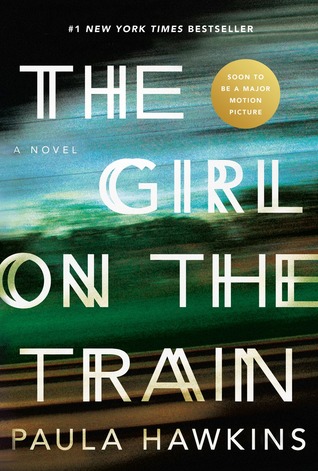
The Girl on the Train

22557272By Paula Hawkins

I've had this book on my "to read" list for awhile...people have compared it to Gone Girl. But although less gruesome than Gone Girl, this novel was less compelling and gripping. I knew Rachel was an unreliable narrator, but this is because she blacked out and can't remember. Gradually, she pieces the truth together in her mind.

Consequently, Hawkins gradually unravels the story rather than diving right in. I thought she did a good job of depicting the harsh reality of alcoholism. But ultimately, I expected more out of this novel than I got. It is very British, and I appreciated that! And a decent read...but not as fantastic as I expected!

Wednesday, November 25, 2015

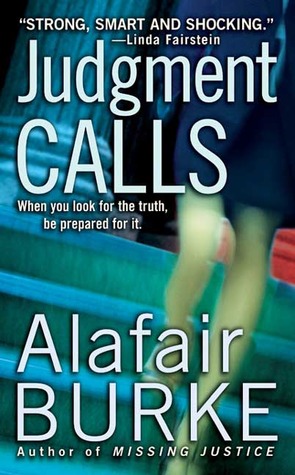
Judgment Calls

Judgment Calls (Samantha Kincaid #1)Judgment Calls, by Alafair Burke

Confession: I acquired this book somewhere solely because it was based in Portland. I love to read books set in my hometown.

It was a solid mystery/thriller, by the daughter of famous writer James Lee Burke. Deputy DA Samantha Kincaid is a solid character. Sometimes the book veered a little too far into legal wonkiness, which led me to think "I COULD NEVER BE A LAWYER"! Far too many obscure legal procedures and technicalities.

I might read more of her to see where she goes as a writer...and where Samantha Kincaid goes as a character.


Wednesday, November 11, 2015

A Gesture Life

A Gesture Life, by Chang-Rae Lee

A Gesture Life is another book that was really hard to get into, but the patience paid off. If it hadn't been a book group selection, I might not have stuck with it.

Franklin Hata was a man who was difficult to admire or respect, because he seemed cold and heartless. His stilted relationship with his adopted daughter Sunny just made me sad. He had a chronic difficulty in relating to anyone on a deep, true level.

Presumably, this was because of his difficult experiences in the war and his obsession with K, a Korean "comfort woman." The storyline about the comfort women made me truly sick to my stomach. Apparently when Chang-Rae Lee began writing this novel, it was going to be all about comfort women, but he found that to be too heavy of a subject. His obsession with K reminded me of the foreign men I knew in Japan who were obsessed with Japanese women...many of them ended up marrying them and staying in Japan. They were drawn to them because they were less likely to challenge them than western women. They liked the way the Japanese women looked up to them. Often, these men would not have been classified as "catches" in the US or UK. These relationships were not very equal.

That is the relationship between Franklin and K. He thinks he loves her, but she only views him as one more man who is taking advantage of her. In his case, perhaps he can help her a little. But he means nothing to her.

I appreciated this book more after discussing it with my book group. Some of them liked it better than I did, and one of my friends observed that perhaps it was the way she had been raised, with more distant parenting. That could be.

It was beautifully written, but a little bit disappointing for me. I expected more, and I found it to be really sad.

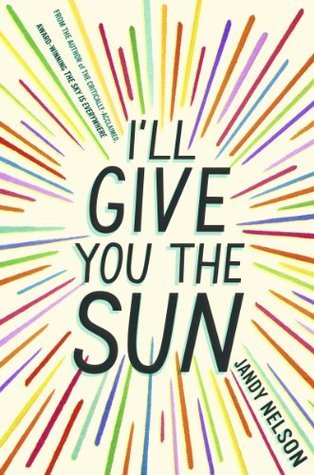
I'll Give You the Sun

I'll Give You the SunI'll Give You the Sun, by Jandy Nelson

I loved this book. Written for young adults, I'll Give You the Sun is about fraternal twins...Jude and her twin brother, Noah, beginning with age 13. Told in alternating perspectives, the story is about their efforts to cope with adolescence and change, friendship, the experience of being twins and siblings, deep-seated grief and longing, art, love, and how to be truly, authentically yourself.

The only thing I didn't like about it was the use of the term "surftards." I kept thinking about John Green's stated regret about using the "retard" word in Paper Towns. One could argue that it's what kids say...but I also think that authors have the opportunity to raise the bar and set a higher standard.

As an Internet author friend has said in her review, "The words and terms toilet-licking, asshat, and surftard are used in nauseating excess. Plus, don’t get me started on how the word surftard is simply another version of “retard”--a slur wearing a cloak of originality. First Amendment aside, I think it is irresponsible for a young adult author to coin a new hate term. I challenge her to replace the tard in surftard with a racial epithet and see how it plays out. This unnecessary hate language adds absolutely nothing to the voice and persona of the character who uses it."

Otherwise, I adored this novel. It made me cry. Totally rich, complicated characters.

Friday, October 30, 2015

In a Dark, Dark Wood

In a Dark, Dark WoodIn a Dark, Dark Wood, by Ruth Ware

Score one point for Ruth Ware for prompting me to think about this book in the middle of the night. In a Dark, Dark Wood is about Nora (formerly Lee), an antisocial, reserved writer in England, who is invited to a hen night (the UK version of a bachelorette party). The strange thing is she hasn't seen the bride for 10 years, since she was a teenager.

Bride Clare brings her "friends" from far and wide to a hidden-away, isolated glass house in the country where they drink heavily and have many an awkward conversation, especially since Nora and Claire fell out of friendship when they were teens.

And then someone is murdered, and Nora doesn't know whether she is the killer.

It's sinister, but not too grisly, and it's hard to care much about what happens to most of the characters. The characters, with the exception of Nina, were spoiled yuppies who thought the world revolved around them.

This was not bad for an airplane or beach read...but Nora annoyed the hell out of me. I don't have much sympathy for someone who cannot move on after a lost teenage love affair. Nora needed to get a life.

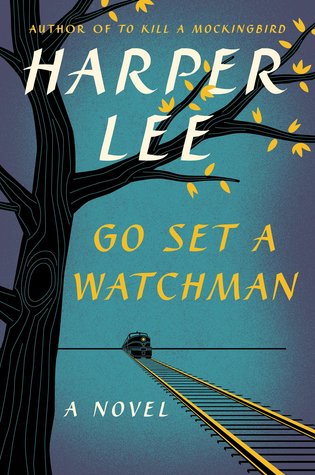
Go Set a Watchman

Go Set a WatchmanGo Set a Watchman, by Harper Lee

I debated whether to read Go Set a Watchman for quite some time, but finally curiosity got the best of me! It's worth reading if only to explore this progression of a writer and a book, as it preceded To Kill a Mockingbird.

What I liked about it:
  • Scout, or Jean Louise, is a grown woman. And she is a crusty, opinionated, and stubborn one at that.
  • As one reviewer noted, Go Set a Watchman is not the book we wanted about race...but it was the book we need. Others have said Atticus was always a racist.
  • The writing, at times, was beautiful...when it was not meandering.
  • It showed a slice of history, and perhaps a more realistic one, in the South during that era.
What I didn't like about it:
  • Oh, the meandering! Lee often goes off on various flashbacks, and I found myself questioning when we would get back to the main story. Not a good sign, and it reflects the need for the novel to be polished...which it was by the time To Kill a Mockingbird was published.
  • Some characters are mere shadows (Jem and Dill) of their evolved selves. I'm not sure why she even included them in this draft, as they appear only as memory fragments.
  • Many reviews discuss Atticus' racism while ignoring Jean Louise's own racism. Perhaps she wasn't as flawed as Atticus, but she was no saint. As "the book we need," it is a better representation of the south during this era than To Kill a Mockingbird, because it showed the many layers of racism. Yes, Atticus and Jean Louise's love interest Hank were worse, but Scout too was racist. Although Jean Louise was horrified by the KKK and its ilk, she was just as horrified by school segregation and interracial marriage.  
I'm glad I read it if only because I'm a curious reader and wanted to form my own opinion (similar to why I read Twilight). But it's easy to see why Harper Lee's first editor advised her to take a different tack. 

Ultimately, this book disappoints because Jean Louise is an old-school Southerner through and through, in spite of the higher hopes the reader might have in the beginning and middle of the novel. As Michiko Kakutani wrote in The New York Times, "The difference is that Mockingbird suggested that we should have compassion for outsiders like Boo and Tom Robinson, while Watchman asks us to have understanding for a bigot named Atticus."

We Are All Completely Beside Ourselves

We Are All Completely Beside OurselvesWe Are All Completely Beside Ourselves, by Karen Joy Fowler

Here's one of the many values of book group for me: it makes me stick with novels that do not grab me immediately. Often, if I stick it out, they are worth it in the end. And so is the case with We Are All Completely Beside Ourselves.

The main character, Rosemary Cooke, was hard for me to relate to, especially at first. She is reserved, private, and distanced from her family because of a tragedy in her childhood. As the book moves along, we eventually learn what that life-changing tragedy was.

Without giving too much away about the story, this book exposed a lot of disturbing facts about the animal testing industry, specifically about chimpanzees and other primates. I learned a great deal about what humans have done to our evolutionary predecessors, and it's not pretty. This book made for great, thought-provoking discussions at book group. I definitely recommend it.

Thursday, September 24, 2015

In the Blood

In the BloodIn the Blood, by Lisa Unger

This was my summer light read; I took it with me to Florida in August.

It was a psychological thriller about a troubled, hard-to-believe protagonist and psychopaths in her life. Perhaps too many coincidences and unlikely events, but if you can suspend belief, it's worth a read.

I would read more from this author.

Skeletons at the Feast

Skeletons at the FeastSkeletons at the Feast, by Chris Bohjalian

Skeletons at the Feast takes place shortly before the second world war ends, told from the perspective of Anna, a wealthy Prussian woman in love with Callum, a Scottish POW; Uri, a Jewish man on the run and in disguise; and a French Jewish woman in a concentration camp. Previously I knew very little about the Prussian people, and the story includes Anna's family's journey west to escape the invading Russians. Bohjalian always does such an excellent job portraying layers of complexity in his characters and situations, and this book is no different.

Some readers have balked at the violence and disturbing imagery in this book, but people, it was war. The Holocaust. A completely brutal time in our history. Based on a diary Bohjalian received from a friend whose grandmother grew up on a farm in East Prussia, the book addresses the dark side of Europe during the war...those who became Nazi party members and emulated Hitler while refusing to acknowledge what was really going on around them.

Wednesday, September 16, 2015

A Monster Calls

A Monster Calls, by Patrick Ness

Still trying to catch up on my book reviews...this was my July book club selection.

Patrick Ness and Jim Kay collaborated on this illustrated novel based on an idea by novelist Siobhan Dowd, who died of breast cancer. As Ness said in his author's note, "She had the characters, a premise, and a beginning. What she didn't have, unfortunately, was time."

A Monster Calls refers to the visits in young Conor's bedroom. Conor's mother is battling cancer, and as he and his family members struggle to adjust to her worsening condition, a huge yew tree outside of his bedroom comes to life and tells him a series of stories. "Stories are wild creatures," the monster said. "When you let them loose, who knows what havoc they might wreak?"

The monster is the only creature who's listening to Conor and speaking to him honestly. His father arrives from the U.S. for an incredibly brief visit and has created a new family where Conor doesn't have a place, and his parents skirt around the fact that his mother is dying. He's sent to stay with his grandmother, who is overly strict and controlling and doesn't seem to appreciate him. His classmates either bully him or pity him because of his sick mom. The monster's the only one who understands the fear and rage inside of his head.

My book group debated whether the monster was real or if it was all in Conor's head. I disagreed with a few others; I believe the monster was real. This is, after all, a young adult fantasy novel. The monster teaches Conor things no one else could. And helps him get in touch with feelings that he didn't know he had. We had an interesting conversation about the way our culture handles illness and dying, both in the U.S. and the UK, where the novel is based. People in the UK are much more likely to tamp down feelings and suppress them, and therapy is often not considered to be necessary. Stiff upper lip and all that!

A Monster Calls is a beautiful tale of loss and love. 

Wednesday, August 26, 2015

Paper Towns

Paper Towns, by John Green
My second John Green novel. I didn't enjoy it as much as The Fault in Our Stars, but it's a worthwhile read. I found it interesting to read a novel set in Orlando (unusual) since we made a trip there in August. I couldn't shake the image of Quentin and Margo sneaking into Sea World!

Orlando might not fit the definition of a real paper town (a fictitious place put on maps by map makers to prevent copyright infringement), but I think it's a fitting description...it's a totally manufactured place, created for tourism and to make money. I was happy to get back to my beautiful hometown of Portland, Oregon!

Similar to Green's other novels, we have a smart, nerdy male character, Quentin, with a quirky male friend and a sort-of love interest, Margo Roth Spiegelman. Even the names are easily identifiable John Green choices! 

Margo was not incredibly likable, and I didn't really understand why she was drawn to her extremely poor choices in friends...she was clearly not shallow, but her friends are. Why didn't she hang out with Quentin instead?

This was an interesting journey she took them all on, and I'm glad to read that John Green has publicly expressed regret for using the word "retard" in this book. Even though it's used frequently in middle schools and high schools, as a huge mentor and hero to kids everywhere, he has the choice to take the higher road.

I look forward to reading more John Green...my oldest son particularly enjoyed Looking for Alaska.

The Secret of Shadow Ranch: My first Nancy Drew

The Secret of Shadow Ranch, by Carolyn Keene

Can you believe that I've never read a Nancy Drew book? This was my first! I read it because of this delightful little second grader--daughter of a close friend--who's obsessed with them at the moment.

I'm glad to be able to say I have read Nancy Drew--she was a plucky detective but she was awfully concerned with her looks and her friend's weight! But I understand that many of the original Nancy Drew books were rewritten in the 1950s to make her more feminine. I'd love to read the actual original story written in the 1930s. I understand that this book diverts from the usual Nancy Drew template because it's set in the desert, away from her home.

The other class "girl" novels I haven't read are Anne of Green Gables--maybe that's a goal for later in the year. I've been told by many that I would like them.

I gave my little friend Grace a copy of the first two "Boys Against Girls" books by Phyllis Reynolds Naylor, which I enjoyed with my boys. We'll see what she has to say about those!