Showing posts with label feminism. Show all posts

Friday, November 1, 2019

Theory of Bastards

Theory of Bastards by Audrey Schulman

I've committed to blog every day in November, so I hope to finally catch up with my book reviews!

I read Theory of Bastards back in January for my book group, and I loved it! Set at some point in the future, the main character, Francine, is a research biologist who ends up taking on a live-in assignment at a laboratory, studying the sex lives of bonobos. Not altogether that likable of a character, Francine has struggled with debilitating endometriosis that has paralyzed her personal life and emotional development. Many people I love have experienced endometriosis and the complications associated with it (foremost being that the medical establishment often doesn't take you seriously because it's a disease that only afflicts women), so I'm glad to see Schulman tackle this topic in her novel.

And then there are the lovely bonobos. I knew they were a matriarchal species, fairly recently discovered, but that was the extent of my knowledge. Bonobos are the most closely related species to humans, sharing 98.7 percent of our DNA. Different from chimpanzees, bonobos are loving, sensitive, and intelligent. And they love to have sex. They are nondiscriminatory, polyamorous, and pansexual. They are also fiercely protective of each other and Francine learns she has to earn their respect.

As much as I was fascinated by the animal study, then Schulman takes us into apocalyptical themes when the research facility is hit by a massive dust storm and all electricity goes out across the grid. How to keep the animals alive? How to keep the bonobos away from the much more aggressive chimpanzees? Will she and her assistant, Stotts, consummate their sexual tension and form an emotional bond? Will they all survive?

I was compelled to keep reading until the end, and this moving book stayed with me for weeks...always good signs of an outstanding read. And now I know I love bonobos! It made for an entertaining book group discussion, as we talked about how many of us confessed to looking up bonobo penises! (Guilty as charged.)


#NaBloPoMo2019

Tuesday, April 29, 2014

My Notorious Life

My Notorious Life, by Kate Manning
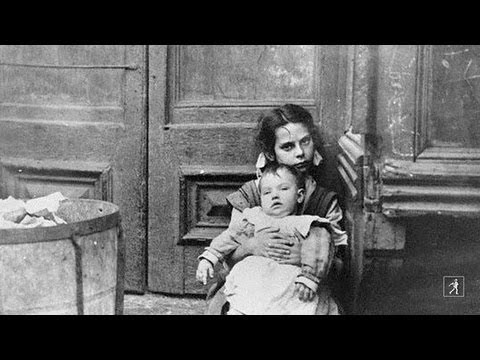
I LOVED this book, but it's probably not for everyone. Kate Manning was inspired to write this book when she saw this photo and learned that 30,000 homeless children lived on the streets of New York in the nineteenth century.


Introduced as a lost diary, the book opens with a suicide. We don't know who died, but we learn that the main character fakes her own death with this dead body of another. We know she's married, and her husband helps cover it up. The authorities are after her, and we know she is famous because her carriage would be recognized in the street.

Then we go back to her childhood, Axie Muldoon, who is a poor Irish immigrant child, wandering the streets of New York with her sister Dutch and brother Joe. Her father--an alcoholic--has died, and her mother has lost her arm in an industrial accident. Soon they are discovered by a famous do-gooder, who gets medical care for Axie's mother but arranges for the children to go to the Children's Aid Society. Soon the children are off to the midwest on the Orphan Train. (This is the second novel I've read this year about the Orphan Train--the first was The Chaperone.) Axie--a spunky, independent, and bright child--ends up returning to New York City after a few months, but her siblings have been ensconced in new families and appear to not mind their separation.

Once back in New York, Axie finds her mother again, but she has remarried Axie's layabout uncle and is pregnant again. When she goes into labor, Axie must act as midwife...at 11 years old. And so begins her story of helping women in labor and childbirth.

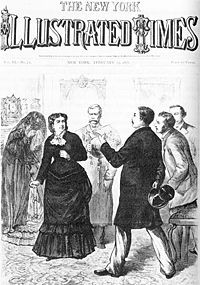
Madame Restell being arrested
Without giving too much more of the plot away, I will say that Axie is a complex, fascinating character, as are her husband and best friend. Axie's story is based on the life and death of Ann Trow Lohman (1811-1879), also known as Madame Restell, a "notorious" midwife who was a friend to desperate women but the enemy of moral crusaders such as Anthony Comstock, founder of the Society for the Suppression of Vice. Comstock finally brought her down, she was vilified in the press and in society, and she ended her own life (although it was rumored that she had faked it). Comstock was proud of the number of suicides he prompted.

My only quibble about this book is that at times I found the Irish brogue inconsistent. I think it was written in such a way because this was Axie's true speaking style, but it comes and goes and at times I found that off-putting.

Demonized in the press
We had such interesting conversations last week at book group when we discussed this book...about feminism, history, birth control, the status of women in this era and now, midwifery, and abortion. This wonderful piece of feminist historical fiction will give you new perspectives about the status of women--then and now--and the lesser evil of abortion. I couldn't help but think about Rush Limbaugh, our modern-day Anthony Comstock, and Sandra Fluke, who in advocating for birth control was blamed for debauchery...much like Madame Restell/Axie Muldoon.

As the mother of three children, one of whom was born at 24 weeks, I am deeply grateful to have been born and become a mother when I did. I'm also grateful to have been able to plan my own family by using birth control.

I could not put his book down...read it! It's sad and thought provoking, but redemptive. Here is author Kate Manning, talking about what led her to write this book:

Wednesday, January 18, 2012

Think: Straight Talk for Women to Stay Smart in a Dumbed-Down World

Think: Straight Talk for Women to Stay Smart in a Dumbed-Down World, by Lisa Bloom

I first heard of Lisa Bloom when I read a fantastic article she wrote for the Huffington Post: "How to Talk to Little Girls." I knew I needed to read her book.

Bloom is the feisty, bright daughter of a feisty, bright mother, pioneering and well-known lawyer Gloria Allred. Allred trained her daughter well--to be an advocate for equality and to stand up for herself and the downtrodden.

The book is divided into two parts. The first part, "The Problem," delves into the question of why we are all so dumbed down nowadays, especially women. She talks about the U.S. chest beating that we are "number one," when in fact we are not...in so many areas. One of those areas is the status of women and the numbers of women who represent us in the political arena. Although conditions are better here for women than in many other countries, we are far from number one. The World Economic Forum's 2009 Global Gender Gap Reports puts us at #31 because of our women's "stagnation in the political empowerment index." And 80 nations surpass the U.S. in the percentage of women holding elective office. You read that right: instead of being Number One, we lag behind 80 nations!

Why are we not up in arms about this? We're too busy spending a fortune on cosmetics and plastic surgery, reading about celebrity gossip, and watching reality TV shows. Wasting our lives away. (When I say "we," I'm referring to Americans in general and women in particular.)

As Bloom discusses, we devalue education, proudly read books that proclaim "Cooking for Dummies," and are more likely to know who Katy Perry is than who is the prime minister of Canada.

For example, take U.S. Weekly or Yahoo's web site, OMG! Bloom reports that U.S. Weekly had 800,000 subscribers in 2003, and now has nearly 2 million. Yet they estimate about 10 readers per subscriber, as many offices, nail salons, and gyms carry the magazine.

According to Bloom's statistics, in 2007 American women averaged $12,000 per year on cosmetics and salon purchases (and 42 percent of the worldwide total). I find that number to be truly staggering! We should be socking that money away for our retirement, or traveling around the world. Now that is really showing how dumb we are.

Bloom is a passionate vegetarian, and she makes an excellent case for us all to go meatless. I knew that raising livestock contributed to climate change, but she quotes a 2006 report by the UN Food and Agriculture Organization that concluded that worldwide livestock farming is the #1 cause of climate change...more than all the cars, trains, planes, and boats in the world. The more meat we eat, the more we are degrading our planet.

As a legal analyst and reporter, Bloom talks about how much time she has been forced to cover missing stories of "pretty white girls," and if a missing child is not white or pretty, or even male, the media will not cover the story. This was not true in Oregon when Kyron Horman went missing over a year ago...but many made the excellent case that his story got way more attention than those of missing children of color. Not that we shouldn't care about Kyron Horman, but shouldn't we also care about all the children who go missing? Why don't we care as equally passionately about all the children sold into prostitution around the world? The U.S. media only wants to cover the "pretty white girls," and the American population are drawn to those stories, in a horrific Catch-22.

In another absurd example of our bizarre focus on the celebrity culture, Bloom discusses all the amazing humanitarian and philanthropic work Angelina Jolie has done throughout her career. But what makes the news? Her relationship with Brad Pitt and her supposed fights with Jennifer Aniston. Or Jolie's former nanny who says she's a neglectful mother. Or what she wore yesterday or where she vacationed. That's all people seem to care about...not the fact that she started working on behalf of refugees in 2000...has visited countries ravaged by poverty such as Sierra Leone, Tanzania, Cambodia, Pakistan, Namibia, and Kenya. She's even visited asylum seekers here in the U.S.

I'm sure that Jolie realizes that she can attract more attention to her cause by giving the public what it wants. Just a few days ago she got the media all excited by saying that what she was most excited about that evening (after the Golden Globes) was to go home to bed with Brad. Celebrities are narcissistic. Yes. But in the case of Angelina Jolie, there's more to her than meets the eye. But does the American public care? No, it doesn't seem to.

Jumping in to Part 2, Bloom gives us her recommendations for reclaiming our brains...such as carving out time in our lives to think, make simple food for your family and don't kill yourself by slaving over meals for hours, and hire someone else to do your housework (even if you have to cut corners elsewhere) so you can reserve time for yourself. She's very adamant on the housecleaner front, and of course I ask myself, what about the option to just not live in a perfectly clean house all the time?

She seems to have a very relaxed, funny parenting style...for example, interpreting "I'm bored!" as "How may I be of assistance?"
"Oh great!" I said, eagerly. "Here's a list of things for you to do. Start with cleaning your room. Next, wash the windows. There's some crud baked on to this pan that really needs a good scrubbing to get it off. Did you rewrite that homework assignment to bring up your grade? How's that thank you to Grandma coming along? Honey? Where'd you go?"
I've already begun applying this technique. Yesterday when my 15-year-old complained about loading the dishwasher, I began to give him a list of all the things I planned to get done that evening, and I told him he could help me with those if he wanted to. Worked like a charm.

She's adamant about not allowing kids into your bed. Well, it's a good thing I'm confident in my own parenting philosophy to know what to ignore and what to take in. I still have a five-year-old who crawls into bed with me around 6:15 a.m., and he usually comes downstairs and sleeps on our floor until then (but not in our bed). It won't last forever, and I do love my morning cuddles. I suppose Bloom wouldn't have approved of my nursing through the night when my babies were little, but I don't care. I was a working mom, and it helped me bond with my kids.

Bloom exhorts women to READ constantly, and the good stuff. Clearly, I agree with that advice, although it also shocks me to read that 80 percent of Americans did not read a book last year. She has tons of reading recommendations, many of which (but not all) I've already read. She's a big fan of Half the Sky by Nicholas Kristof and Sheryl DuWunn, as am I, and has a reading list in the appendix.

She tells us to use our newfound time and knowledge to take care of our lives. Look things up if you're curious. Exercise. Have more sex! Hang out with girlfriends--they are great for your health (as is the sex!). Volunteer in your community and take a stand.

Finally, Bloom talks about how lucky we are to live in the good ol' US of A, with the freedoms we have and the privilege. We need to take advantage of these things and BACK AWAY from the cotton candy nutritionless junk food media. I certainly have been more careful not to click on the tabloid-style internet news since reading this book. What a waste of time it all is. Think!

Wednesday, August 10, 2011

Bitter Bitch: Fear of Flying revisited

Bitter Bitch: A NovelBitter Bitch by Maria Sveland
My rating: 4 out of 5 stars

Bitter Bitch is billed as "the international bestseller that has shocked Europe"; however, the only thing particularly shocking was the title, which caused all sorts of commentary from my family (especially when my husband showed it to my visiting mother-in-law and sister-in-law!). Apparently the literal translation from the Swedish is even more schocking: "Bitter Cunt"!

Sarah, mom of a toddler, has just turned 30 and is feeling like a bitter bitch. She flies to Tenerife (in the Canary Islands) for a week's vacation and reads Erica Jong's feminist classic, Fear of Flying, while she's away. However, she finds herself longing for quiet and uninterrupted sleep rather than the classic "zipless f--k."

Sveland examines the state of modern woman- and motherhood and peels back the facade that women can easily have it all. Although Sarah loves her husband Johan, she also has great unresolved hostility towards him. Having experienced horribly sexist men in television journalism and other areas of her life, Sarah reflects that "Refusing to admit your own part in oppression is an incredibly smart power strategy, since oppression is made invisible by diminishing it." Not only does this lack of awareness exist in men, but it also exists in the privileged--both men and women.

After Sarah is unable to nurse her baby Sigge successfully, she develops a life-threatening breast infection. Johan chooses to take Sigge home instead of having them both stay in the hospital with Sarah, an action that Sarah views as betrayal. (Having experienced the extreme bonding connection that exists between mother and newborn, I can completely relate to this feeling.) Their marriage is damaged as a result of this and the fact that Johan is gone for weeks at a time (because of his job) while Sarah is caring for newborn Sigge. She feels exhausted and completely alone, even though she loves her child passionately.

Sarah struggles with the fact that women still bear the burden in marriage: they do most of the housework and the child care. "I really do not think there is much difference between becoming a mother during the 1970s or in the twenty-first century. In the beginning you are just as alone with your child as most mothers have been for centuries...it is sad, but becoming a mother seems to be one of the most difficult undertakings when it comes to equality."

When the couple goes to married marriage counselors, they tell Sarah that achieving equality in a marriage is impossible. Both Sarah and Johan storm out in disgust. But in fact, Johan's paternity leave (more common in Sweden) was what saved their marriage. "That's when he understood what it meant to take full responsibility as a father. Men should take longer parental leave than women, since women have a biological head start because they have carried and given birth to their children. Men need more time to get the innate experience."

She talks in detail about the great guilt work-outside-the-home mothers feel when they leave their children in day care (or take off for a weekend or week away). Fathers tend not to experience that same amount of guilt. Why is that? She concludes that women should be more self-serving: "The one who demands the most gets the most." For example, who is most likely to be doing the cleanup at a party? The women (especially with older generations). Sarah feels guilty when she doesn't jump up to help the other women, but the men don't seem to feel guilty at all. Why is that?

She also laments the fact that women are rarely able to relax or feel completely safe out in public. They can never escape the potential for men to harass them. (I discussed this very topic with friends at Holden Village late one night.) "I strongly doubt that men can comprehend the discomfort or ferar involved in having to deal with it. I wonder how this really affects women, deep down."

Sarah was raised with a doormat mother and a verbally abusive, alcoholic father, so she didn't have a lot of faith in marriage. Lest you conclude that Sarah is anti-men, though, she waxes lyrical about how much she loves men who peel oranges in public, bring packed lunches to work, bike or walk to work, and dance.

Reading this book, it made me realize how lucky I am to be in a marriage of relative equality. I nursed my sons constantly (and through the night) for many years, and then my husband took over the late night wakefulness after they stopped nursing. He is a stay-at-home dad and does the cooking during the week. I call him our "household manager," because of course he does much more than looking after the kids and cooking. We still fall back into gender stereotyped roles when it comes to some responsibilities: he takes out the garbage, mows the lawn, and deals with the car maintenance, while I am responsible for all of the gift and clothing buying and storing the kids clothes over various seasons. We both grocery shop. But he writes the thank you cards. I let him drive much of the time because he likes to, and I'd rather be reading. I'm the breadwinner but he still has a career and associated goals. I hope someday I can work less and he can get paid for the work he does (writing). We make decisions together.

I feel that we have achieved as close to equality as I can imagine in our marriage. So thankfully, even though I feel that Sveland's observations about marriage and parenting are completely sound, I am not a bitter bitch myself. I must say that it's refreshing to read a feminist novel given all of the anti-feminist backlash out there in popular society. Here's Maria Sveland on feminism and marriage.

I'm not sure what I think about the ending...it depends on whether you are cynical or optimistic. As an optimist myself, I'd like to think that Sarah found some comfort and peace with her life. I'm glad that Sveland wrote this important book, and I have no doubt that many women would be able to relate very closely to this story.

Thursday, December 16, 2010

Growing Up Laughing: Growing up with Marlo

Growing Up Laughing: My Story and the Story of FunnyMy rating: 4 out of 5 stars

I'm giving this four stars not based on the quality of the writing per se, but because of how much I enjoyed it. Having just finished David Sedaris' Holidays on Ice, I realized that my humor preferences are much more upbeat than cynical and negative.

This is not a straightforward memoir. Thomas intersperses recollections of her growing up with interviews of famous comedians, in which she asked them how they grew up to be funny. Most of the comedians she interviewed--Joy Behar, Whoopi Goldberg, Tina Fey, Jon Stewart, Billy Crystal, Robin Williams--are my favorites. Many of the chapters start with classic jokes, and the book is chock-full of wonderful photos.

I grew up on Marlo Thomas...I was a "Free to Be You and Me" kid. I cried when I read the chapter about why she decided to create "Free to Be You and Me" (because she was looking for a book for her niece, Dionne, and she couldn't find anything that validated and encouraged girls' choices and independence). I memorized the sketches, and my sister saved up all her money so she could buy a copy of the record for her second-grade (and my third-grade) teacher, Mr. Sposito. "Free to Be You and Me" was like a lifeline for us little girls in the 1970s.

She wrote about how she became a feminist...as the daughter of a conservative Republican Catholic. But even though Danny Thomas was traditional and conservative (Presidents Reagan and Ford spoke at his funeral), it was clear that he had the utmost faith in his daughter's abilities. He even embraced her liberal husband Phil Donohue, and he loved each member of his family passionately.

When Thomas married Donohue, he was raising four sons on his own, so she was seriously outnumbered. All of the males would constantly ask her where things were, including Phil: "Where are my shoes?" She wrote:
"What is it about men? They think we women have a radar attached to our uterus. And the thing that killed me was that I knew where they were. I knew where Phil's shoes were. I knew where all four boys' shoes were...I was beginning to understand why there hadn't been a female Shakespeare or Mozart. There wasn't room in their heads for symphonies and sonnets--their brains were cluttered with where everyone's shoes were."
The only sad thing about Thomas' life is her plastic surgery. In her younger days, she was a truly beautiful woman. Now her face has been changed by plastic surgery, and she's lightened her hair to light brown. Yes, she looks great for 73, but she doesn't look like herself any more.

Back to the book--some have criticized it for being too upbeat and "happy family," perhaps looking for more of a Sedaris tome. But her life has been happy. Clearly she is one of those people who exudes positive energy, and she draws that kind of positive energy to her. I thoroughly enjoyed this book from start to finish, but perhaps that reflects my own sentimental history with her work and my overall attitude about life.

Marlo Thomas seems to truly live this quote by Whoopi Goldberg in her book: "We're here for a reason. I believe a bit of the reason is to throw little torches out to lead people through the dark."

Check out this little video clip of Marlo and Phil visiting Ellen DeGeneres' show.

If you're interested in following Marlo Thomas' current activities, check out her great web site. She features jokes of the day, interesting conversations with women, and other articles. I follow her activities on Facebook. I've checked out Season 1 of "That Girl" from the library and can't wait to dig in!

Sunday, September 26, 2010

Bad Mother: A Chronicle of Maternal Crimes, Minor Calamities, and Occasional Moments of Grace

Bad Mother: A Chronicle of Maternal Crimes, Minor Calamities, and Occasional Moments of GraceBad Mother: A Chronicle of Maternal Crimes, Minor Calamities, and Occasional Moments of Grace by Ayelet Waldman

My rating: 5 of 5 stars

So many things about Ayelet Waldman's book of essays rang true for me. I loved this book.

She organizes it into 18 chapters, 18 being a significant number in the Jewish faith. Each chapter tackles a different topic related to her experience of motherhood.

Waldman was a lightning rod on the internet a few years ago, when she published an essay saying that she loved her husband more than her children. She went on to say that if one of her children were to die, she would survive somehow, but it would be vastly more difficult to survive her husband's death.

Frankly, I don't even want to consider such questions, which reflects my tendency to avoid thinking of such potentially difficult subjects. But is it really so horrible to say that she loves her husband more than her children? After all, he came first. I remember, growing up, that my parents' relationship was primary in our family. They always made the time to go out on dates and spend time alone. It was their opportunity for recharging. This never upset me (except on a few occasions when we were left over the weekend with people we didn't know very well).


Ayelet Waldman was raked over the coals and pilloried on the internet for making such a statement. She was called a "bad mother," both literally and by suggestion. This experience, along with her realization that women are apt to label each other such, prompted her to write this book.

Here's what resonated with me:

Chapter 1: Waldman's admitted sanctimony before she had children...when she saw a woman speaking harshly to her woman on a Muni train...and she informed the woman that everyone was watching her. She then goes on to talk about how readily we label women as "bad mothers," while all a man has to do to be called a "good father" is to simply show up and be present. Rarely are men labeled as "bad fathers" unless they have abandoned their families or are drug addicts or criminals. The standards are completely different for men and women. There are no "daddy wars."

Chapter 2: She describes the moment when she first met her husband, writer Michael Chabon, on a blind date. He came to her door, and even though as a cynical soul she didn't believe in love at first sight, when she saw him, she knew he would be her soul mate. She uses the Yiddish term--bashert--the one that God, or fate, meant for you.
"The legend associated with this word says that before you are born, an angel appears to the soul of your infant self and takes you on a tour of your life. You visit your future, or a version of your future. One of the things the angel shows you is the person whose soul is a match for yours. The person with whom you are meant to share your life. Then the angel strikes you beneath your nose, leaving that subtle channel in the skin between the nose and the mouth, your philtrum. The blow causes you to forget what you have seen. But there remains a vestige of memory, an unconscious sense of what you saw and learned. Enough of a memory to evoke a jolt of recognition when you stumble across your bashert..."
I love this description, because it describes so well how I felt about my own Michael when I first met him and began getting to know him...as if we had been destined to meet and join together.

I also enjoyed Waldman's description of how she multi-tasked while breast pumping...that was me, for so many months and years of my life! Fortunately I didn't have to deal with young men barging in on me to sneak a peek at my breasts, as Waldman did in her law office.

Chapter 3: Waldman devotes a chapter to her (and her husband's) growing up to "Free to Be You and Me." And here is my only criticism of the book. She claims that "Free to Be You and Me" is faulty grammar, and actually titles the chapter "Free to Be You and I," which she claims is correct. I beg to differ: "Free to Be You and Me" is correct. The grammatical error in that song is "And you and me are free to be you and me," which should be "And you and I are free to be you and me."

But anyway...I loved the descriptions of that wonderful book, record, and TV program, which was the backdrop of my own childhood. I too could recite "Ladies First" by heart. I remember my sister saving up all her money to purchase a copy of the record for our beloved teacher, Mr. Sposito (I had him in 3rd grade and she had him in 2nd), when we invited him over to dinner--one of the highlights of our childhood!

When I had my own children, I sought out and purchased the video for them. Even if my husband didn't grow up on "Free to Be You and Me," he could have, given his full commitment to being an equal partner in our marriage and parenting.

Chapter 9: She writes of her anxiety about her children getting excited about dodge ball, because she had painful memories of that game. She called the children's gym teacher to protest, armed with the facts (the National Association for Sport & Physical Education had issued a position paper on dodge ball, claiming that it was an inappropriate activity for K-12, because it targets and eliminates weaker kids).

She eventually had to give up her fight when she learned that not only did her kids love dodge ball, but no one else was complaining. (As a fellow dodge ball hater, I question that...there must have been kids at that school who didn't like the game, but they were being quiet, like I was.)

Chapter 10: Waldman's anecdote about receiving a bonus package of condoms and installing them in her children's bedroom, to their horror, reminds me of a friend of ours in Japan, whose mother would arrive from England with a box of condoms for him.

Chapter 11: She poignantly writes about experiencing a pregnancy in which the baby was suspected to have a serious chromosomal defect, and their decision to terminate. This is never an easy choice for parents, and I admire Waldman's courage in writing about this, including her own doubts and guilt about their decision...as well as their grief for their lost child, Rocketship. She also points out that when our mothers' generation was fighting for the right to choose, they didn't have to "confront the ugly physical reality." They didn't have ultrasounds and get the opportunity to see their babies on screen and form emotional attachments to them. I've never been the pro-choice advocate who insists that a fetus is not a baby. After giving birth to a 24-weeker and experiencing multiple miscarriages, I know all too well that a fetus is a baby. I still passionately believe in choice, but this knowledge makes the issues of abortion ever more painful and makes the issue far more complicated, with large areas of gray shading.

Chapter 14: When discovering during one of her next pregnancies that the baby was underweight (which could be an indicator of a fatal trisomy defect), she lets herself go to the dark side, for awhile. Then she goes to temple on Rosh Hashanah and listens to a sermon about hope and trusting in God. She suddenly had a moment of certain realization that her baby would be fine...even though she was the worst kind of pessimist. I could relate to this deep-down feeling--I had the same feeling when Chris was in the NICU. Even in spite of the dire predictions, I clung to my hope that he would be a healthy, happy child. That's not to say that my hope didn't ever falter, but with a few exceptions, that hope got me through the dark days. And my gut feeling was correct, just as Waldman's was.

Chapter 15: Waldman writes about hoping that one of her sons will be gay, because she thinks he will be closer to his mother that way. And she also won't have to compete with a daughter-in-law. I truly hope that I have some wonderful daughter-in-laws, but I confess to a few worries about that prospect. Will she drive my son away from me? Will she love us as much as he does? I get her concerns. Add to that the fact that gay men often tend to be more forthcoming and sensitive than straight men...and I get it.

Chapter 16: Maybe it's hormonal, maybe it's just loving babies. But I can relate to Waldman's baby lust. In my case, I know that three children is enough (four for her), but I can't help but feeling a bit of baby lust when I see a baby. Not that I want another one, mind you, but for a brief second, I remember the feel of that brand-new soft skin against mine, the complete helplessness and cuddliness of a newborn, and I have a moment of insanity.

Chapter 18: Finally, she writes about the parent who inevitably asks--at every back-to-school night, "What accommodations do you make for the exceptionally gifted child?" I love the way she confesses to her own secret hopes that her children will be brilliant and gifted, and then comes to realize that while they may not be brilliant on the standardized testing model, they are brilliant in other ways. While we are desperately wanting our children to be advanced or gifted in some way, we can miss the magic of everyday wonder. And so much emphasis on aggressive education and advanced learning can also reduce a child's chance to just be a child.

One of Waldman's sons has a "malformed palate"--and he nearly starves, or so she tells it. She talks about her intense guilt for missing this until it was almost too late (although the medical professionals missed it, too!), and her feelings of guilt because she had been taking medication during the pregnancy. She writes about her difficulties in getting him to eat--and so desperately wanting him to breastfeed--and I think of the struggles my own mother must have gone through when I was born with a cleft palate.

At first, I was marveling at Waldman's depth of revelation...even though some people who read my blogs might think that I reveal too much, actually I do hold back! But later I read about Waldman's bipolar diagnosis and her own fears that her children might end up with the same disorder, and it made more sense. Waldman herself admits that she has a tendency to "overshare" at times. This makes for better and more memorable writing, but it also sets her up to be a target and to be called a "bad mother."

Reading about the depth of love Waldman has for her children convinced me that she is anything but a "bad mother." We've all felt like bad mothers at times, and Waldman is no different.

But how many of us would be willing to share our warts and scabs for all the world to read? This book, clearly, is not for everyone...but I feel like I have found a new friend.

Finally, I love synchronicity. We are reading the Lemony Snicket series to our 7-year-old, Kieran, at the moment, and he is loving them. In Waldman's acknowledgements, she lists several people and then there is this line:

"To Daniel Handler (whose idea this was in the first place)..."
Daniel Handler is the author of the Lemony Snicket series. Is that not a perfect ending?


View all my reviews

Saturday, September 25, 2010

The Vagina Monologues: A church equals the female anatomy?

The Vagina MonologuesThe Vagina Monologues by Eve Ensler

My rating: 4 of 5 stars

As a feminist for over 25 years, it's surprising that I arrived so late to The Vagina Monologues. I had heard about the play for years, but have never seen it. Recently at a women's music camp, one woman performed one of the sketches and I found it hilarious, shocking, and illuminating.

I scanned through the Goodreads reviews and found it interesting to note how many people strongly disliked this book. They are judging it as literature, but it's not literature. It's performance art; it's a play. You can't judge it like you would a novel or a nonfiction book. Although I found the book fascinating, I know I need to see it performed.

This is a ground-breaking piece of work. Eve Ensler is brave, as are all the women out there who perform this play...and the women (and men!) who attend. I couldn't help but remember Storm Large's wonderful one-woman play, "Crazy Enough," and how she had everyone in the audience (men too!) singing along with her: "My vagina is eight miles wide..."

One of my favorite parts was in the introduction, when Gloria Steinem wrote about the design of traditional churches and cathedrals imitating the female body...and her desire to reclaim these patriarchal religious structures. "There is an outer and inner entrance, labia major and labia minora; a central vaginal aisle toward the altar; two curved ovarian structures on either side; and then in the sacred center, the altar or womb, where the miracle takes place--where males give birth." I will never look at a cathedral the same way again!

The Vagina Monologues have been a rallying cry for women of all ages everywhere. Just let it be. Get worked up. Sit back and enjoy. Or just be quiet. Let them reclaim a part of themselves that has been hidden away and shamed.
View all my reviews >>

Sex Wars: A long-overdue novel about the fight to gain women's right to vote!

Sex Wars: A Novel of Gilded Age New YorkSex Wars: A Novel of Gilded Age New York by Marge Piercy

My rating: 5 of 5 stars

Marge Piercy made a strong impression on me when I discovered I was a feminist. One of my favorite of her novels is "Gone to Soldiers" about WWII.

Sex Wars is a long-overdue, wonderful historical novel about the suffragette movement--a period in our history about which little is written or discussed.


View all my reviews

Hypocrite in a Pouffy White Dress: Growing up with hippie parents

Hypocrite in a Pouffy White DressHypocrite in a Pouffy White Dress by Susan Jane Gilman

My rating: 4 of 5 stars

Enjoyed this memoir of a girl growing up with hippie parents, struggling with her feminist ideals and how to incorporate them into her life.


View all my reviews

Wednesday, September 22, 2010

Take this Bread: Spiritual rebirth through feeding the hungry

Take This Bread: A Radical ConversionTake This Bread: A Radical Conversion by Sara Miles

My rating: 4 of 5 stars

Sara Miles is a NY-born left-wing, single mom, lesbian journalist and foodie, raised by children-of-missionaries but atheist parents, who lived and traveled extensively in war-torn central America as a young woman. In her 30s, she walked into an Episcopalian church and took communion, and it changed her life.

Miles' Christianity is a very earthy, progressive, inclusive sort, which I can completely relate to (but many others might find offensive). She took her experience of spirit and faith and translated it into very real terms by deciding to feed Jesus' sheep, as he asked his disciples to do. She got her church to let her open up a food pantry, where they fed 250+ families each week for free, no strings attached. Eventually she opened up several more food pantries with the help of a benefactor who liked what she was doing.

With all the honesty of Anne Lamott, Miles talks about her difficulty and ambivalence in embracing the poor and Christians alike. She vehemently and colorfully expresses her dislike of the pushy Russians, for example, in addition to the closed-minded old school Episcopal church.

I enjoyed the descriptions of her time in Central America, her grandparents' missionary experiences, and the time she spent in the kitchens of New York City, in addition to the detailed descriptions of the food pantry experience. The middle of the book dragged a bit, and the whole book was focused more on Miles' spirituality than her personal life. It sounds like her activism might have caused some stress in her marriage and with her relationship with her daughter, but this is only briefly mentioned.

Overall, I really enjoyed this book and greatly admire how Miles put her faith into action.


View all my reviews