Thursday, September 24, 2015

In the Blood

In the BloodIn the Blood, by Lisa Unger

This was my summer light read; I took it with me to Florida in August.

It was a psychological thriller about a troubled, hard-to-believe protagonist and psychopaths in her life. Perhaps too many coincidences and unlikely events, but if you can suspend belief, it's worth a read.

I would read more from this author.

Skeletons at the Feast

Skeletons at the FeastSkeletons at the Feast, by Chris Bohjalian

Skeletons at the Feast takes place shortly before the second world war ends, told from the perspective of Anna, a wealthy Prussian woman in love with Callum, a Scottish POW; Uri, a Jewish man on the run and in disguise; and a French Jewish woman in a concentration camp. Previously I knew very little about the Prussian people, and the story includes Anna's family's journey west to escape the invading Russians. Bohjalian always does such an excellent job portraying layers of complexity in his characters and situations, and this book is no different.

Some readers have balked at the violence and disturbing imagery in this book, but people, it was war. The Holocaust. A completely brutal time in our history. Based on a diary Bohjalian received from a friend whose grandmother grew up on a farm in East Prussia, the book addresses the dark side of Europe during the war...those who became Nazi party members and emulated Hitler while refusing to acknowledge what was really going on around them.

Tuesday, September 22, 2015

Rapture Practice

Rapture PracticeRapture Practice, by Aaron Hartzler

Aaron Hartzler grew up in an extremely conservative, religious home, where just disagreeing with his parents was tantamount to being seduced by Satan. For example, one day the young, fashion-conscious Aaron wanted to go to church without wearing socks with his Sperry Topsiders (because that's what you do). His father commanded him to put socks on, and Aaron resisted...and thus ensued a huge power struggle, with his father pouring on the guilt and shame...over a lack of socks.

I had to laugh when I read that Aaron got in trouble at his conservative Christian school for singing a Sandi Patty song! She was popular back when I hung out with some evangelical Christians in college, but apparently she fell from grace after she got divorced and had an affair.

Aaron is gay, but as a child he didn't know that. He felt himself drawn to fashion, theater, and music...and he also felt himself desperately torn between wanting to please his parents and wanting to express himself, in spite of his strict evangelical upbringing.

I found myself getting really annoyed with his parents, who on one occasion told Aaron he couldn't be in his school play because he had pop music tapes in his car (or some such extreme infringement of their rules). The book ends before Aaron comes out to his parents, so we don't learn how they reacted to the news...but follow-up research indicates he's still in touch with them, so that's good.

My book group enjoyed this book, and many commented on how Aaron deeply loved his parents in spite of their deep religiosity and their strict demands on him.

I'm curious to read Part 2 of his memoir!

Wednesday, September 16, 2015

A Monster Calls

A Monster Calls, by Patrick Ness

Still trying to catch up on my book reviews...this was my July book club selection.

Patrick Ness and Jim Kay collaborated on this illustrated novel based on an idea by novelist Siobhan Dowd, who died of breast cancer. As Ness said in his author's note, "She had the characters, a premise, and a beginning. What she didn't have, unfortunately, was time."

A Monster Calls refers to the visits in young Conor's bedroom. Conor's mother is battling cancer, and as he and his family members struggle to adjust to her worsening condition, a huge yew tree outside of his bedroom comes to life and tells him a series of stories. "Stories are wild creatures," the monster said. "When you let them loose, who knows what havoc they might wreak?"

The monster is the only creature who's listening to Conor and speaking to him honestly. His father arrives from the U.S. for an incredibly brief visit and has created a new family where Conor doesn't have a place, and his parents skirt around the fact that his mother is dying. He's sent to stay with his grandmother, who is overly strict and controlling and doesn't seem to appreciate him. His classmates either bully him or pity him because of his sick mom. The monster's the only one who understands the fear and rage inside of his head.

My book group debated whether the monster was real or if it was all in Conor's head. I disagreed with a few others; I believe the monster was real. This is, after all, a young adult fantasy novel. The monster teaches Conor things no one else could. And helps him get in touch with feelings that he didn't know he had. We had an interesting conversation about the way our culture handles illness and dying, both in the U.S. and the UK, where the novel is based. People in the UK are much more likely to tamp down feelings and suppress them, and therapy is often not considered to be necessary. Stiff upper lip and all that!

A Monster Calls is a beautiful tale of loss and love. 

Monday, September 7, 2015

The Life-Changing Magic of Tidying Up: The Japanese Art of Decluttering and Organizing

The Life-Changing Magic of Tidying Up: The Japanese Art of Decluttering and Organizing, by Marie Kondo


I'd been wanting to read this book for awhile, but a friend suggested that my husband read it first...he bought it in Ashland on our 25th wedding anniversary trip, and it did seem to be a little bit life changing! Soon after we returned home, he went through his clothing and discarded several garbage bags full...including his rowing singlet (tank top) from the mid-1980s...which was in shreds. 

By the time I read the book and started my same process, I didn't discard as many items of clothing as he did, mostly because I'd stayed on top of the discarding process over the years...but I still ended up with two to three bags. It's hard to think about clothing items "sparking joy" when they don't fit you any more. In some cases, I found the experience to be depressing! Last week I went through my jewelry and got rid of 20 necklaces, 25 pairs of earrings, and 10 bracelets. 

Marie Kondo is a bit extreme in some of her methods, and she clearly does NOT have children...I expect our process to take a lot longer and be much more complicated than the expected six months. It's hard to imagine kitchen items, appliances, tools, household items, and books "sparking joy." But the process is a great guidelines...just needs to be taken with a LARGE dose of salt!

I'm looking forward to continuing the process...books next. And then tackling the huge mess that is our office. 


The Meaning of Mary Magdalene: Discovering the Woman at the Heart of Christianity

The Meaning of Mary Magdalene: Discovering the Woman at the Heart of Christianity, by Cynthia Bourgeault


Mary Magdalene was a prophet, a seer, a disciple to disciples. Great historical reclaiming of this amazing woman. 

Wednesday, August 26, 2015

Paper Towns

Paper Towns, by John Green
My second John Green novel. I didn't enjoy it as much as The Fault in Our Stars, but it's a worthwhile read. I found it interesting to read a novel set in Orlando (unusual) since we made a trip there in August. I couldn't shake the image of Quentin and Margo sneaking into Sea World!

Orlando might not fit the definition of a real paper town (a fictitious place put on maps by map makers to prevent copyright infringement), but I think it's a fitting description...it's a totally manufactured place, created for tourism and to make money. I was happy to get back to my beautiful hometown of Portland, Oregon!

Similar to Green's other novels, we have a smart, nerdy male character, Quentin, with a quirky male friend and a sort-of love interest, Margo Roth Spiegelman. Even the names are easily identifiable John Green choices! 

Margo was not incredibly likable, and I didn't really understand why she was drawn to her extremely poor choices in friends...she was clearly not shallow, but her friends are. Why didn't she hang out with Quentin instead?

This was an interesting journey she took them all on, and I'm glad to read that John Green has publicly expressed regret for using the word "retard" in this book. Even though it's used frequently in middle schools and high schools, as a huge mentor and hero to kids everywhere, he has the choice to take the higher road.

I look forward to reading more John Green...my oldest son particularly enjoyed Looking for Alaska.

The Secret of Shadow Ranch: My first Nancy Drew

The Secret of Shadow Ranch, by Carolyn Keene

Can you believe that I've never read a Nancy Drew book? This was my first! I read it because of this delightful little second grader--daughter of a close friend--who's obsessed with them at the moment.

I'm glad to be able to say I have read Nancy Drew--she was a plucky detective but she was awfully concerned with her looks and her friend's weight! But I understand that many of the original Nancy Drew books were rewritten in the 1950s to make her more feminine. I'd love to read the actual original story written in the 1930s. I understand that this book diverts from the usual Nancy Drew template because it's set in the desert, away from her home.

The other class "girl" novels I haven't read are Anne of Green Gables--maybe that's a goal for later in the year. I've been told by many that I would like them.

I gave my little friend Grace a copy of the first two "Boys Against Girls" books by Phyllis Reynolds Naylor, which I enjoyed with my boys. We'll see what she has to say about those!


Tuesday, August 25, 2015

Room

Room, by Emma Donoghue

I'm desperately behind in my book reviews, so I'm having a hard time remembering the details of the books...so forgive me for the brevity here.

I avoided this book for awhile, as I'd heard others talk about how difficult it was. I hadn't realized that Emma Donoghue had also written Slammerkin, one of my best books of 2005. Room is not as dark as many books I've read, so I'm not sure why I stayed away.

Room describes a mother's desperate love for her son and desire to protect him above all costs. "Ma" and Jack are in captivity for five years until she devises an escape plan. In the second half of the book, the two struggle to adapt to their new-found freedom. It illustrates power imbalance and violence against women.

Many readers dislike the simplified, child-like language Jack uses, and I agree that it is an odd choice. In my experience, only children tend to have more advanced vocabularies, not less advanced...and I would think this would be even more the case in this story, since Jack was Ma's only companion.

Being married to a Brit, I found a number of instances where British English snuck into a story supposedly set in the U.S.

But overall, I found this novel to be touching, thought provoking, and mesmerizing.

Friday, August 14, 2015

A Queer and Pleasant Danger

A Queer and Pleasant Danger: The True Story of a Nice Jewish Boy Who Joins the Church of Scientology and Leaves Twelve Years Later to Become the Lovely Lady She is TodayA Queer and Pleasant Danger: The True Story of a Nice Jewish Boy Who Joins the Church of Scientology and Leaves Twelve Years Later to Become the Lovely Lady She is Today, by Kate Bornstein 

What a wild ride Kate Bornstein's life has been. Born and raised as a man, Bornstein's journey through scientology--including her marriage and fatherhood--seems stranger than fiction. As another reviewer wrote, "In the first six pages we learn that Kate is an anorexic Jewish sadomasochist lesbian transsexual woman with chronic lymphocytic leukemia and lots of tattoos and a bionic knee and borderline personality disorder, who writes porn and used to be in a cult and wants to be cremated when she dies and managed to dodge the Vietnam war through a psychiatric deferment, all of which is considerably more than I know about the majority of my friends."

Bornstein reveals more than we really want to know about her, and she does it in an endearing, disarming way...but I have to laugh when she says she's writing this book for her (estranged) granddaughter! What person would want to read about his or her grandparent's S&M adventures? I thought the scientology bits were interesting and eye-opening, and I have to admire Kate's gutsy spirit. 

Friday, July 24, 2015

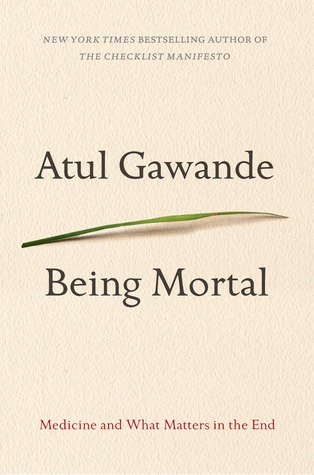
Being Mortal

Being Mortal: Medicine and What Matters in the EndBeing Mortal, by Atul Gawande

Did you know that 75 percent of us will not be able to make decision for ourselves when we reach the end of our lives?

This is such an important book! Physician Atul Gawande tackles the difficult questions of approaching death and how to maintain a life worth living at the end.

Combining medical information, anecdotes, and personal stories of his patients and his own family, Gawande prompts the reader to think about what is important in the end. It's the softer side--nursing home residents caring for animals and small children, or people on hospice clearly expressing to their family members what their quality of life means--that resonated the most with me.

The other day a new study came out, concluding that chemotherapy at end-stage cancer does not extend patients' lives and certainly not their quality of life. That's what this book is about.

This book made me want to have these discussions with my own parents, siblings, spouse, and children. I want to live my life fully all the way to the end.                  


Tuesday, June 2, 2015

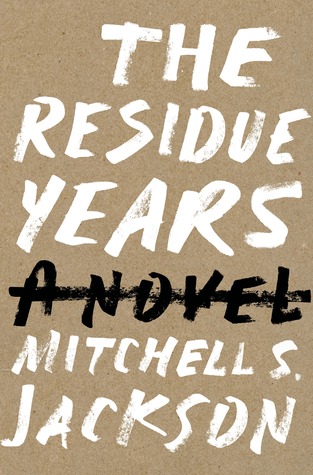
The Residue Years

The Residue YearsThe Residue Years, by Mitchell S. Jackson

I always enjoy reading stories about my hometown or seeing it on film (e.g., Grimm), so that's what drew me to The Residue Years. Our local library system featured it for its "Everybody Reads" program.

But this book represents a different part of Portland than where I grew up (in the predominantly white suburbs). What makes it most interesting is that it's an autobiographical novel, based on the author's own life experiences.

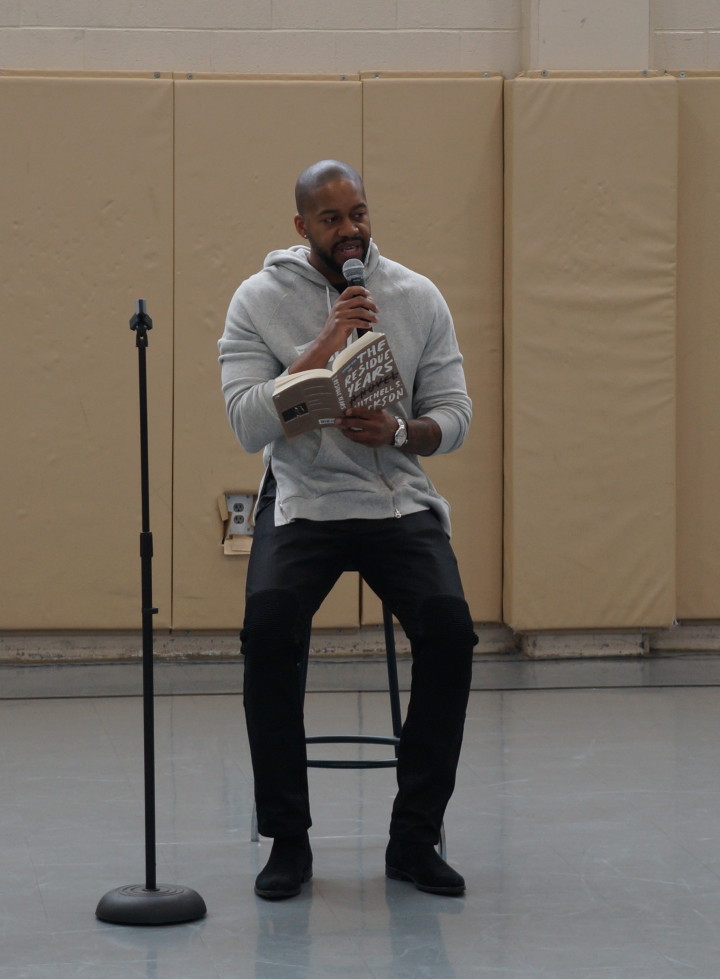
DSC00848 copyGrace is a drug addict, even though she loves her children. She just can't escape the appeal of losing herself (and her troubles) in a haze. And Champ ends up selling drugs, largely because he sees so many people dealing around him...it's the easiest way to make money.

It took me a few chapters to get into this book, but Jackson's writing is beautiful: “She’s been through fire and got a soft spot for folks that seen the flame.”

The Residue Years raises questions of class and privilege. If I had been born and raised in another part of Portland, perhaps to black parents, would I have faced similar obstacles in my path? Probably.

Jackson opens up our city to bring in different perspectives...some of them not always easy to see.

Wednesday, May 27, 2015

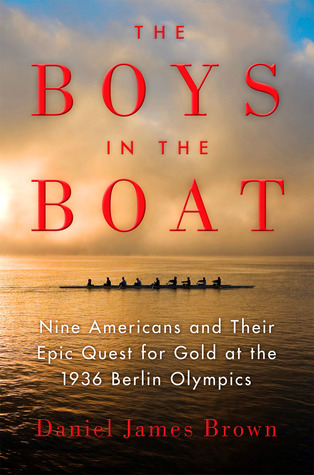
The Boys in the Boat: Nine Americans and Their Epic Quest for Gold at the 1936 Berlin OlympicsThe Boys in the Boat: Nine Americans and Their Epic Quest for Gold at the 1936 Berlin Olympics, by Daniel James Brown

If you'd told me I'd finish this book with tears in my eyes, I never would have believed you. I am not an athlete and I know little about rowing crew...my only brush with rowing was when I was a freshman at Pacific Lutheran University, and a member of the crew team approached me in the cafeteria and asked if I'd be interested in becoming a coxswain. (I am only 5' tall.) I wonder how my life would have been different now if I'd said yes. But I am no athlete, and I doubt I could've stuck it out, after reading about the hard training these rowers have to endure.

Daniel James Brown spins a great tale, starting with the heartbreaking childhood of Joe Rantz, the primary protagonist of this book. He delves into the interesting lives of most of the crew team, as well as head coach Al Ulbrickson and shell (boat) builder, George Pocock. The 1936 University of Washington team mostly came from blue collar workers, in contrast to the more educated teams from the East Coast and California.

The Boys in the Boat takes us from the Dust Bowl to the building of the Hoover Dam, from Eton College in England to eastern Washington, from Seattle and Poughkeepsie to Berlin...to the way Hitler pulled the wool over so many people's eyes, including Avery Brundage. president of the IOC, who refused to believe mounting evidence about the Nazi campaign against the Jews.

It's an inspiring story of a small group of nine men, trained by highly driven and skilled coaches, who beat all the odds and build a perfect team together. Like a skilled novelist, Brown uses the technique of building a perfect boat out of Northwest cedar as an analogy for building a finely tuned crew team out of young men like Joe Rantz, who was a man of true resiliency against the odds:
"The result was that the boat as a whole was under subtle but continual tension caused by the unreleased compression in the skin, something like a drawn bow waiting to be released. This gave it a kind of liveliness, a tendency to spring forward on the catch of the oars in a way that no other design or material could duplicate.
To Pocock, this unflagging resilience--this readiness to bounce back, to keep coming, to persist in the face of resistance--was the magic in cedar, the unseen force that imparted life to the shell. And as far as he was concerned, a shell that did not have life in it was a shell that was unworthy of the young men who gave their hearts to the effort of moving it through the water."
I found this book to be moving and fascinating. The Gold Medal-winning Husky Clipper still survives--in fact, my alma mater appears in the book as it was lent to PLU in Tacoma in the 1960s. Now it's in Washington's Conibear Shellhouse.

A few weeks ago when we attended a Seattle Mariners' game, I saw a street named after Royal Brougham, the legendary columnist in the Seattle Post Intelligencer who chronicled the rise of this team. What an exciting story this was!

Friday, May 8, 2015

A Book of Uncommon Prayer: 100 Celebrations of the Miracle & Muddle of the Ordinary, by Brian Doyle
I got the delicious opportunity to hear author Brian Doyle in Seattle earlier this year. He entertained the packed audience at Seattle University by sharing his colorful writing, telling jokes and laugh-out-loud anecdotes, choking back tears, and entreating us to sing and cry along with him with his sometimes gut-wrenching words. Many of these uncommon prayers drew me in, and I decided to purchase the book.

A few weeks later I decided to use the prayers as my focus for the April A to Z Blogging Challenge. I wrote to Brian and asked his permission to share his writing, and he consented. Each day in April I featured one of these prayers...from homages to doctors, nurses, the pope, the Girl Scouts, IT professionals, proofreaders, and nuns...to angry prayers at Osama Bin Laden and texting drivers...he celebrates the miracle and muddle of ordinary life in a most beautiful way.

Click the link above to read the uncommon prayers I chose to feature. Or if you'd like to learn more about Brian Doyle, check out this video of his appearance at Boston University a few years ago (where he addresses 9/11), and you'll get a flavor of why I liked him so much. The Daily Beast calls him "a writer to be ignored at your own peril."

Wednesday, May 6, 2015

Pope Francis

Pope Francis: Untying the KnotsPope Francis: Untying the Knots, by Paul Vallely

As I wrote recently on my main blog, I recently heard journalist Paul Vallely at the Search for Meaning Book Festival in Seattle; he gave the keynote address. Pope Francis: Untying the Knots is the first in-depth book on Jorge Mario Bergoglio. Vallely wrote it after traveling to Argentina to interview those who knew him well and investigate the claims that the Pope did nothing to prevent the kidnapping and torture of two priests during the Dirty War.
I'm fascinated with Pope Francis' transformation as a young man: he began as an arrogant, dictatorial leader who was also extremely conservative.

Vallely gives great background and insights into the politics of Argentina and the Vatican. In his younger days, he spurned liberation theology (the attempt to interpret Scripture through the plight of the poor) and did indeed prevent the eventually kidnapped priests (who were working in the ghetto) from delivering communion. His detractors say this opened the door for the military junta to kidnap the priests. Vallely discovered that Francis worked valiantly to get them freed after they were kidnapped, and it seems that Francis now has regrets about what he did or did not do. And now not only has he embraced and celebrated liberation theology, but he has also made a huge step toward transparency: he's asked the Vatican to open up its archives on the Dirty War.

The key reason that Pope Francis is the first Jesuit to become Pope is that Jesuits are called to be servants, not leaders. The founder of the Jesuits, Ignatius of Loyala, didn't even want them to be bishops. So that explains why Pope Francis is tackling the job in such an unusual, servant-like way. Being the Pope is like being royalty! He has spurned most of the trappings of Pope royalty, as we've heard since the Council of Cardinals elected him. From paying his own hotel, thinking that his Vatican apartments were way too big, and refusing to wear the fancy robes or read shoes, to washing the feet of the poor, female, and underprivileged, he prefers to be a servant rather than a Catholic king.

Francis views God in a clearly different way than previous popes and many priests...that God is grounded in mercy:
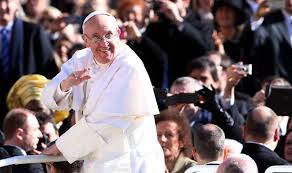
"Mercy, this word changes everything. It is the best word we can hear: it changes the world. A little mercy makes the world less cold and more just... The Lord never gets tired of forgiving; it is we that get tired of asking forgiveness." 
Vallely explores why Bergoglio chose the papal name of Francis.
"Francis is more than a name--it's a plan," said Leonardo Boff, founding father of liberation theology. "It's a plan for a poor Church, one that is close to the people, gospel-centred, loving and protective towards nature which is being devastated today. Saint Francis is the archetype of that type of Church." 
In recent days, Pope Francis continues to promote justice, make waves, and anger conservatives by declaring the gender age gap "a scandal" and preparing to release an encyclical on climate change. Although today Frank Bruni wrote about the absurdity of the Pope's statement in the New York Times that the Vatican's "own kitchen is much too messy for them to call out the ketchup smudges in anybody else’s."
Bruni went on, "He left out the part about women in the Roman Catholic Church not even getting a shot at equal work. Pay isn’t the primary issue when you’re barred from certain positions and profoundly underrepresented in others...For all the remarkable service that the Catholic Church performs, it is one of the world’s dominant and most unshakable patriarchies, with tenets that don’t abet equality."
But still, it's progress given the glacial pace of the Catholic church, and it's angering conservatives who would vastly prefer the church to remain frozen to any kind of progression.

Human rights lawyer Alicia Oliveira, Pope Francis' close friend for 40 years (who died in 2014), said about the Pope:
"He tells me he's having a great time. Every time I speak to him I tell him, 'Be careful Jorge, because the Borgias are still there in the Vatican.' He laughs and says he knows. But he's very, very, very happy. He's having fun with all the people in the Vatican telling him he can't do things--and then doing them."

Wednesday, April 29, 2015

The Circle

The Circle, by Dave Eggers
The CircleAn excellent choice for a book group discussion, The Circle is like a 1984, updated to the Internet age.

Young Mae Holland is thrilled to land a job at The Circle, which is like a combination Facebook/Google...a company for the cool kids. As a main character, she falls a little flat. She's unlikable and no reader could affirm the choices she makes in her life, especially as the story progresses. She is completely desperate for attention and selfish.

But this book is not so much about character development as it is biting satire and a parable for our like-and-tweet-obsessed, voyeuristic culture. As each of The Circle's projects are unveiled, what initially sounds like a good, democratic, society-improving idea turns out to be creepy and sinister, reducing any shred of privacy we have left. Life = work, and work = life. And nothing is secret any more, anywhere.

This book made me question the time I spend on the Internet and how I too have gotten sucked into wanting "likes" or shares. It's about our need for instant gratification, coupled with our desire to know everything about everyone. Sinister and thought-provoking. I recommend it.

Sunday, April 26, 2015

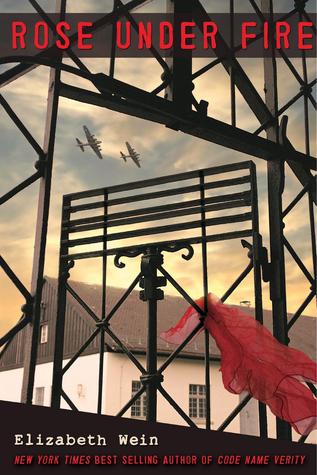
Rose Under Fire

Rose Under Fire (Code Name Verity, #2)Rose Under Fire, by Elizabeth Wein

By the author of my #1 favorite last year Code Name Verity, Rose Under Fire is another novel set in World War II illustrating soul-deep friendships among women. One of the main characters in Code Name Verity appears in Rose Under Fire, but as more of a minor character.

Rose is an American ATA pilot and poet who gets captured by the Nazis and deposited in Ravensbruck, where she befriends Russian, French, and Polish women. She is especially drawn to the "Rabbits," the Polish women who were the subjects of the Nazis' horrific medical experiments.

It's the kind of book that makes you wonder what you would do if you were in similar, horrifying circumstances.

This book focuses more on the Christians and political prisoners in the concentration camps and not as much on the genocide of the Jews...a story that is not as likely to be told.

I didn't love it as much as Code Name Verity, but that book set a high bar...and like that other book, I stayed up into the wee hours to finish it. That is truly the sign of an excellent book!

The Lost Memoirs of Jane Austen

The Lost Memoirs of Jane AustenThe Lost Memoirs of Jane Austen, by Syrie James

Jane Austen imitators abound, especially in recent years, and I am a bit of a snob about them. I found Death Comes to Pemberley by the great P.D. James to be disappointing, for example. So I was surprised by how much I enjoyed The Lost Memoirs of Jane Austen.

I've always enjoyed epistolary novels, so that helps. This book purports to be Austen's lost memoirs and tells about her unrequited great romance. I enjoyed the way she described her close relationship with her sister Cassandra and also her independence.

Based on what actually happened, Syrie James fills in the gaps and takes literary license to create a suitor for the intelligent and lively Jane. I recommend it for Jane Austen lovers!

Friday, April 3, 2015

Believing Cassandra

Believing Cassandra: An Optimist Looks at a Pessimist's World, by Alan AtKisson

As a sustainability communicator, I'm glad I read this book at last. It came highly recommended from my friend and our company's sustainability director. Even though I read the first edition (published several years ago), the concepts are ever fresh.

Alan AtKisson is a true optimist at heart. He reminds us about the Greek myth about Cassandra, who was blessed with the gift of prophecy but cursed because no one would believe the truth she had to share. Can you imagine how that would feel?

And that is the essence of how we need to communicate about the perils facing our planet. When we preach doom and gloom, it's easy for people to turn us off and believe that nothing they can do can possibly help (I often find myself feeling the same way!).

AtKisson has been working in sustainability since 1988 and in 2013 he was inducted into the Sustainability Hall of Fame. Believing Cassandra was his first book, in which he shares how he got into the field along with personal stories of his life's journey, interspersed with data and anecdotes about what people are doing around the world to combat climate change.

His aim is to give hope, and for all of us to find a way to be optimistic about the challenges facing our world. He urges us to break Cassandra's curse by giving people a reason to hope instead of letting the doomsayers take over the messaging. Because if that happens, no one will listen.

This book has already helped me transform my thinking about how to communicate about sustainability, especially to those people who are unconvinced of the need to turn the tide.

Wednesday, April 1, 2015

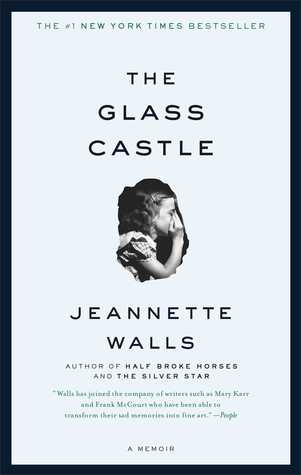
The Glass Castle

The Glass CastleThe Glass Castle, by Jeannette Walls

I first read The Glass Castle soon after it was published in 2006, but as I wrote in my review for another of Walls' books, Half Broke Horses, my book group chose it for March. I loved Half Broke Horses so much that I decided to read The Glass Castle once again!

The story opens with Walls, aged 3, starting a kitchen fire and getting third-degree burns because she was cooking hot dogs and her dress caught fire. At age 3. Hospitalized for several weeks, her parents take her out of the hospital before she has fully healed and has been discharged. And she's right back to cooking hot dogs at the stove, because that's what her parents tell her to do.

Rose Mary Walls (Jeannette's mother) had been raised to be independent, but she took that to an entirely different level. Probably bipolar, Rose Mary wanted to spend all her time making art, not raising children. So the children had to raise themselves. They didn't get groceries for weeks at a time...because Jeannette's dad Rex drank away any money they had, and Rose Mary couldn't be bothered to find a way to feed the kids.

Nomads and rebels, Jeannette's parents took their kids all around the country, and they would flee towns in the middle of the night when her parents were unable to pay their debts. They slept in cardboard boxes and peed and pooped in a hole in the ground until it overflowed.

This book has so many shocking stories...it's unfathomable that her parents would think how they raised their children was okay...but alcoholism and mental illness will do that. All three of the Walls children got out as soon as they could.

Now Walls' mother lives on her property in Virginia (you can get a glimpse of her mom in this youtube video). She is a hoarder, to no one's surprise. Even though her parents provided very little stability in her life, it's clear that Jeannette had a deep, complicated love for both of them.