Showing posts with label spirituality. Show all posts

Tuesday, April 21, 2020

Catching Up: Great Nonfiction Reads

I seem to have read even more nonfiction than fiction in the last several months!


Big Magic: Creative Living Beyond Fear, Elizabeth Gilbert

Yes, it's a bit woo-woo, but it was just what I needed at the right time, as my dear friend Caley knew as she chose it for our book group. I loved the story about Gilbert's idea for a novel, landing with Ann Patchett after she let it go. Gilbert believes that ideas have a life of their own, and they are demanding to be expressed.

“The universe buries strange jewels deep within us all, and then stands back to see if we can find them.”

Her comment that “It might have been done before, but it hasn’t been done by you!” reminds me of my entrepreneurial hero, Marie Forleo, who exhorts her students not to worry if someone else is doing the same thing as you...because you will do it in your own unique way. People don't just hire a service or product...they hire the person behind the creative idea.

Judging from the reviews, people either love or hate this book, and this was also the case with my book group. I loved it, but mostly because I read it at the right time in my life...when I had a creative idea (starting and working on my own business), just urging me to believe in it.

Educated, Tara Westover

This story was so astonishing it seemed almost preposterous, but it certainly demonstrates the power and resilience of the human spirit. Tara Westover was raised in an isolationist Mormon family in remote Idaho. At times it was difficult to read, especially trying to understand her desire to maintain connections with her dysfunctional, violent, and gaslighting family members after she escaped and made a life for herself, but that's what abuse does to a person. A great read, and a great true story.


Getting Started in Consulting, Alan Weiss

A friend who had started her own business recommended this book to me. I found it to be a great start in setting up my own consulting business. I haven't followed everything Weiss recommends (for example, he recommends you mark up your subconsultants by up to 50 percent!), but I used it for the basics. I especially appreciated the way he inserted words of wisdom from other people who had set up their own consulting firms.

It tends to be more male focused, while much of what I've been reading and the people I've been following have a more female-centered approach, but still a valuable resource.


In Pieces, Sally Field

Growing up on "Gidget" and "The Flying Nun," followed by "Norma Rae," "Places in the Heart," and "Steel Magnolias," I've always loved Sally Field, especially playing the matriarch in "Brothers and Sisters" and seeing her impassioned speeches in support of LGBTQIA rights.

I listened to In Pieces on audio so I could hear Field tell her story. I was taken off guard to learn she had been sexually abused by her stepfather...somehow I had not seen any information about that before I read the book. She hated "The Flying Nun" and "Gidget," and Burt Reynolds was a complete tool and waste of space.

Listening to Sally tell her story felt like an old friend sharing her intimacies with me.


Just Mercy: A Story of Justice and Redemption, Bryan Stevenson

I wanted to read Stevenson's book before seeing the movie. Bryan Stevenson is a hero for the neglected, the abused, the convicted without a fair trial, and those who are forgotten on Death Row. Just Mercy relates his stories of working tirelessly on their behalf, combined with facts and historical context about the prison industrial text and racism in this country. I found this book to be tragic, moving, inspiring, and infuriating. Highly recommended.


My Love Story, Tina Turner


Another book I listened to on audio, Tina Turner's memoir begins with heryears she has had to stop touring because of extensive health challenges...but I read that she's publishing another book this year. Tina Turner is a rock star in more ways than one...she has endured horrible hardships in her life, including the suicide of her beloved son a few years ago, yet she still remains hopeful and resilient at age 80.
wedding to the love of her life in Switzerland...and then three weeks after this highly awaited day, she suffered a massive stroke and had to learn how to do everything all over again. She looks back on her life, beginning with her birth as Anna Mae Bullock in Nutbush, Tennessee, and describes her awful existence with the abusive Ike. In her later


Over the Top: A Raw Journey to Self-Love, Jonathan Van Ness

Of course I had to listen to this one on audio. It's Jonathan Van Ness! I love this guy, although I know some people find him a bit hard to bear. He pours his guts out in this memoir, and I loved his raw vulnerability, honesty, and truth. Watching "Queer Eye," what many people would not imagine is that Jonathan Van Ness was pretty damn poor before he landed that gig. Trigger warnings for sexual and drug abuse, drug use, eating disorders, cancer, and homophobia. I love his podcast too ("Getting Curious"), in which he interviews experts on a wide variety of topics...essentially anything that piques his interest.


Shameless: A Sexual Revolution, Nadia Bolz-Weber

I feel extremely lucky that we were at Holden Village when Nadia Bolz-Weber was writing the first drafts of this book, and she workshopped them with us in large sessions. Of course, she's Nadia Bolz-Weber, so even her first drafts were brilliant. Of all the books she's written, this one is my favorite. I have to laugh, reading all the negative reviews on Goodreads, with people claiming her book is not biblical or adhering to Lutheran doctrine, etc. They are completely missing the point.

“It doesn't feel very difficult to draw a direct line between the messages many of us received from the church and the harm we've experienced in our bodies and spirits as a result. So my argument in this book is this: we should not be more loyal to an idea, a doctrine, or an interpretation of a Bible verse than we are to people. If the teachings of the church are harming the bodies and spirits of people, we should rethink those teachings.”

The church has a major problem with sex. Until we solve this problem and embrace the fact that God created sexuality as a gift, not a sin, Christianity will continue to alienate and harm people.

The Sex Lives of Cannibals: Adrift in the Equatorial Pacific, Maarten Troost

Maarten Troost moved to Tarawa, a tiny South Pacific island in the Republic of Kiribati, with his then-girlfriend, now-wife. Travel writing? Count me in! I was intrigued. This was a book group choice, and many found it to be an interesting read. I, however, would not recommend it.

I found Troost to be a whiny, full-of-himself bore who feels sorry for himself, hardly writes anything about his girlfriend's very different experience of the island, and treats the islanders themselves like pariahs. The titles of his books--The Sex Lives of Cannibals, Getting Stoned with Savages, and Headhunters on my Doorstep--are meant to be tongue in cheek, but they speak more of his personality. He never gets to know any of the I-Kiribati or makes much attempt to appreciate anything about living on the island.

After leaving Kiribati, he lands a plum job back at the World Bank. Reading this book reminded me why I prefer to read books by women and people of color. Troost represents exactly the type of privileged, overpublished white guy whose books I do not want to read.


White Fragility: Why It’s So Hard for White People to Talk About Racism, Robin DiAngelo

Every white person needs to read this book, as soon as possible. I have recommended it repeatedly. Until we white people face our "whiteness" problem, we will never be able to begin to fix our own racism. This book is a great start. That is all. 

We Are Displaced, Malala Yousafzai

Malala has written a beautiful collection of essays about others who have been displaced from their countries of origin because of war, terrorism, famine, or other challenges that make it dangerous for them to stay home. 

According to the United Nations, "an unprecedented 70.8 million people around the world have been forced from home by conflict and persecution at the end of 2018. Among them are nearly 30 million refugees, over half of whom are under the age of 18."

These figures are mind-boggling. No one chooses to be a refugee. It's one of the worst things that can happen to a person, or a people. It breaks my heart when Americans, sitting in their comfortable houses with plenty to eat, do not understand that people do not flee here unless they have no other options available. These stories will move you and remind you of how far we have to go as a civilization. 

You Are a Badass: How to Stop Doubting Your Greatness and Start Living an Awesome Life, Jen Sincero

I began listening to this book at just the right time in my life, when I had a serious case of imposter syndrome.

Some may say it's just another self-help book, but I found it helpful. I remember driving down the freeway, shouting out loud "YOU ARE A BADASS!" and it actually felt healing for me.

“You are perfect. To think anything less is as pointless as a river thinking that it’s got too many curves or that it moves too slowly or that its rapids are too rapid. Says who? You’re on a journey with no defined beginning, middle or end. There are no wrong twists and turns. There is just being. And your job is to be as you as you can be. This is why you’re here. To shy away from who you truly are would leave the world you-less. You are the only you there is and ever will be. I repeat, you are the only you there is and ever will be. Do not deny the world its one and only chance to bask in your brilliance.”

“You are loved. Massively. Ferociously. Unconditionally. The Universe is totally freaking out about how awesome you are. It’s got you wrapped in a warm gorilla hug of adoration. It wants to give you everything you desire. It wants you to be happy. It wants you to see what it sees in you.”

If you need a shot in the arm or a boost in your self-esteem, give this book a try. I liked Sincero's funny, flippant style.


Thick and Other Essays, Tressie Cottom McMillan

One (white male) reviewer on Goodreads used the term "firebombing" when describing this book. He thought that McMillan wasn't nice enough, I guess, and how dare she criticize David Brooks? That attitude (Black women need to be nice) is telling, given the fact that firebombing has been used for mass destruction of Black people since the Civil Rights Movement.

This book by sociologist Dr. Tressie Cottom McMillan, contains a number of incisive, insightful essays about race and racism, white people, Black girlhood, academics, sociology, beauty, and other topics. The most powerful essay for me was about the high mortality rate for Black women in labor and childbirth, when McMillan shared her own heartbreaking story. Dr. McMillan is a writer and wise voice to follow.


Untamed, by Glennon Doyle

I loved this book. First of all, if you cannot abide Elizabeth Gilbert or Brene Brown, steer clear. Glennon Doyle is not for everyone.

I first found Doyle when she was getting known as a "mommy blogger," writing about her "littles." (Aside: I hate the term "littles" when referring to one's children!) She was also an evangelical Christian at the time and had a long history of anorexia/bulimia, addiction, and anxiety. She continued to pour her heart out on the web after she learned her husband had been unfaithful. (Talk about being public about what a jerk you are...being unfaithful to a well-known blogger!) Through therapy, she found a way to forgive her husband and wrote about their continuing journey in Love Warrior. Then, while on the road to market that book, she met and fell in love with soccer superstar Abby Wambaugh.

I got to hear Glennon and Abby tell their story on stage a few years ago. It's clear they were made for each other. Now they have formed a co-parenting team with Doyle's ex-husband, Craig.

Untamed is about Glennon's journey back to herself, after a lifetime of trying to please everyone else and becoming the image of what she thought God and her parents wanted her to be. Yet again, this book came along at the right time for me, at the beginning of the coronavirus lockdown. I rarely read books a second time, but I might reread this one.

“When women lose themselves, the world loses its way. We do not need more selfless women. What we need right now is more women who have detoxed themselves so completely from the world's expectations that they are full of nothing but themselves. What we need are women who are full of themselves. A woman who is full of herself knows and trusts herself enough to say and do what must be done. She lets the rest burn.”

The Yellow House, by Sarah M. Broom

Sarah M. Broom's book, The Yellow House, is a story about her family of 12 children, born to Simon and Ivory Mae Broom. Sarah (born as Monique) was only six months old when her father died, leaving Ivory Mae, who did not know how to drive at the time, with several children at home and a rambling, ramshackle house she bought with her own money at a very young age.

It's also a story about New Orleans, specifically New Orleans East, where the yellow house, with a life of its own, stood until it was split in half during Hurricane Katrina.

It's about a family displaced, and about a young writer who can't stay away from New Orleans for long, trying to recover from great losses, even traveling to work in Burundi to grieve and rediscover herself...and seeing many parallels between wartorn Burundi and hurricane-torn New Orleans.

It's about the Black, working-class experience on the outskirts of New Orleans, and the glaringly obvious distinction between the touristy French Quarter. It's about a failure of infrastructure and corrupt leadership, a failed safety net, and the displacement of people who cannot afford to live in New Orleans any longer.

And still, it's a love affair of sorts for New Orleans. All wrapped up in a towering, split-in-two Yellow House.

Monday, September 7, 2015

The Meaning of Mary Magdalene: Discovering the Woman at the Heart of Christianity

The Meaning of Mary Magdalene: Discovering the Woman at the Heart of Christianity, by Cynthia Bourgeault


Mary Magdalene was a prophet, a seer, a disciple to disciples. Great historical reclaiming of this amazing woman. 

Friday, May 8, 2015

A Book of Uncommon Prayer: 100 Celebrations of the Miracle & Muddle of the Ordinary, by Brian Doyle
I got the delicious opportunity to hear author Brian Doyle in Seattle earlier this year. He entertained the packed audience at Seattle University by sharing his colorful writing, telling jokes and laugh-out-loud anecdotes, choking back tears, and entreating us to sing and cry along with him with his sometimes gut-wrenching words. Many of these uncommon prayers drew me in, and I decided to purchase the book.

A few weeks later I decided to use the prayers as my focus for the April A to Z Blogging Challenge. I wrote to Brian and asked his permission to share his writing, and he consented. Each day in April I featured one of these prayers...from homages to doctors, nurses, the pope, the Girl Scouts, IT professionals, proofreaders, and nuns...to angry prayers at Osama Bin Laden and texting drivers...he celebrates the miracle and muddle of ordinary life in a most beautiful way.

Click the link above to read the uncommon prayers I chose to feature. Or if you'd like to learn more about Brian Doyle, check out this video of his appearance at Boston University a few years ago (where he addresses 9/11), and you'll get a flavor of why I liked him so much. The Daily Beast calls him "a writer to be ignored at your own peril."

Monday, December 2, 2013

Talking Taboo: American Christian Women Get Frank About Faith

Talking Taboo: American Christian Women Get Frank About Faith, edited by Erin Lane and Enuma Okoro 


I discovered this book when Nadia Bolz-Weber (author of Pastrix) recommended it on her Facebook page. It's a collection of essays by female Christian leaders under the age of 40 (it's part of a series by young female spiritual leaders). The title immediately caught my attention. These women, many pastors and teachers, share their thoughts on a variety of topics that have been off limits in Christianity. 

Some of the essays by more conservative women wrestle with the teachings of men as the head of the household, women speaking in church or preaching, women as professionals, the decision to live with a partner before marriage, leaving an abusive marriage and being cast out by her church, choosing not to follow in parents' footsteps as a Christian missionary caring for the poor, choosing celibacy, being called to work with refugees, tattoos, freedom without makeup, recovery, dealing with dissatisfaction in one’s marriage, etc. Many of these are even greater taboo topics in conservative Christian circles. We all have our own taboos.

The following essays struck particular notes with me:

"The Gatherer-God: On Motherhood and Prayer," by Micha Boyett…who struggled to find time to pray with young children. She has found that her most contemplative time is when her mind is fuzzy and she has no book before her…when she was breastfeeding, for example. She takes her cue from Christ’s own mother, who twice is described as “pondering” at the work of God in her son. “Why else would such a prayer be mentioned in the Gospels unless to call us to such deep work?”

"Naughty by Nature, Hopeful by Grace," by Enuma Okoro, who confesses that she develops a crush on a close male friend, but through talking to her friends and wrestling with the issue, she comes to peace with it and finds a way to move on without disrupting their friendship (or his marriage). “I am beginning to realize how little the churches of which I have been a part have taught me about the beauty of boundaries and the reality of fine lines.” I admired Okoro's honesty on such a difficult topic.

"Married by Children," by Erin Lane. The author grapples with the decision not to have children, and how unusual that is in the church. We tend to be heavily focused on family and children in our churches.

"High Stakes Whack-a-Mole: Noticing and Naming Sexism in the Church," by Lara Blackwood Pickrel. Pickrel writes about being treated as “less than” as a woman, having comments directed about her appearance because she’s a woman, and being told she’s too sensitive when she notices sexism. That last one is a particularly strong pet peeve of mine!

"Crafting Bonds of Blood," by Patience Perry. The author writes about reclaiming the menstrual and labor rituals and our sensuality. Perry writes, "Imagine if ALL women were validated for their potential to create life as evident in their monthly cycle…I am seeking ways that we can strengthen and reinvigorate women through the common bonds of blood…I’d like to see our society embrace women’s rituals and reconcile our disconnection with creation.” Have you ever heard menstruation or women's reproductive organs mentioned in church?

"The God of Shit Times," by Rachel Marie Stone. This was definitely my favorite title. Stone reclaims the power of profanity after being raised in a family where Christian "ladies" don't swear. When Stone's friend was in cancer treatment, she acknowledged that profanity had a purpose: “In the midst of my frigid and tedious winter, I needed some good profanity to adequately describe how much it all sucked. Sometimes an f-bomb is the exact, right word.” After seeing several close friends through deep, dark times and experiencing them myself, I can relate. Our God is a God of shit times.

"Naming God for Ourselves Amidst Pain and Patriarchy," by Rahiel Tesfamarian. The author changed her imagery of God through her divinity studies. Tesfamarian writes, "The image of my Maker as a ‘soft, still voice’ or ‘gentle whisper’ found in 1 Kings 19 was comforting and reassuring…I have done the hard work of unpacking God for myself. But that responsibility should not fall solely on me as an individual. The church also has a lot of work to do. Will more churches rise to this occasion, commit to being cutting-edge on matters of gender equality, and go where women of faith dare to take them? IS the church ready for a generation of women who are determined to define God on their own terms?” I went through a similar journey myself when I studied feminist theology in college and discovered that God was so much bigger than one gender alone.

“The Silence Behind the Din: Domestic Violence and Homosexuality," by Rev. Sarah C. Jobe. As a chaplain who works with victims of sexual abuse, Jobe reflects that the church does not address sexual assault or domestic violence, even though 30 percent of women are victims. Instead the church condemns homosexuality while ignoring sexual assault and domestic violence. She raises the story of Sodom and Gomorrah and the fact that instead of addressing the issue of rape in the story, this story is used as a weapon against homosexuality. “Will we continue to read the Scriptures according to our taboos around homosexuality and domestic violence, accepting interpretations that maximize violence?”

"No Women Need Apply," by Gina Messina-Dysert. This essay is about the war on women being waged by the Catholic church. Messina-Dysert finds a way to identify as Catholic by realizing she is her own agent and will not allow anyone to tell her what her religious status is based on her refusal to accept discrimination. She is also raising a daughter who will fight for women’s ordination in the Catholic church. This essay is important to me because I am married to a Catholic and belong to a Lutheran-Catholic community. 

"The Pastor Has Breasts," by Rebecca Clark. Clark writes about pregnancy, body awareness, sexuality, and breastfeeding in a highly public environment that is church. This essay made me think about what the unique journey female pastors must take and how the standards can be very different for them. When I was breastfeeding my children, I did so in church during worship. I'm grateful no one ever questioned this. As a pastor, I no doubt would have been under a microscope and judged for doing this.

"Created for Pleasure," by Kate Ott. Ott became aware of masturbation as a blessing from God. She notes her "aha moment" of learning in a seminary sexual ethics class that the clitoris is the only body part created solely through pleasure. She asks, ”What would the world look like if every girl and woman knew exactly how her body worked? If it was respected and her enjoyment of sexual behaviors was as important as that of her partner…that would be the world God intended…God created us to experience pleasure for the sake of knowing and loving ourselves better, so that we can know and love others better, including God.” What a wonderful way to look at our bodies and sexuality...and a wake-up call for the church.

"Flesh and Blood," by Ashley-Anne Masters. As a chaplain caring for women who have experienced pregnancy loss, Masters writes about pregnancy loss not being openly addressed in the church. She also writes about her own loss conducting a baptism right after experiencing her own miscarriage and how she shared her own grief with strangers. I received some support from church friends when I experienced several miscarriages, but it wasn't something I felt comfortable talking about. 

"What Do Cinderella, Lilies, and the Cross Have in Common," by Carol Howard Merritt. Merritt had to ask for a salary raise at her first church and experienced condescension from church members about her husband being the stay-at-home dad. Money, especially needing to ask for it, is a huge taboo topic for pastors...especially female ones.

"My Secret Buddhist Life," by Mary Allison Cates. After Cates was told she didn't look like a minister, she rediscovered her body through yoga and nose piercing. She also wrote about how she is feeling more comfortable with her female pastor body now that she is older and her body attracts less attention.

I liked the wide variety of perspectives in this collection, and this book made me long to sit around a dinner table with all these women and get to hear their stories personally.

Wednesday, September 25, 2013

The Year of Living Biblically: One Man's Humble Quest to Follow the Bible as Literally as Possible

The Year of Living Biblically: One Man's Humble Quest to Follow the Bible as Literally as Possible
The Year of Living Biblically: One Man's Humble Quest to Follow the Bible as Literally as Possible, by A.J. Jacobs

I finally got around to reading this book, one of the grand one-year experiments that I am fascinated by. (I actually first read the book that Jacobs' protege wrote, The Unlikely Disciple: A Sinner's Semester at America's Holiest University.) After reading the entire encyclopedia from start to finish during one year, A.J. Jacobs spent a year of his life trying to follow as many biblical tenets as possible. As a secular Jew, he didn't really know much about the Bible, but this made him an especially objective participant in trying to follow the bible's many rules.

One of the first things I was delighted to discover, a few pages in, was that A.J. Jacobs consulted a number of biblical and theological experts during his journey...and one of the subject matter experts he consulted several times was Rev. Eldon Richards, a retired pastor who calls himself a "pastor out to pasture," and who happens to be the mentor and friend of my own Lutheran pastor. So that was very exciting! Pastor Eldon says all sorts of inspirational things such as (discussing that some people will not take him seriously in his quest, because he's not a practicing Jew or Christian): "You just have to tell them that you have a hunger and a thirst, and you may not sit at the same banquet table as them, but you have a hunger and a thirst. So they shouldn't judge you."

Jacobs focuses most of his year on the Old Testament, since it does have more rules, and only a few months on the New Testament. He cataloged a long list of archaic commandments and laws to follow. He stopped shaving his face and cutting his beard, resulting in this unruly hair growth:


He and his poor, long-suffering wife were trying to get pregnant again during this biblical year, and the task of being fruitful and multiplying was made more difficult by the fact that he couldn't touch her for several days after her menstrual period. (I think I would have gotten so fed up with him during that year that it would have taken any romance right out of the marriage!) He carried a little stool around everywhere he went so he wouldn't have to occupy the space where a menstruating woman had previously sat. One of the best anecdotes in the book was when he returned home one day to be informed that his (menstruating) wife had sat on every single sitting space in his apartment, just to annoy him! 

Jacobs in full biblical regalia
Some laws, of course, were impossible to follow (such as sacrificing animals and offspring!), although he gets as close as he can to doing these things. He (sort of) stones an adulterer, dresses all in white, writes the Ten Commandments on his door frame, gets a slave intern (the aforementioned protege, Kevin Roose), tries to discipline his son more effectively and honor his parents, does what he can to avoid lying, tries to stop coveting other people's things (a constant challenge), wears clothing without mixed fibers, changes his eating habits, circumcises his sons (not just because of the experiment, but mostly because of his Jewish heritage), tithes 1/10th of his income, visits the Holy Land, consults with many spiritual advisers, explores a wide variety of biblical rule-following traditions (Amish, hardcore creationists, polygamists, Orthodox Jews, Jehovah Witnesses, etc.), and prays and meditates, among other activities. 

At first it felt like he was just going along with the motions, but eventually he actually felt something when he would pray. He wasn't sure what exactly, but something: 


“I'm still agnostic. But in the words of Elton Richards, I'm now a reverent agnostic. Which isn't an oxymoron, I swear. I now believe that whether or not there's a God, there is such a thing as sacredness. Life is sacred. The Sabbath can be a sacred day. Prayer can be a sacred ritual. There is something transcendent, beyond the everyday. It's possible that humans created this sacredness ourselves, but that doesn't take away from its power or importance.” 

Throughout this experiment, Jacobs proves the point that you cannot really understand the true spirit of the Bible simply by following rules and laws. I felt that the focus on the New Testament was seriously lacking in this book...along with the words and actions of Jesus that instruct us to love our neighbors, practice radical compassion, care for the poor and downtrodden, and stand up for justice. 

Here's an example: one day he and his wife ran into an old college acquaintance of hers in a coffee shop. After they had caught up for several minutes, the woman mentioned getting the families together again in the future. Jacobs, called to be totally honest and not lie, flatly said he wasn't interested...he already had enough friends and he doesn't want any new ones. His wife, of course, was horrified and embarrassed. Part of me wished I had the guts and honesty to speak this kind of thing aloud (because I must admit that I have often thought this myself--I am very selective about my friendships!), but on the other hand, would this have been what Jesus would have done? No way. 

Even though Jacobs recognizes that life is sacred in the end, he doesn't really seem to grasp the prophecy of Jesus through his little experiment. But maybe that is the point after all. The bible, taken at face value and literally, is worthless without the spirit and grace flowing throughout it.

Friday, September 17, 2010

Bringing Up Geeks: Otherwise known as genuine, enthusiastic, empowered kids

Bringing Up Geeks: How to Protect Your Kid's Childhood in a Grow-Up-Too-Fast WorldBringing Up Geeks: How to Protect Your Kid's Childhood in a Grow-Up-Too-Fast World by Marybeth Hicks

My rating: 4 of 5 stars

The subtitle of this book is "How to Protect Your Kid's Childhood in a Grow-Up-Too-Fast World," and defines geeks as Genuine, Enthusiastic, Empowered Kids.

This book made me feel validated as a parent. As if we are actually doing not too badly as we decide how to raise our children.

The author, a parenting columnist and mom of 4, has 10 rules for raising "geeks":

Rule 1: Raise a brainiac

Rule 2: Raise a sheltered kid

Rule 3: Raise an uncommon kid

Rule 4: Raise a kid adults like

Rule 5: Raise a late bloomer

Rule 6: Raise a team player

Rule 7: Raise a true friend

Rule 8: Raise a homebody

Rule 9: Raise a principled kid

Rule 10: Raise a faithful kid

Nonreligious readers should probably avoid Rule 10, because it talks about the importance of spirituality in a child's life...and how that helps them cope with some of the stresses of being a "geek."

While I was reading this book, we were dealing with an issue my middle schooler told me about (regarding some inappropriate behavior going on at school), and we made the decision to talk to the teacher about it. My middle schooler was not happy about this, but I explained to him that sometimes doing the right thing is not the popular thing.

I highly recommend this book for parents who want to raise children who are individuals and do not just go along with the hip and cool kid culture.


View all my reviews

Tuesday, September 14, 2010

Angry Conversations with God: A Snarky but Spiritual Memoir

Angry Conversations with God: A Snarky but Authentic Spiritual Memoir Angry Conversations with God: A Snarky but Authentic Spiritual Memoir by Susan E. Isaacs


My rating:
4 of 5 stars

I discovered Susan Isaacs when I googled her name, expecting to find the web site of the novelist Susan Isaacs (not the same one). Instead I stumbled upon Isaacs' great blog (
Gray Matter). She is one funny and snarky Christian.

At the church I attend (which is a Lutheran-Catholic community, one of a kind in the world as far as we know), we like to joke about the fact that Catholics are not the only ones who experience guilt. Susan Isaacs' "snarky but authentic spiritual memoir" proves that point. Isaacs was raised as a Lutheran and over her adulthood sampled a wide variety of Christian flavors, which in the end turned her off to Christianity, at least for a time.

The book cleverly intersperses Isaacs' accounting of her childhood (including that awful Kirsten in her Lutheran school who made her life a misery!) and subsequent life trying to make it as an actress and writer, with her "marriage counseling" sessions with God (the Father), and the saintly Norwegian Jesus in that famous painting.

Along the way, she dabbles with anorexia, bulimia, and alcoholism, and as she says, she became a slut (by sleeping with two guys). She feels great guilt over everything, even for feeling guilty--because, after all, aren't her troubles middle-class white girl troubles? I CAN relate to that--feeling guilty about feeling sorry for myself.

I too grew up Lutheran, belonged to the Luther League (even though my Luther League was full of nerds like me, unlike Isaacs I loved it!), and my freshman year at PLU dabbled in 7/11 churches full of "James Dobson mix tapes" until I attended a bible study, where the other girls told me my Jewish friend would go to hell. That was when I walked out and never went back.

I too had a dark night of the soul when I had to throw out "God the Father" and a spiritual moment when I realized I needed to replace him with a different version of God (which, in my mind, was a Creator God).

I enjoyed this book--Isaacs has a refreshing style of writing--but I did feel sorry for her, wasting so many years on SO MUCH GUILT...and on an angry "God the Father." I can understand how she felt empty being with men who didn't really understand her, but to feel so much guilt about premarital sex? As even God said (in her counseling session), 40-year-old women are not meant to be celibate!

I also couldn't relate to Isaacs' image of a marriage with God, and feeling that she needed to love God more than anything or anyone else in her life. I know that's what a lot of (especially fundamentalist) Christian churches say, but for me, I experience God through the love of others. They are not mutually exclusive. God is not a big white man up in the sky for me--he is not someone I'm married to or need to go to marriage counseling with. I don't need to love God more than I love my husband, children, family, and friends. They are one in the same, for me.

Ultimately, though, Isaacs' memoir is funny, snarky, and real. I'm glad she found happiness and contentment (in the epilogue)!

View all my reviews >>

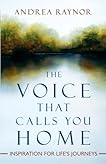
The Voice That Calls You Home: Inspiration for Life's Journeys

The Voice That Calls You Home: Inspiration for Life's Journeys The Voice That Calls You Home: Inspiration for Life's Journeys by Andrea Raynor


My rating:
5 of 5 stars

I got the opportunity to read this book before it is officially published, because the author's publicist sent me an advance review copy. Raynor has worked as a chaplain, both in hospice care and caring for people during the 9/11 recovery efforts, and she is a cancer survivor. Knowing these facts, I was intrigued. What I didn't expect, however, was how much this book would deeply move me.

In recent years, I rarely keep books that I've read unless I think I will read them again someday. Even then, I try to keep books moving along--I will post them to Paperbackswap.com or give them away instead of keeping them on our many bookshelves--but this one is a keeper and a loaner. I can already think of a long list of people who would appreciate this book.

I found myself needing to pause occasionally at the end of the chapter, because not only did the book make me cry several times (and I admit, I'm very emotional since becoming a mother, especially after surviving the NICU for 4 months), but I also needed to absorb the power of the message.

Much to Mike's disgust, I'm sure, I've dog-eared this book several times to mark the passages that touched me most. I'm not sure whether I can get him to read it now, since he will be so disturbed by the dog ears!

Raynor opens her book with the story of a Buddhist tale about a woman named Kisagotami who is grieving the loss of her baby. She goes to the Buddha, begging him to bring her son back to life. The wise Buddha tells her that he will do what she asks, if she will do one thing. She must return to her village and get a single mustard seed from one household that has not known death. Kisagotami returns to the Buddha without a mustard seed, but she has experienced healing because she heard the stories of her community and realized she was not alone.

After becoming an advocate of family-centered health care and coming to know so many people who have grieved their children's deaths, two incidents in the book highlighted the need for continuing work and education in this area. Raynor describes the death of an older Italian man, and the nurse who told her that she was going to ask the family to leave so she could prepare the body. Raynor suggested to the nurse that they ask the man's wife to stay (something she herself would never have asked for because of her limited English and respect for medical authority). The nurse assented, and she and Raynor watched as the wife cleaned her husband's body so tenderly and lovingly that they both felt blessed by the experience. But it never would have occurred to the nurse to ask the wife to participate. It reminds me of the time that an NICU nurse proudly informed me, when we arrived in the unit, that she had given tiny baby Christopher his first bath, even though she knew we would be arriving soon...and forever eliminating our opportunity to experience that first milestone. (And consequently she will forever remain in my mind as "that nurse.")

Another moment desperately needing family- and patient-centered care was when Raynor went in for her second lumpectomy and was treated like she didn't even exist, by the technician, nurse, anesthesiologist, and surgeon. When she woke up from surgery, the nurse was plying her with coffee so she'd be able to get up and leave. When Raynor found out that she would have to have a mastectomy, she wisely sought a new surgeon and a new hospital, one that would care for her spirit as well as her body.

Raynor's memoir is unusual in the sense that she was raised in a warm, loving family environment, by wise, spiritual parents. She appears to be the kind of person who has always had a transcendental connection with spirits and death. Her parents used to have seances when she was young, and her Methodist father had a unique ability to connect with spirits. Her father's mother died when he was young, and Raynor's daughter was born on the anniversary of her grandmother's death, transforming that day for her father into a happy, doubly meaningful one.

In the dark weeks and months after 9/11, Raynor volunteered at Ground Zero, going down to New York at night time, after spending all day doing hospice work and caring for her own family. When bodies or fragments of bodies were recovered, she would say prayers over them in the morgue. She ministered to the police officers, fire fighters, and other workers, and she tried to find meaning, somehow, in the wasteland.

She writes openly and honestly about her own battle with breast cancer, and the circle of friends and family who lifted her up during her darkest days. She writes about well-meaning friends who tell her "at least you're here" or "at least you've got your health" without understanding how discounting that is. (I can remember similar feelings when Chris was in the NICU, or when I had miscarriages.) I loved the story of her "buzz party" surrounded by women friends, and how her son asked her whether she'd rather die of cancer or be bald for a little while so she could stay with him.

Raynor writes beautifully of her experiences seeing people through to the other side. Although she witnesses and supports the deepest kind of pain and grief imaginable, she tries to find meaning and mystery in this sadness and suffering. She does not offer easy answers or platitudes, but suggests that the best we can do is to keep calling out for help, and "keep believing that there is One who hears, and to be open to the ways in which God comes to us. As the German theologian Dorothee Solle wrote: 'God has no other hands than ours.'" What I valued most about this book were the underlying themes of being God for one another and helping each other through the scariest moments of life.

The ultimate message of Raynor's book is that we can be each other's angels on earth. The most important thing we can do for someone who is suffering is to be present, to listen, and to be present again. We cannot take away another person's pain and we should not even try, but we can be present. We can be ministers to each other, and be the voice that calls each other home.

View all my reviews >>