Showing posts with label memoir. Show all posts

Thursday, February 10, 2022

The 1619 Project, The Girls in the Wild Fig Tree, and Here We Go Again

The 1619 Project, a New Origin Story, by Nikole Hannah-Jones

I described this book to a friend by likening it to Howard Zinn's People's History of the United States, but focusing exclusively on the way race and racism have drenched and contaminated every aspect of American life, culture, politics, etc.

This book began from an essay by Dr. Nikole Hannah-Jones about how all of our country's sins and structures grew out of that first ship carrying enslaved people from Africa in 1619. Next came The New York Times Magazine’s award-winning “1619 Project," containing 18 essays and 36 poems and works of fiction that explore the legacy of slavery in America. 

The 1619 Project ignited the fears about critical race theory, and over half of states have made some attempt, some successful, to ban it in schools. That's the first reason you should read it!

The second reason to read it is to unlearn everything you have learned about race and racism in the United States and abroad. This is a new origin story for America. Must read. Outstanding and eye opening.

The Girls in the Wild Fig Tree, by Nice Leng'ete

I happened across this book when browsing for a new audio book. I loved it! Nice is a human rights activist who was born in Kenya as a member of the Maasai tribe. When it came time for her to be "cut" (female genital mutilation), she ran away. She knew that girls who got the cut always dropped out of school, and she wanted an education. 

She had to face down her family members and leaders from her tribe to assert her right to get an education and avoid the cut. She went onto become a vocal advocate for girls to have an alternative rite of passage to FGM. She had great sadness in her life, but she has a fierce passion and she learned how to use it.

Nice has an incredibly engaging voice and spirit. She is magnificent! 


Here We Go Again: My Life in Television, by Betty White

I sought this out on audio because I wanted to hear Betty White's voice again! It was published in 1995, so it has aged quite a bit and doesn't include anything from her last 26 years in television.

But for a child of the '60s, I enjoyed hearing about how she got her start in television. She was such a spirited trailblazer!! I also loved hearing about her love story with her beloved Alan and how she met him on Password. 

This won't win any literary prizes, but it was a pleasant listen to hear Betty once again!


Sunday, May 17, 2020

Two books by Black women: Kindred and Tough Love

Kindred, by Octavia Butler

How have I never read Octavia Butler until now, for goodness sake?!?!? My dear friend Catherine gave me this book for Mother's Day, and it was the perfect distraction for a pandemic. It had been on my "to read" list for a while, but when it landed in my lap, I had to read it.

I have always loved time travel, but this time travel is far more serious than usual. Written and set in 1976, this book finds 26-year-old Dana suddenly flung back into the antebellum south to save a drowning white boy. It turns out that he is one of her ancestors. Over the course of several years (in the time travel south) or days in the present, Dana ends up back on this plantation over and over again, each time to rescue clueless and careless Rufus.

It goes about as you might imagine. Slavery was brutal and tragic and soul-destroying...but many enslaved people found the strength to attempt escape or stay captive and endure. Apparently Butler's critics said she softened the horrors of slavery in this book, but it was horrible enough to understand that it was often far worse.

I will remember this book for a very long time to come, and I stayed up late into the evening to finish it. So worth the read!

Tough Love, by Susan Rice

While I was reading Kindred, I was listening to Tough Love by Dr. Susan Rice. Tough Love represents the life of a highly successful, highly educated Black woman, 44 years after Kindred was written by another Black woman.

Truth be told, I didn't know much about Susan Rice until I heard her interviewed on a podcast. She struck me as incredibly bright, funny, and capable, so when I saw she'd written a book I was immediately intrigued.

Most people associate her with Benghazi, because unfortunately she was tasked with being the spokesperson for the Obama administration after the Benghazi attack and then she became a scapegoat for the right wing, in spite of all investigations finding that she did nothing wrong. She continues to be vilified by Republicans to this day. She's now on the list of potential candidates for VP for Joe Biden. Her parents were both highly accomplished educators...her dad was a Cornell professor and her mom was an educational policy scholar who helped design the Pell Grant system. Rice was raised amidst the political and policy world, mentored by Madeleine Albright, headed to Stanford for her undergrad degree (to the chagrin of her parents, who wanted her to go to Harvard), studied at Oxford on a Rhodes scholarship, and earned her M.Phil and Ph.D. there. She worked on the Dukakis campaign and served for Bill Clinton and Barack Obama while they were presidents.

This book is packed with stories about her childhood and young adulthood, diplomacy and policy work here and overseas, and family. She married her college sweetheart and has two children--one a diehard liberal and the other a Trump supporter. Yikes!

Susan Rice is a rock star, and I enjoyed learning about all she's accomplished in her time on earth.

Saturday, May 2, 2020

Real American: A Memoir

Real American: A Memoir, by Julie Lythcott-Haims

Real American is a book, like Ta-Nehisi Coates' Between the World and Me, or Robin DiAngelo's White Fragility, that all white people need to read...or even better, listen to, which is how I absorbed this beautiful and heart-breaking memoir. (And of course, people of color should read it too!)

If you are white, it will make you profoundly uncomfortable (a condition we white people need to feel a whole hell of a lot more often), and it will make you think and view the world differently and more sensitively, like the other two books.

Lythcott-Haims was born to a white (British) mother and a Black American father. All her life she never felt like she fit into either race, beginning in kindergarten when her friend asked, "What are you?" In high school, her best friend described her love of "Gone With the Wind" and told Lythcott-Haims that she thought of her as "normal," but not Black. Her locker was defaced with racist slurs on her birthday. These are just a few of the racist acts she experienced.

After being raised in an academically focused, cosmopolitan family, she attended Stanford University in the 1980s before earning her law degree at Harvard and an MFA in writing from the California College of the Arts. After working as the Dean of first-years at Stanford for 10 years, she wrote How to Raise an Adult, an acclaimed treatise on how not to helicopter parent.

Much of the book is about her growing-up years, and it's a love letter to her parents, neither of whom had easy lives. Her father eventually became a prominent pediatrician and served in Jimmy Carter's administration...but he made the decision to raise his family in predominantly white circles, which had a huge impact on her throughout her life.

In the second half of the book, as she ends up marrying a white Jewish man and becomes a mother herself, she comes to grips with her low self-esteem and lack of a sense of belonging. She elaborates on the constant microaggressions she and other people of color receive every day...even (and especially?) at fundraisers for her children's school when a few people show up in costume and blackface.

I urge you to read this unforgettable book. I just happened across it when I was looking for an audio book for a car journey, and I think it needs a lot more attention!

Monday, January 20, 2020

When They Call You a Terrorist: A Black Lives Matter Memoir


When They Call You a Terrorist: A Black Lives Matter Memoir, by Patrisse Khan-Cullors and Asha Bandele

My Lutheran-Catholic church Spirit of Grace has been studying two books: When They Call You a Terrorist: A Black Lives Matter Memoir by artist, organizer and freedom fighter Patrice Khan-Cullors and minister, theologian, and civil rights leader Howard Thurman's Jesus and the Disinherited. I just finished When They Call You a Terrorist today on Dr. Martin Luther King Jr. Day.

I was particularly inspired to pick it up when I saw a friend open our worship service by sharing her thoughts of the book. This white woman has worked for social justice her whole life and has traveled to the important sites of the civil rights era in the south. As she described what she learned in this book, she was brought to tears. I knew I had to read it right away.

When They Call You a Terrorist is the beautifully written story of a Black girl growing up in inner-city Los Angeles by a hard-working single mother and a father and stepfather who come and go. Although raised in poverty, she and her family fiercely love and protect each other...as they have to do big time when her beloved brother Monte is repeatedly targeted, beaten, and incarcerated for his mental illness.

Patrisse emerges from her childhood with a feisty, creative, and confident spirit in spite of the fact that she sees firsthand the destructive damages of racism every single day. And when Trayvon Martin and so many other Black children and adults are gunned down and their assassins go free, she knows she has to act. With a team of other Black women and people in the queer community, she starts a movement, #BlackLivesMatter. Not only do they fight against racism and hatred, but they also take care of each other's mental, physical, and spiritual health because so many of them have been traumatized by racist violence on a daily basis.

And what do these committed activists get for their efforts? They are called terrorists. They are terrorized by police departments. They are killed in their cars. They are the ones called racist.

Today, on this holiday when we celebrate the greatest civil rights leader of our time, people will be sharing his quotes freely on social media. But as author/activist Ally Henny wrote on Facebook,

"You might be seeing a lot of activists telling you not to quote King today
unless you’re standing up for black folks every day.
Maybe you’ve been confused or bothered by this. “But shouldn’t we be honoring Dr. King today?,” you might be asking yourself. And yes. We absolutely should be honoring King today.
The issue is that, if you’re out here sharing quotes and whatever else by Dr. King, but you’re not living the principles that he stood for, your “commemoration”
rings hollow to the black folks in your circles.
Today is a “safe” day to talk about race. It’s a day where a lot of folks want to get sentimental and talk about race in America as if we’ve somehow arrived. We haven’t.
What are you going to say the next time white supremacists march?
What are you going to say when the next black persons is murdered by the police?
What are you going to say when black kids in your community
 are trying to learn in inferior environments?
What are you going to say when your coworker does something racist?
What are you going to say when your company, church, school, or other institution that says they’re “committed to diversity” but they’re an unsafe place for black, brown, and indigenous people?
Posting a quote, picture, or speech doesn’t mean crap if you’re not out here every other day fighting white supremacy."

Here's who needs to read When They Call You a Terrorist:
  • Every white person who thinks we've transcended racism.
  • Every person who has ever uttered "All Lives Matter" or "Blue Lives Matter."
  • Every white person who thinks they are "woke."
  • Every white person who has never had to fear their children being arrested for just existing.
  • Every white person who looks away when #BlackLivesMatter comes up in discussion.
  • Every white person who voted for Trump.
  • Every white person who voted for anyone else but Trump.
  • Every white person who thinks that police are always fair and friendly.
  • Every white person who believes people should "pull themselves up by their bootstraps."
  • Every white person who thinks there are more drugs in Black neighborhoods than white ones.
  • Every white person who thinks that people in prison deserve to be there.
  • Every white person who lives in a predominantly white neighborhood or community.
  • Every white person who has never been pulled over and questioned because of their race.
  • Every white person who can conveniently stop thinking about racism when they want to.
  • Every white person.
And everyone else too. 

Patrisse Khan-Cullors is our modern-day MLK Jr., and she needs to be heard. What will you do on this day of commemoration? I am going to start by listening.


Tuesday, November 12, 2019

Becoming

Becoming, by Michelle Obama
I read Becoming earlier this year, and I loved it. Although her family did not have much money or resources, she grew up in a family of deep, consistent love on the south side of Chicago, rich in memories.

A few of my most vivid memories of the book were when she learned how to play the piano from her strict Great Aunt Robbie, who had a strict protocol about lessons. The students could not move ahead in the book until they had accomplished a particular song. This struck Michelle as particularly boring and unfair, so she played ahead in the book and got in trouble. I could relate so much to Michelle's reaction, chafing at this rule! Some rules are meant to be broken!


At her first piano recital, Michelle learned her family's circumstances were not like everyone else's. Great Aunt Robbie's piano had a chip to mark the middle C. Sitting at a beautiful grand piano for the recital, Michelle panicked because she could not find middle C. Great Aunt Bobbie came to her rescue, pointing out the C. 
“Maybe she knew that the disparities of the world had just quietly shown themselves to me for the first time." 
She and her brother Cliff shared a small bedroom, jerry-rigged into two extremely small areas. Her parents were strict but she always felt loved, and although her dad became ill with multiple sclerosis, he continued to work tremendously hard for as long as he could. Michelle followed in her parents' hard-working footsteps, committed to academic excellence, and earned two Ivy League degrees.

I admired her self-awareness when she realized, working as a corporate lawyer, that this life was not for her. After meeting a much more laid-back and carefree Barack and losing her best friend from college to cancer, she reinvented herself and her career. I enjoyed learning about Michelle's professional life and aspirations--we heard so little about the real Michelle when she was first lady.
“For me, becoming isn’t about arriving somewhere or achieving a certain aim. I see it instead as forward motion, a means of evolving, a way to reach continuously toward a better self. The journey doesn’t end.” 
Reading about Michelle and Barack's courtship made me smile...they were so different in so many ways, but alike in the ways that mattered. She is still not a fan of politics, but knew that he was meant to be a public servant and would not stand in his way.
Getting ready to hear from Michelle in Portland!
Michelle writes extensively about parenting and balancing her work and family life, especially as Barack was away from home more frequently because of his political career. She was determined to protect her daughters from the privileged life as much as she possibly could.

She also writes about the value of female friendship, which is also sacred to me.
“Friendships between women, as any woman will tell you, are built of a thousand small kindnesses...swapped back and forth and over again.” 
And about how challenging it can be to be a woman:
“Women endure entire lifetimes of these indignities—in the form of catcalls, groping, assault, oppression. These things injure us. They sap our strength. Some of the cuts are so small they’re barely visible. Others are huge and gaping, leaving scars that never heal. Either way, they accumulate. We carry them everywhere, to and from school and work, at home while raising our children, at our places of worship, anytime we try to advance.”
And where "when they go low, we go high" came from:
“Since childhood, I’d believed it was important to speak out against bullies while also not stooping to their level. And to be clear, we were now up against a bully, a man who among other things demeaned minorities and expressed contempt for prisoners of war, challenging the dignity of our country with practically his every utterance. I wanted Americans to understand that words matter—that the hateful language they heard coming from their TVs did not reflect the true spirit of our country and that we could vote against it. It was dignity I wanted to make an appeal for—the idea that as a nation we might hold on to the core thing that had sustained my family, going back generations. Dignity had always gotten us through. It was a choice, and not always the easy one, but the people I respected most in life made it again and again, every single day. There was a motto Barack and I tried to live by, and I offered it that night from the stage: When they go low, we go high.”
I closed the book feeling inspired by the life she has lived, much of it so publicly, and sad for what we have lost as a country.
With my heart full!
My husband and I were extremely lucky to be able to see Michelle when she came to Portland, and it was a night I will never forget! I wiped away tears many times. She designed her book tour so it was a conversation with someone who knew her well. In Portland, it was with Sam Kass, the Obamas' personal chef starting in Chicago, and who designed the garden and healthy cooking at the White House with her. It was funny, poignant, endearing, and intimate, and it filled my heart!
“For every door that’s been opened to me, I’ve tried to open my door to others. And here is what I have to say, finally: Let’s invite one another in. Maybe then we can begin to fear less, to make fewer wrong assumptions, to let go of the biases and stereotypes that unnecessarily divide us. Maybe we can better embrace the ways we are the same. It’s not about being perfect. It’s not about where you get yourself in the end. There’s power in allowing yourself to be known and heard, in owning your unique story, in using your authentic voice. And there’s grace in being willing to know and hear others. This, for me, is how we become.”
 #NaBloPoMo2019

Sunday, September 11, 2016

The Rainbow Comes and Goes

The Rainbow Comes and Goes: A Mother and Son On Life, Love, and LossThe Rainbow Comes and Goes: A Mother and Son on Life, Love, and Loss, by Anderson Cooper and Gloria Vanderbilt

The Rainbow Comes and Goes is a poignant, thoughtful exchange of memories and insights between a mother and son. As a mother to three boys, and daughter to aging parents, I love the idea of mother and son writing emails to each other, getting to know one another on a much deeper level.

It's hard to imagine the depth of loneliness and despair Gloria Vanderbilt must have felt in her sad childhood. Far more valuable than riches is the love and compassion of at least one parent, if not two. Both Vanderbilt and Cooper are fatherless...Vanderbilt's father died when she was a baby, and Cooper lost his as a young man. And Cooper's only brother and Vanderbilt's son committed suicide when he was in his 20s. Such a sad family story.

When Gloria Vanderbilt experienced a serious illness at age 91, they decided to take advantage of her remaining time left to get to know each other on a deeper level and share information they'd never revealed to each other. The result is a beautiful collection of email letters, prompting me to want to interview my own parents and mother-in-law and document their experiences, and also to write more of my own story for my children to have after I am gone.

Monday, August 8, 2016

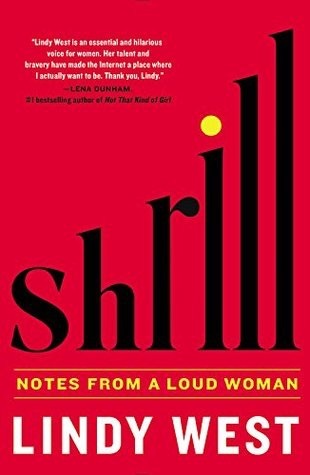
Shrill: Notes from a Loud Woman

Shrill: Notes from a Loud Womanby Lindy West

I first became aware of Lindy West when I happened across this article in Jezebel, "How to Stop Being Shy in 13 Easy Steps," a brief excerpt from Shrill. (In the book, this article is a whole, hilarious chapter.) I think I've read other essays by West, but her name wasn't familiar to me. Now I'm a big fan.

West has been writing in the blogosphere for years, first for The Stranger in Seattle and also for Jezebel and now The Guardian. She's loud, sassy, confident, funny, and brutally honest. She writes about what it's like to live fat (her word), be a comic in an environment much more friendly to men, fight sexism, have an abortion, aim for her higher self, and fall in love. She has stood up to nasty, woman-hating, fat-shaming trolls on Twitter and on the comedy circuit, both online and also in live interviews.

The most troubling thing about reading this book is realizing how much hateful crap women online face every day. In fact, while I was in the middle of this book, I read that famous feminist blogger Jessica Valenti has gone offline social media because the trolls were threatening to rape her five-year-old daughter! Such a dark side to the Internet, when men feel safe taking out their anger on women online. This has to stop, although I'm not sure what the solution is if outright, public misogyny is allowed in the comedy clubs. As West learned when she faced her troll head on, most trolls are pathetic white men who are jealous of confident women.

I often need to take a break when reading books of essays, but not this one. Lindy West is a funny, bright, brave, and passionate badass, and she's found a new fan in me.

Wednesday, March 30, 2016

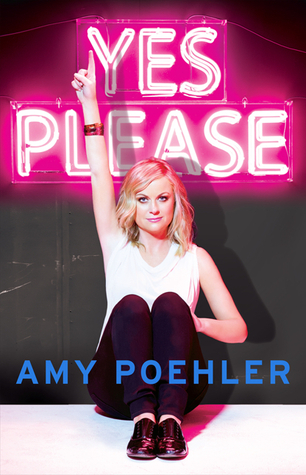
Yes Please

Yes PleaseYes Please, by Amy Poehler

Reading Yes Please is like sitting down with your wackiest, most honest friend, the one who tells you everything, warts and all.

I’d recommend this book to fans of comedy, SNL, Parks and Recreation, or Poehler’s movies…others might find it less interesting.

I enjoyed reading Poehler’s stories of her childhood (she was deeply cherished and told she could do anything, not a surprise when you see her optimism and cheerful spirit). She discusses her early career in comedy and how she made her big break onto SNL. She also talks of motherhood and being a professional woman, albeit a celebrity one. She speaks fondly of her friends, colleagues, and ex-husband Will Arnett…and warmly tells stories of making and tearfully ending Parks and Rec.

And she confessed one of her shameful secrets…being part of a SNL sketch that made fun of a disabled child, and trying to make amends after she learned what she had done. Honest to a fault though, she waited awhile after being called on the situation before she could ask apologize and ask for forgiveness.

I love Poehler’s brand of feminism: being unabashedly proud to be female; upbeat, optimistic, and fun; and embracing male allies, but not taking any shit, which she continues to espouse in her Amy Poehler’s Smart Girls videos and Facebook page. And best of all, like me, she cherishes her women friends, as important to our souls and spirits as food and water are to our bodies. She lives out this philosophy in her work (Leslie Knope’s Galentine’s Day and adoration of her best friend) and in her life (as she writes about one of her main collaborators, Tina Fey).

So if this sounds appealing to you, sit down with your imaginary best friend Amy for some funny, poignant, and touching tales.

Wednesday, November 25, 2015

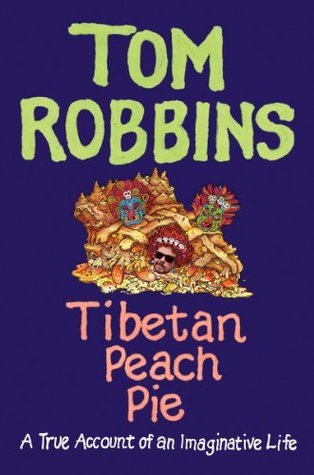
Tibetan Peach Pie

Tibetan Peach Pie: A True Account of an Imaginative LifeTibetan Peach Pie, by Tom Robbins

If you've ever read Tom Robbins, you're well familiar with his gallivanting across the field of language and experience. This book, which he insists is not a memoir, is no different.

It's a series of hilarious essays on a variety of topics. Robbins' stories of his childhood growing up in Appalachia, through his growing-up years and colorful relationships, are highly entertaining. Drugs, of course, made things more colorful!

This book made me want to go back and re-read some of the novels that made such an impression on me in my 20s...Jitterbug Perfume, Another Roadside Attraction, and Even Cowgirls Get the Blues. Robbins is now in his 80s, but his voice and perspective (not to mention his author photo!) still seem to be in his 30s. Now he lives in quaint La Conner, Washington, a delightful spot. Wouldn't it be fun to go see him at a reading?

"A True Account of an Imaginative Life" of Tommy Rotten describes this book well.

Jacket photo

Robbins in 2014--he's aged pretty well, actually! 

Tuesday, September 22, 2015

Rapture Practice

Rapture PracticeRapture Practice, by Aaron Hartzler

Aaron Hartzler grew up in an extremely conservative, religious home, where just disagreeing with his parents was tantamount to being seduced by Satan. For example, one day the young, fashion-conscious Aaron wanted to go to church without wearing socks with his Sperry Topsiders (because that's what you do). His father commanded him to put socks on, and Aaron resisted...and thus ensued a huge power struggle, with his father pouring on the guilt and shame...over a lack of socks.

I had to laugh when I read that Aaron got in trouble at his conservative Christian school for singing a Sandi Patty song! She was popular back when I hung out with some evangelical Christians in college, but apparently she fell from grace after she got divorced and had an affair.

Aaron is gay, but as a child he didn't know that. He felt himself drawn to fashion, theater, and music...and he also felt himself desperately torn between wanting to please his parents and wanting to express himself, in spite of his strict evangelical upbringing.

I found myself getting really annoyed with his parents, who on one occasion told Aaron he couldn't be in his school play because he had pop music tapes in his car (or some such extreme infringement of their rules). The book ends before Aaron comes out to his parents, so we don't learn how they reacted to the news...but follow-up research indicates he's still in touch with them, so that's good.

My book group enjoyed this book, and many commented on how Aaron deeply loved his parents in spite of their deep religiosity and their strict demands on him.

I'm curious to read Part 2 of his memoir!

Friday, August 14, 2015

A Queer and Pleasant Danger

A Queer and Pleasant Danger: The True Story of a Nice Jewish Boy Who Joins the Church of Scientology and Leaves Twelve Years Later to Become the Lovely Lady She is TodayA Queer and Pleasant Danger: The True Story of a Nice Jewish Boy Who Joins the Church of Scientology and Leaves Twelve Years Later to Become the Lovely Lady She is Today, by Kate Bornstein 

What a wild ride Kate Bornstein's life has been. Born and raised as a man, Bornstein's journey through scientology--including her marriage and fatherhood--seems stranger than fiction. As another reviewer wrote, "In the first six pages we learn that Kate is an anorexic Jewish sadomasochist lesbian transsexual woman with chronic lymphocytic leukemia and lots of tattoos and a bionic knee and borderline personality disorder, who writes porn and used to be in a cult and wants to be cremated when she dies and managed to dodge the Vietnam war through a psychiatric deferment, all of which is considerably more than I know about the majority of my friends."

Bornstein reveals more than we really want to know about her, and she does it in an endearing, disarming way...but I have to laugh when she says she's writing this book for her (estranged) granddaughter! What person would want to read about his or her grandparent's S&M adventures? I thought the scientology bits were interesting and eye-opening, and I have to admire Kate's gutsy spirit. 

Tuesday, June 2, 2015

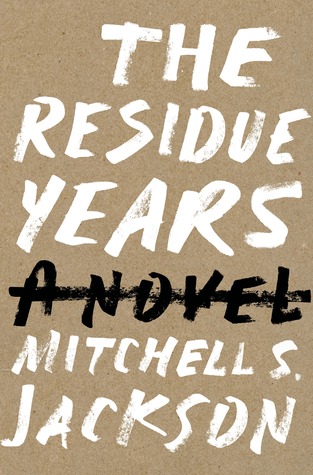
The Residue Years

The Residue YearsThe Residue Years, by Mitchell S. Jackson

I always enjoy reading stories about my hometown or seeing it on film (e.g., Grimm), so that's what drew me to The Residue Years. Our local library system featured it for its "Everybody Reads" program.

But this book represents a different part of Portland than where I grew up (in the predominantly white suburbs). What makes it most interesting is that it's an autobiographical novel, based on the author's own life experiences.

DSC00848 copyGrace is a drug addict, even though she loves her children. She just can't escape the appeal of losing herself (and her troubles) in a haze. And Champ ends up selling drugs, largely because he sees so many people dealing around him...it's the easiest way to make money.

It took me a few chapters to get into this book, but Jackson's writing is beautiful: “She’s been through fire and got a soft spot for folks that seen the flame.”

The Residue Years raises questions of class and privilege. If I had been born and raised in another part of Portland, perhaps to black parents, would I have faced similar obstacles in my path? Probably.

Jackson opens up our city to bring in different perspectives...some of them not always easy to see.

Wednesday, April 1, 2015

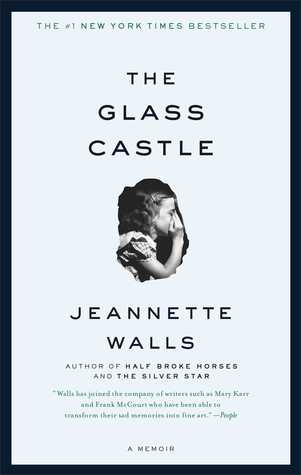
The Glass Castle

The Glass CastleThe Glass Castle, by Jeannette Walls

I first read The Glass Castle soon after it was published in 2006, but as I wrote in my review for another of Walls' books, Half Broke Horses, my book group chose it for March. I loved Half Broke Horses so much that I decided to read The Glass Castle once again!

The story opens with Walls, aged 3, starting a kitchen fire and getting third-degree burns because she was cooking hot dogs and her dress caught fire. At age 3. Hospitalized for several weeks, her parents take her out of the hospital before she has fully healed and has been discharged. And she's right back to cooking hot dogs at the stove, because that's what her parents tell her to do.

Rose Mary Walls (Jeannette's mother) had been raised to be independent, but she took that to an entirely different level. Probably bipolar, Rose Mary wanted to spend all her time making art, not raising children. So the children had to raise themselves. They didn't get groceries for weeks at a time...because Jeannette's dad Rex drank away any money they had, and Rose Mary couldn't be bothered to find a way to feed the kids.

Nomads and rebels, Jeannette's parents took their kids all around the country, and they would flee towns in the middle of the night when her parents were unable to pay their debts. They slept in cardboard boxes and peed and pooped in a hole in the ground until it overflowed.

This book has so many shocking stories...it's unfathomable that her parents would think how they raised their children was okay...but alcoholism and mental illness will do that. All three of the Walls children got out as soon as they could.

Now Walls' mother lives on her property in Virginia (you can get a glimpse of her mom in this youtube video). She is a hoarder, to no one's surprise. Even though her parents provided very little stability in her life, it's clear that Jeannette had a deep, complicated love for both of them.

Monday, November 24, 2014

Tiny Beautiful Things

Tiny Beautiful Things: Advice on Love and Life from Dear Sugar, by Cheryl Strayed

You know those books that stun you and make you marvel at the beauty of the writing? This is that kind of book. But it's not for the faint-hearted or for anyone who doesn't like salty language.

Acclaimed author Cheryl Strayed, who wrote Wild (link to my review), wrote an advice column called "Dear Sugar" for The Rumpus for a few years. When she began writing, she described herself as having the “by-the-book common sense of Dear Abby and the earnest spiritual cheesiness of Cary Tennis and the butt-pluggy irreverence of Dan Savage and the closeted Upper East Side nymphomania of Miss Manners.” Yes, that fits well. It's just as much raw, honest memoir as advice columns.

Letters to Dear Sugar range from people trying to decide whether to stay with their partners to others who don't know how to handle their partners' sexual desires. One woman wrote in to ask about whether she should try to have a child, while others expressed confusion about whether it was okay not to have a child.

In every case, Sugar responds in the most loving, kind way she can...like your closest, most honest and compassionate friend. Honest is the key word here; sometimes it's tough love, such as the letter from a privileged young person complaining about her parents not being willing to pay off her college loans. On other occasions, Strayed shares candidly about her own sex life and relationships.

Here's another example: a man overheard his close friends talking about his relationship with a woman they didn't think was particularly good for him. Understandably, he felt betrayed and upset. Sugar responds empathetically, but then shares her own similar story and explains that his friends were not discussing his love life to be mean, but because they care about him.

Strayed is heartfelt, honest, and authentic in her responses. In one column, someone writes in with a simple but vague question: "WTF, WTF, WTF? I'm asking this question as it applies to everything every day." In response, Sugar shares her experience of her grandfather sexually abusing her. In so many of these columns, she guts herself to bear her soul.

Strayed made me cry many times, mostly when she shares memories of her dead mother...such as in her title essay, "Tiny Beautiful Things," when she offers advice to her 20-something self.

In one letter, a woman writes about her 6-month-old daughter with a brain tumor and how she questions God's existence...how can God exist if her baby is allowed to die? Even though Strayed is a professed atheist ("I don't even believe in God") and wonders who the hell she is to respond to the letter, she does respond in the most beautiful, graceful way imaginable. Here's an excerpt:
"What if you allowed your God to exist in the simple words of compassion others offer to you? What if faith is the way it feels to lay your hand on your daughter’s sacred body? What if the greatest beauty of the day is the shaft of sunlight through your window? What if the worst thing happened and you rose anyway? What if you trusted in the human scale? What if you listened harder to the story of the man on the cross who found a way to endure his suffering than to the one about the impossible magic of the Messiah? Would you see the miracle in that?"
You can read Sugar's columns online on the Rumpus blog, as I've shared, but I encourage you to read it as a book. You can read them in bite-size chunks so you can savor them slowly. And as it's Thanksgiving week, I direct you to Dear Sugar's Thanksgiving column (not in the book), in which she shares 94 things to be grateful for, collected from her readers. I plan to read this post gradually and savor it throughout the week!

I will leave you with a few great quotes from Dear Sugar:
“It is not so incomprehensible as you pretend, sweet pea. Love is the feeling we have for those we care deeply about and hold in high regard. It can be light as the hug we give a friend or heavy as the sacrifices we make for our children. It can be romantic, platonic, familial, fleeting, everlasting, conditional, unconditional, imbued with sorrow, stoked by sex, sullied by abuse, amplified by kindness, twisted by betrayal, deepened by time, darkened by difficulty, leavened by generosity, nourished by humor and “loaded with promises and commitments” that we may or may not want or keep.
The best thing you can possibly do with your life is to tackle the motherfucking shit out of it.” 
“The useless days will add up to something. The shitty waitressing jobs. The hours writing in your journal. The long meandering walks. The hours reading poetry and story collections and novels and dead people’s diaries and wondering about sex and God and whether you should shave under your arms or not. These things are your becoming.” 
"You will learn a lot about yourself if you stretch in the direction of goodness, of bigness, of kindness, of forgiveness, of emotional bravery. Be a warrior for love.”
“Forgiveness doesn't sit there like a pretty boy in a bar. Forgiveness is the old fat guy you have to haul up a hill.” 
“But the reality is we often become our kindest, most ethical selves only by seeing what it feels like to be a selfish jackass first.” 
“We are all entitled to our opinions and religious beliefs, but we are not entitled to make shit up and then use the shit we made up to oppress other people.”
“I can’t tell you what to do. No one can. But as the mother of two children, I can tell you what most moms will: that mothering is absurdly hard and profoundly sweet. Like the best thing you ever did. Like if you think you want to have a baby, you probably should.
I say this in spite of the fact that children are giant endless suck machines. They don’t give a whit if you need to sleep or eat or pee or get your work done or go out to a party naked and oiled up in a homemade Alice B. Toklas mask. They take everything. They will bring you the furthest edge of your personality and abso-fucking-lutely to your knees.
They will also give you everything back. Not just all they take, but many of the things you lost before they came along as well.” 
 “The place of true healing is a fierce place. It's a giant place. it's a place of monstrous beauty and endless dark and glimmering light.” 
“One Christmas at the very beginning of your twenties when your mother gives you a warm coat that she saved for months to buy, don’t look at her skeptically after she tells you she thought the coat was perfect for you. Don’t hold it up and say it’s longer than you like your coats to be and too puffy and possibly even too warm. Your mother will be dead by spring. That coat will be the last gift she gave you. You will regret the small thing you didn’t say for the rest of your life.
Say thank you.” 
Loved this book. 

Thursday, October 30, 2014

A House in the Sky

A House in the SkyA House in the Sky, by Amanda Lindhout & Sara Corbett

This is sure to be near the top of my list of the year's top nonfiction reads. Canadian Amanda Lindhout grew up in a dysfunctional family and escaped by poring through National Geographic magazines, dreaming about exciting adventures.

When she grew up, instead of going to college, she opted to work for several months as a waitress at high-end restaurants and save all of her money...and then spend everything she'd earned on several months of travel. Soon she began taking photographs in the hopes of funding more travel. In addition to more "secure" countries, she also ventured to Pakistan, Afghanistan, Syria, and Sudan and worked in Bagdad for an Iranian broadcasting company. She became addicted to travel...and the more daring and dangerous, the better.

Then in 2008, she decided to go to Somalia, the most dangerous country in the world (at least, at the time), primarily because no one else was going there and she wanted her big break. She convinced her Australian ex-boyfriend Nigel to go with her. Crazy? Yes! Naive? Completely. But she didn't deserve to get kidnapped, gang raped, and tortured. In spite of it all, she was able to forgive her captors and after her release after 460 days, she founded a nonprofit foundation, the Global Enrichment Foundation, to provide university opportunities to women in Somalia. (See accomplishments at right) She's since returned to Somalia a couple of times.

She and Nigel converted to Islam in the hopes of it protecting them, although it didn't really. I was particularly touched by the poignant interactions Lindhout had...exchanging notes and handmade gifts with her co-captive Nigel on Christmas, a desperate and tender encounter she had with a woman in a burkha on the day she and Nigel tried to escape (unsuccessfully), and the rare times she got to speak to her mother.

Lindhout doesn't always come across well--especially in her traveling days before the kidnapping--but her bravery is phenomenal. She kept herself grounded by meditating on hope. The book is beautifully written, and I'm surmising that is cowriter Sara Corbett's doing. It's been optioned for a movie, and Rooney Mara will portray Lindhout.

The saddest thing about this book, in the end, is that after all they endured together, Amanda Lindhout and Nigel are no longer in contact. Nigel wrote his own book with his sister, and it was highly critical of Lindhout and her family. They've fallen out and lost their shared connection through the greatest crisis of their lives.

Highly gripping, educational, and inspirational. I strongly recommend it!

Sunday, August 10, 2014

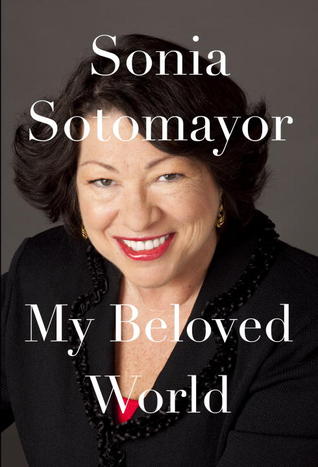
My Beloved World

My Beloved WorldMy Beloved World, by Sonia Sotomayor

What a phenomenal woman! I never would have guessed that someone so accomplished--reaching the top rung of her field at a fairly young age--would start her life with such large obstacles. She had an alcoholic father, was raised by a hard-working single mother in poverty, and continues to struggle from anxiety. In this memoir, she opens up and shares her stories from a young age...from when she was first diagnosed with juvenile diabetes and had to start giving herself daily injections...to talking about how her marriage failed. She decided to write a book because "People who live in difficult circumstances need to know that happy endings are possible."

She revealed more about herself than typical for a Supreme Court justice and knew she might be judged harshly for some of her choices, but she made this decision consciously to offer comfort, and maybe inspiration, by showing that an "ordinary person, with strengths and weaknesses like anyone else, has managed an extraordinary journey."

From an early age, she chafed against injustice...beginning with Catholic school, where she reflected that "I accepted what the Sisters taught in religion class: that God is loving, merciful, charitable, forgiving. That message didn't jibe with adults smacking kids." The nuns also criticized working mothers, which angered Sotomayor because her own mother worked long hours in a couple of jobs to send Sonia and her brother to that private school. This passion for justice fed her desire to become a judge, and after she became a judge she dreamed of becoming a Supreme Court justice.

Even though she has accomplished amazing things in life, she has not done it without carrying along a load of doubts. From her school days well into her professional career, she wrote about settling into new places or positions before jumping in with both feet. In college, she didn't want to join a club in her first year until she had gotten the lay of the land.

I love Sotomayor's views on mentors and friends: "Whenever I make a new friend, my mind goes naturally to the question, what can I learn from this person? There are very few people in the world whom you can't learn something from, but even rarer are those souls who can reveal whole worlds to you if you observe them carefully." From her far-flung Dominican family from childhood, to her current family of close friends and relatives, Sotomayor highly values close relationships with others. Although she never had children, she has a special affinity for them and has close bonds with countless godchildren. She has a special relationship with her niece was an early preemie.

Living with diabetes her whole life has given Sotomayor a wise, deep appreciation for life:
"I've lived most of my life inescapably aware that it is precious and finite. The reality of diabetes always lurked in the back of my mind, and early on I accepted the probably that I would die young. There was no point fretting about it; I have never worried about what I can't control. But nor could I waste what time I had; some inner metronome has continued to set a beat I am unable to refuse. Now diabetes has become more manageable, and I no longer fear falling short in the tally of years. But the habit of living as if in the shadow of death has remained with me, and I consider that, too a gift." 
I share her philosophy of every experience containing a lesson or a blessing:
"With every friend I've known, in every situation I've encountered, I have found something to learn. From a task as simple as boiling water, you can learn a worthwhile lesson. There is no experience that can't avail something useful, be it only the discipline to manage adversity. With luck, there will be plenty of time ahead for me to continue growing and learning, many more stories to tell before I can begin to say definitively who I am as a judge."
Although I had a hard time sinking into this memoir at first, it was well worth the effort!

Sunday, July 6, 2014

Free Spirit: Growing Up on the Road and Off the Grid

Free Spirit : growing up on the road and off the gridFree Spirit: Growing Up on the Road and Off the Grid, by Joshua Safran

When I first chose this book, I thought Joshua Safran was one of the Safran Foer brothers. I'd read Everything Is Illuminated by Jonathan Safran Foer, and later on read Moonwalking with Einstein by Joshua Foer. From what I can tell, there is no relation whatsoever, but "Safran" must be a relatively common Jewish name (as is "Joshua"). I'm so glad I found this book anyway!

Joshua Safran, an award-winning attorney who has committed his career to combatting domestic violence, tells the story of his childhood. This book was born when he represented a battered woman who had been serving life in prison for killing her batterer. This case resonated with him, as he realized he had a story to tell about his own experiences.

Safran's mom with her
feminist artist friends in San Francisco
Safran's mother ("Claudia") was a counterculture feminist artist/activist, and when he was four years old, they left Haight Ashbury in San Francisco and hit the road. He was raised in an extremely open, permissive home and "homeschooled." He heard his mother having sex with her lovers. He felt inadequate because he didn't have a vagina. They hitchhiked all around the west coast (mostly in Washington state), constantly seeking a true intentional community--utopia. Safran's village of parents were not necessarily related to him--he had a few positive role models along the way, but none of them were ideal. Many of his childhood experiences made me squirm with discomfort...being bullied after he puts himself in a regular school, being completely separated from his mother and nearly sliding down a mountainside or drowned at a hippie festival, or careening up a mountain with a drunk driver (his stepdad).

Safran as a child
But as much as his mother was proudly independent and strident in many ways, she ended up with loser after loser. (His father wasn't actively in the picture.) The last one--who she married--was physically abusive. Safran observed the abuse and felt humiliated for not supporting his mother and stopping her attacker. This book, more than any other I've read, describes well what it's like to be in a home full of domestic violence.

Joshua Safran constantly yearned for a "normal life," but wasn't able to find this until he'd graduated from college, married someone who also was raised in a hippie home, reconnected with Judaism, and creates his own family.


Now he's a practicing Orthodox Jew, husband and father, and attorney. He's written the story of his childhood with his mom's permission. It's a story of redemption and discovery in spite of a very difficult beginning.

This book brought me to tears at the end...especially this paragraph:
"People sometimes ask me: If you could do your childhood all over again, would you grow up in the cushy suburbs you always dreamed of? And I always give a complicated answer. As a father, I have done everything in my power to give my children the stable, secure, and comfortable childhood I never had. But I also recognize that while my early life was difficult, I received an unconventional and powerful education that taught me self-reliance, righteousness, and empathy like no other. In the end, I would rather slog back down those trails at my mother's side again. There are many ways to judge a mother, but I think the best way is to look at the man her son grew up to be." 
As a mother of three sons who sometimes doubts her own parenting strategies and patience (who doesn't?), this is reassuring and touching. And the way Safran has dedicated his work to helping women who are unable to help themselves is the most inspiring of all.

If you're interested in knowing more about Joshua Safran's story, take a look at this video presentation of him talking at Google:


I'm a hippie at heart, but this book shows the dark side of living off the grid and on the edge of mainstream culture...especially for children. Safran is already working on a sequel and his mother, Claudia Miriam Reed, is writing her own book. You can view her spoken word poetry about domestic violence here.

Friday, June 13, 2014

House of Prayer No. 2

House of Prayer No. 2: A Writer's Journey HomeHouse of Prayer No. 2, by Mark Richard

Clearly, Mark Richard has a gift for writing. The end of this book made it all worth while for me, but my mind wandered a bit along the way. Perhaps I'm getting too old or shallow.

I found it awkward that the book starts out in third person and then goes into second person, making the narrator appear detached...as if he's observing his disaster of a life from afar, absolving himself of any responsibility. As a child, he's labeled as "special" because of his deformed hips and spends a great deal of time in charity hospitals.

It's a wonder he made it to adulthood, with some of the risks he took. It's almost as if he didn't feel his life was worth preserving...having faced his crippling hip problems and a dysfunctional family.

By the time he becomes a writer, he's also worked in a variety of odd jobs...on a fishing boat, painting houses, as a radio DJ, photographer, journalist, bartender, and almost a pastor.

The book traverses over his life in a scattershot way. We don't learn much about his writing career or his marriage. I enjoyed the end of the book the most--when he helps build the "House of Prayer."

Although the book was lyrically written, I guess I was looking for something more compelling.

Monday, December 2, 2013

Talking Taboo: American Christian Women Get Frank About Faith

Talking Taboo: American Christian Women Get Frank About Faith, edited by Erin Lane and Enuma Okoro 


I discovered this book when Nadia Bolz-Weber (author of Pastrix) recommended it on her Facebook page. It's a collection of essays by female Christian leaders under the age of 40 (it's part of a series by young female spiritual leaders). The title immediately caught my attention. These women, many pastors and teachers, share their thoughts on a variety of topics that have been off limits in Christianity. 

Some of the essays by more conservative women wrestle with the teachings of men as the head of the household, women speaking in church or preaching, women as professionals, the decision to live with a partner before marriage, leaving an abusive marriage and being cast out by her church, choosing not to follow in parents' footsteps as a Christian missionary caring for the poor, choosing celibacy, being called to work with refugees, tattoos, freedom without makeup, recovery, dealing with dissatisfaction in one’s marriage, etc. Many of these are even greater taboo topics in conservative Christian circles. We all have our own taboos.

The following essays struck particular notes with me:

"The Gatherer-God: On Motherhood and Prayer," by Micha Boyett…who struggled to find time to pray with young children. She has found that her most contemplative time is when her mind is fuzzy and she has no book before her…when she was breastfeeding, for example. She takes her cue from Christ’s own mother, who twice is described as “pondering” at the work of God in her son. “Why else would such a prayer be mentioned in the Gospels unless to call us to such deep work?”

"Naughty by Nature, Hopeful by Grace," by Enuma Okoro, who confesses that she develops a crush on a close male friend, but through talking to her friends and wrestling with the issue, she comes to peace with it and finds a way to move on without disrupting their friendship (or his marriage). “I am beginning to realize how little the churches of which I have been a part have taught me about the beauty of boundaries and the reality of fine lines.” I admired Okoro's honesty on such a difficult topic.

"Married by Children," by Erin Lane. The author grapples with the decision not to have children, and how unusual that is in the church. We tend to be heavily focused on family and children in our churches.

"High Stakes Whack-a-Mole: Noticing and Naming Sexism in the Church," by Lara Blackwood Pickrel. Pickrel writes about being treated as “less than” as a woman, having comments directed about her appearance because she’s a woman, and being told she’s too sensitive when she notices sexism. That last one is a particularly strong pet peeve of mine!

"Crafting Bonds of Blood," by Patience Perry. The author writes about reclaiming the menstrual and labor rituals and our sensuality. Perry writes, "Imagine if ALL women were validated for their potential to create life as evident in their monthly cycle…I am seeking ways that we can strengthen and reinvigorate women through the common bonds of blood…I’d like to see our society embrace women’s rituals and reconcile our disconnection with creation.” Have you ever heard menstruation or women's reproductive organs mentioned in church?

"The God of Shit Times," by Rachel Marie Stone. This was definitely my favorite title. Stone reclaims the power of profanity after being raised in a family where Christian "ladies" don't swear. When Stone's friend was in cancer treatment, she acknowledged that profanity had a purpose: “In the midst of my frigid and tedious winter, I needed some good profanity to adequately describe how much it all sucked. Sometimes an f-bomb is the exact, right word.” After seeing several close friends through deep, dark times and experiencing them myself, I can relate. Our God is a God of shit times.

"Naming God for Ourselves Amidst Pain and Patriarchy," by Rahiel Tesfamarian. The author changed her imagery of God through her divinity studies. Tesfamarian writes, "The image of my Maker as a ‘soft, still voice’ or ‘gentle whisper’ found in 1 Kings 19 was comforting and reassuring…I have done the hard work of unpacking God for myself. But that responsibility should not fall solely on me as an individual. The church also has a lot of work to do. Will more churches rise to this occasion, commit to being cutting-edge on matters of gender equality, and go where women of faith dare to take them? IS the church ready for a generation of women who are determined to define God on their own terms?” I went through a similar journey myself when I studied feminist theology in college and discovered that God was so much bigger than one gender alone.

“The Silence Behind the Din: Domestic Violence and Homosexuality," by Rev. Sarah C. Jobe. As a chaplain who works with victims of sexual abuse, Jobe reflects that the church does not address sexual assault or domestic violence, even though 30 percent of women are victims. Instead the church condemns homosexuality while ignoring sexual assault and domestic violence. She raises the story of Sodom and Gomorrah and the fact that instead of addressing the issue of rape in the story, this story is used as a weapon against homosexuality. “Will we continue to read the Scriptures according to our taboos around homosexuality and domestic violence, accepting interpretations that maximize violence?”

"No Women Need Apply," by Gina Messina-Dysert. This essay is about the war on women being waged by the Catholic church. Messina-Dysert finds a way to identify as Catholic by realizing she is her own agent and will not allow anyone to tell her what her religious status is based on her refusal to accept discrimination. She is also raising a daughter who will fight for women’s ordination in the Catholic church. This essay is important to me because I am married to a Catholic and belong to a Lutheran-Catholic community. 

"The Pastor Has Breasts," by Rebecca Clark. Clark writes about pregnancy, body awareness, sexuality, and breastfeeding in a highly public environment that is church. This essay made me think about what the unique journey female pastors must take and how the standards can be very different for them. When I was breastfeeding my children, I did so in church during worship. I'm grateful no one ever questioned this. As a pastor, I no doubt would have been under a microscope and judged for doing this.

"Created for Pleasure," by Kate Ott. Ott became aware of masturbation as a blessing from God. She notes her "aha moment" of learning in a seminary sexual ethics class that the clitoris is the only body part created solely through pleasure. She asks, ”What would the world look like if every girl and woman knew exactly how her body worked? If it was respected and her enjoyment of sexual behaviors was as important as that of her partner…that would be the world God intended…God created us to experience pleasure for the sake of knowing and loving ourselves better, so that we can know and love others better, including God.” What a wonderful way to look at our bodies and sexuality...and a wake-up call for the church.

"Flesh and Blood," by Ashley-Anne Masters. As a chaplain caring for women who have experienced pregnancy loss, Masters writes about pregnancy loss not being openly addressed in the church. She also writes about her own loss conducting a baptism right after experiencing her own miscarriage and how she shared her own grief with strangers. I received some support from church friends when I experienced several miscarriages, but it wasn't something I felt comfortable talking about. 

"What Do Cinderella, Lilies, and the Cross Have in Common," by Carol Howard Merritt. Merritt had to ask for a salary raise at her first church and experienced condescension from church members about her husband being the stay-at-home dad. Money, especially needing to ask for it, is a huge taboo topic for pastors...especially female ones.

"My Secret Buddhist Life," by Mary Allison Cates. After Cates was told she didn't look like a minister, she rediscovered her body through yoga and nose piercing. She also wrote about how she is feeling more comfortable with her female pastor body now that she is older and her body attracts less attention.

I liked the wide variety of perspectives in this collection, and this book made me long to sit around a dinner table with all these women and get to hear their stories personally.

Friday, November 1, 2013

Orange Is the New Black

Orange is the New Black: My Year in a Women's PrisonOrange Is the New Black: My Year in a Women's Prison, by Piper Kerman

I'm completely hooked on the Netflix series "Orange Is the New Black," so I was anxious to read the memoir that is the basis for the show. I'd heard an interview with Piper Kerman on "Fresh Air" several months ago, so I already knew that the book is notably different than the show.

Here's the plot in a nutshell if you're not familiar with the show. Rich, Smith-educated white girl smuggles drug money for her girlfriend. Ten years later, after she has reinvented her life and gone to the other side (she's engaged to a man), the feds show up at her door. She has to go to prison for 15 months (13 months with time off for good behavior) because of the mistake she made as a young woman.

She serves her time in Danbury Prison in Connecticut, and toward the end of her sentence she gets transferred to even worse places--Oklahoma City and Chicago. While in prison, she makes friends and learns how to survive.

Here's what is most different about the book and show, and what I preferred:

  • When she first arrives at Danbury, many of the other prisoners reached out to her and helped her. Not so in the show, at least not right away. Win: book.
  • In the show, we learn the back stories (and actually see them) of the other prisoners. In the book, this rarely happens. It's mostly about Kerman's experience alone. Win: show, by far (this is the best part of the show!). Apparently in reality, it wasn't cool to ask why a woman was in prison, so Kerman didn't often know the back stories.
  • In the show, Piper is housed at Danbury with Alex, her former girlfriend. They have an affair and she becomes attached to her again. Her long-suffering fiance Larry finds out and breaks off their engagement. In the book, she runs into Alex Nora in the end, as they are rounded up to testify against someone else (part of their plea bargain). But they do not have an affair. They develop a tenuous friendship instead. Win: book, although the show is much more dramatic and interesting to watch.
  • We hear more about prison creativity in the book. Piper becomes an expert at making "prison cheesecake" with a variety of ingredients...in the movie, we don't get this level of detail. Win: book.
  • "Crazy Eyes" is an exaggeration of the show, as are several of the other characters. A woman flirts with Piper in the book, but not so aggressively as in the show. Red Pop doesn't bully her by starving her in the beginning of the stay, but she is an important character. Crazy, meth-addicted fundamentalist Christian who tries to kill Piper seems to be another fantasy. Win: book. The show plays into the stereotype of lesbian (and other types of) aggression in prison. In fact, there's a lot more lesbian sex in the show than in the book.
  • "Pornstache" (a perverted, masochistic guard) is much bigger in the show than "Gay Porn Star" in the book. He doesn't last long in reality, and he doesn't deal drugs or sleep with prisoners. Win: book (reality).
  • Larry is much more neurotic and self-obsessed in the show than in the book. He takes advantage of the information he gets from Piper to go on "This American Life" and share personal stories of the prisoners. He breaks it off with Piper when he discovers she's back with Nora Alex. None of this happens in the book. They are both loyal and much less interesting to a TV audience. Win: the book (for love, at least, if not for TV viewing).

When Piper moves to Oklahoma City and then Chicago to testify, it's much more horrific and bare than Danbury, which seems almost "comfortable" in comparison. It's hard to know how they will address this, if ever, in the show.

As Kit Steinkellner writes in this article on BookRiot,
"Orange is the New Black is a fine memoir. Orange is the New Black is a revolutionary first season of television."
I have to agree. I enjoyed the book, but the TV show is so much fuller, mostly because the stories of the diverse prisoners are so much more interesting than the rich white woman's. I'm glad Piper Kerman wrote her story, though, because it's called attention to the bad conditions of women in prison and their lack of control over their environment.