Sunday, August 7, 2016

This Changes Everything: Capitalism vs. The Climate

This Changes Everything: Capitalism vs. The Climateby Naomi Klein

I read part of this book for our church book group, but I must confess I didn't get through the whole thing. Instead I supplemented my reading by watching the video, available for free on Amazon Prime.

Here's my key takeaway: trade contributes to our global carbon emissions, and they are not tracked like each country tracks their carbon emissions on their own soil. I knew nothing about this factor, and I found this chapter particularly enlightening.

Klein calls for a revolution, and I can see clearly why she was a Bernie Sanders supporter. She decries business and previous climate change resolutions, and she demands immediate change in our capitalistic economy to save the planet.

I find myself becoming more pragmatic as I age, and I'm sure part of this is my own role working as a sustainability marketing and communications manager for an environmental consulting firm. One of the most exciting things we are doing is partnering with The Nature Conservancy (TNC) to promote the use of natural infrastructure. Klein comes across as very hard on "Big Green," as represented by groups like TNC. She criticizes TNC for drilling on land donated to the organization in Texas. I don't know much about this particular situation, but I can't help but wonder if there is more to the situation than meets the eye.

And the tricky thing is that we can't throw the baby out with the bath water. We are not yet ready to go fossil fuel free, and part of reducing our dependence on foreign oil supplies is being able to meet our own energy demands. I just take this all with a grain of salt.

This Changes Everything prompts many questions for us to consider, and it was a great book to consider with a group. The stories Klein tells, both in the book and the movie, about activists standing up to businesses invading the environment are inspiring. But in general, I believe we need to work with business and government instead of going it on our own. Capitalism is here to stay, and it's going to be more effective if we can find ways to work together rather than against each other. It's absolutely imperative, in fact, for our own survival.

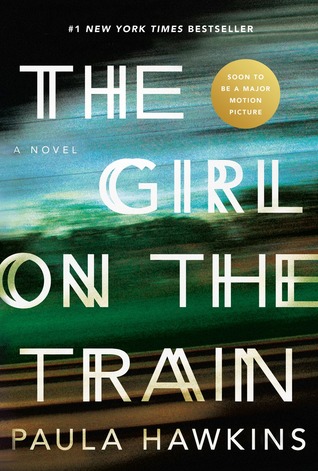
The Girl on the Train

22557272By Paula Hawkins

I've had this book on my "to read" list for awhile...people have compared it to Gone Girl. But although less gruesome than Gone Girl, this novel was less compelling and gripping. I knew Rachel was an unreliable narrator, but this is because she blacked out and can't remember. Gradually, she pieces the truth together in her mind.

Consequently, Hawkins gradually unravels the story rather than diving right in. I thought she did a good job of depicting the harsh reality of alcoholism. But ultimately, I expected more out of this novel than I got. It is very British, and I appreciated that! And a decent read...but not as fantastic as I expected!

Saturday, August 6, 2016

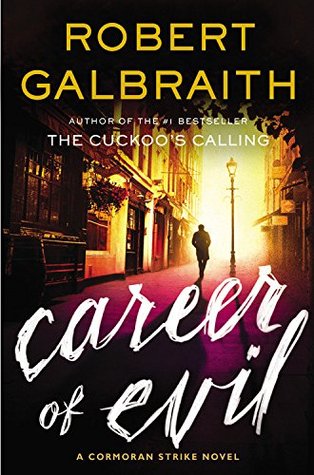
Career of Evil

Career of Evil (Cormoran Strike, #3)by Robert Galbraith (aka JK Rowling)

I enjoyed the first Robert Galbraith (The Cuckoo's Calling) but was much less enthralled with #2 (The Silkworm). Career of Evil was much more interesting and once again captured my attention.

Cormoran Strike is a fascinating, haunted protagonist. But OMG, Robin is such a strong, self-assured character in so many ways. Why on earth does she want to stay with Matthew? This is the clear weakness in this series, in my opinion.

I will keep reading. But I would love to get rid of Matthew!!

The Martian

The MartianBy Andy Weir

I read The Martian in one weekend, when my husband and I were celebrating our 26th anniversary at the Sylvia Beach Hotel in Newport, Oregon.

A few weeks later we watched the movie. Although I enjoyed seeing the book illustrated in film, I found the movie a bit lacking compared to the book. Weir's novel at times goes way too much into detail in the science, but it also does a better job of showing the conflict Mark Watney faced.

The most amazing thing about this story was the way "the martian" Watney won against Mars with science...and the book illustrates this much more thoroughly and convincingly than the movie.

At our book group meeting, it prompted us to research what's happening nowadays with NASA and Mars exploration. (The answer: not much, because of limited research funding.)

My Brilliant Friend

My Brilliant Friend (The Neapolitan Novels, #1)By Elena Ferrante 

I was not as enthusiastic about this book as were some of my book groupies. The first of a trilogy turned quartet, I enjoyed it well enough but don't feel terribly compelled to read on.

The story of two young Italian girls and supposedly a great story of female friendship, the novel disappointed me a bit. I had a hard time understanding what Elena saw in Lila. It reminded me of my younger days, when I was friends with girls who didn't really treat me very well.

In my older years, I've become more selective. So reading books like this that supposedly represent female friendship leave me feeling frustrated. This is not representative of an equal, life-giving friendship.

Apparently this author is a real mystery, and the forthcoming books are huge hits. But I will not read any further unless my friends, who treat me better than Lila treats Elena, tell me I must!

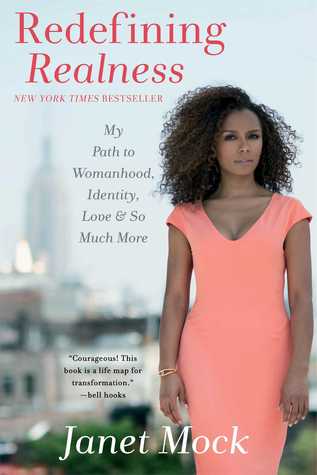
Redefining Realness: My Path to Womanhood, Identity, Love, and So Much More

Redefining Realness: My Path to Womanhood, Identity, Love & So Much Moreby Janet Mock

Wow. I know a few people who have transitioned from woman to man, but Janet Mock's book gave me great insights on what it feels like from the other perspective. And even deeper, it also enlightened me about what happens if a person feels uncomfortable in one's own skin and does not have the financial resources to change that. I read this book for my pastor's book group, and I'm grateful to be part of a church community that grapples with these questions!

Janet Mock knew she wasn't a boy from a very early age, but to make the changes she had to make, she had to resort to selling her body to get there. This broke my heart, as did her experiences of trying to become accepted by her own father. 

She was lucky in that she had a great fount of self-confidence and assurance, which led her through the process. And she was also lucky to live in an environment, in Hawaii, that was accepting of her transition. 

This book is an important story about finding out who you are and the journey to getting there. Janet Mock is a truly brave, inspirational woman. 

Sisters of Heart and Snow

Sisters of Heart and SnowBy Margaret Dilloway 

This is the second Margaret Dilloway novel I've read this year, and I was drawn to this book because I looked up books about female samurai warrior Tomoe Gozen. This novel intersperses stories about Gozen with two Japanese-American women, Rachel and Drew Snow, whose Japanese mom has Alzheimer's and who are estranged from their American father.

I was far more interested in the story about Tomoe Gozen than the modern-day women, but Dilloway does illustrate the often-complicated relationships between sisters. I enjoyed this book, but I think I would have preferred an in-depth historical novel about Tomoe Gozen. It seemed like we were only skimming the surface of her story.

Station Eleven

Station ElevenBy Emily St. John Mandel

Another book group read, this was a beautiful piece of speculative fiction. With the Zika virus, avian flu, and other outbreaks, you can easily imagine this kind of catastrophe happening in our time.

One one hand, I was wondering how people have the strength to carry on in such circumstances, and on the other hand, I was struck by how some characters find their own beauty, art, and poetry in stark conditions.

These types of books make me appreciate what I have--available food, shelter, health care, and loved ones around me.

America's Original Sin: Racism, White Privilege, and the Bridge to a New America

America's Original Sin: Racism, White Privilege, and the Bridge to a New AmericaBy Jim Wallis

Jim Wallis calls this book his "lament of the white father." A central theme of the book is the fact that parents of black children have to have "the talk," about how to behave around police and how to just behave in general, in order to survive. Wallis was inspired to write this book after Trayvon Martin was shot and he witnessed the ignorance of the white Christian evangelicals in his midst. He realized that if his own son, a six-foot-tall athlete, had been walking down the street, doing the same thing, he would have been fine.

Wallis identifies racism as the true original sin. As Michelle Obama recently said, "I live in a house that was built by slaves." As Wallis says, "This nation was founded by the near genocide of one people and the kidnapping of another people to build this nation. So slavery and the indigenous destruction of those who were here--that was our original sin. And it still lingers in our criminal justice system--in most of our systems."

Wallis aims most of his message specifically evangelical Christians, because he was disappointed and dismayed by their response to recent highly publicized shootings of African-American men. But it's an important message for all white Americans to hear. He believes it's the call of our Christian faith to work for racial justice, and I agree.

Tuesday, August 2, 2016

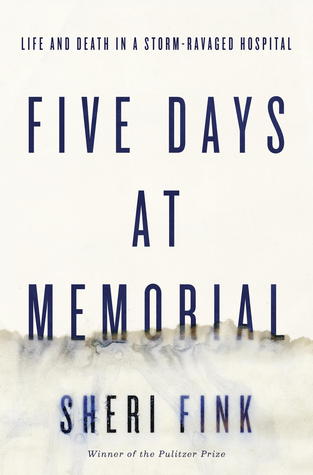
Five Days at Memorial, by Sheri Fink

Five Days at Memorial: Life and Death in a Storm-Ravaged HospitalFive Days at Memorial, by Sheri Fink

Well, what a brutal book this was. In short, when Hurricane Katrina struck New Orleans, hospitals all over the city faced huge crises...patients and staff were stranded for days without adequate water, air conditioning, and electricity. At Memorial, thousands of people and pets were stranded. The infrastructure and medical staff were grossly unprepared for the crisis that followed.

Not only was the rescue attempt poorly organized and managed (part of this was due to lack of resources in the city and the gross negligence of the hospital's parent company), but also, a few of the staff developed a sort of triage system to decide who should be rescued first.

Those who had a DNR (do not resuscitate) were rescued last, and patients in a nursing home that leased hospital space were at the bottom of the list as well. In the end, 45 patients died...far more than in other hospitals...doctors hastened the deaths of critically ill patients by injecting them with morphine. What bothered me the most about this story is that the patients' family members were kept in the dark completely. The doctors played God with these patients' lives.

Most of the blame for the horrors landed on Dr. Anna Pou...she was one of three women charged with second-degree murder; however, all charges were dropped. It seemed unfair that only the women were charged, as some male physicians were implicated as well...but the most egregious outcome is that Anna Pou went onto become some kind of expert in disaster medicine ethics!

This book should be read by every medical person and hospital administrator. Our hospitals and other infrastructure are terribly unprepared for natural disasters of this magnitude, which could happen anywhere!

Sunday, July 31, 2016

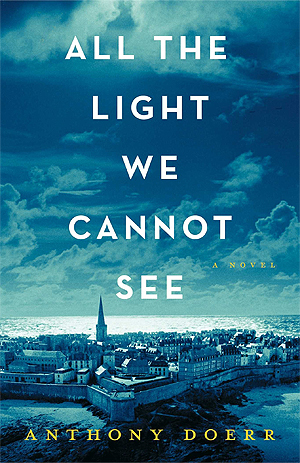
All the Light We Cannot See

All the Light We Cannot SeeAll the Light We Cannot See, by Anthony Doerr

When reading this book, one of my first comments to my husband was how deeply evocative Idaho writer Doerr's writing is...and how it makes me feel a bit stupid. Later I learned that Doerr spent 10 years researching and writing this book, and it shows.

I tend to love sprawling wartime sagas about people around the world, all experiencing the horrors of war in different ways and circumstances. Marie-Laure is a precocious, bright French child going blind, while Werner is a German orphan who eventually finds the Hitler Youth as his only viable way out of the orphanage. Doerr skillfully weaves their stories together, intermixed with beautiful details about shells, museum archiving and curating, the lifeblood of radios during wartime, precious gems, the cruelty of the Third Reich, mental illness, the French Resistance, and the reality of war for everyday citizens. It will make you realize that when you're poor, orphaned, extremely bright, and German during the war, you don't have very many options available.

Sometimes I thought Doerr spent too much time on minor characters...I would have liked to learn more about Marie-Laure's father, for example, and less about the Nazi gem hunter. And the scene near the end, when Werner is nearly buried alive in bomb wreckage in a cellar? I found myself scanning. It went on far too long. Some of the coincidences are a bit far-fetched, so the book is not perfect.

But damn if it didn't drive me to the Internet to find out about the enchanting walled town in France where Marie-Laure finds refuge. It's called Saint-Malo, and it's on the Brittany coast in northwestern France. The colorful descriptions of this town, and the beautiful relationships Marie-Laure has with her father and uncle (and the precious miniature gifts her father created for her), are my favorite parts of this novel.

How to Be an American Housewife

How to Be an American HousewifeHow to Be an American Housewife, by Margaret Dilloway

Give me any book about Japan or Japanese people, and the author already has a head start toward my liking it. I enjoyed this novel about a Japanese woman who made a difficult choice in Japan and then moved to the U.S., determined to be the perfect American housewife. As she has children and ages, she realizes how difficult this prospect is. This novel captures the stress many Asian-American parents and children feel, as one generation places a much higher value on hard work than the other, and the younger generation adapts better than the older one.

Nature's Fortune: How Business and Society Thrive by Investing in Nature

Nature's Fortune: Why Saving the Environment is the Smartest Investment We Can Make
Nature's Fortune: How Business and Society Thrive by Investing in Nature, by Mark Tercek and Jonathan S. Adams

When I asked our global sustainability director how I could learn about natural capital and natural infrastructure, she recommended I read Nature’s Fortune, written by the CEO of The Nature Conservancy (TNC), Mark Tercek. 

When I read in the introduction that he’d majored in English and then lived and taught in Japan like I did, I was hooked. We English majors who’ve been called gaijin have to stick together! I was fascinated to learn about his pathway into sustainability…he came into it through the back door, with a business background at Goldman Sachs, where he created a sustainability business and began partnering with TNC and other environmental nonprofits and exploring ways to make conservation profitable. "I was a late bloomer but protecting nature became my cause and my passion."

Tercek has transformed TNC into an organization that collaborates with business instead of fighting against business. As he says, "Hard-core environmentalists can be quick to criticize organizations such as TNC when they build alliances with companies. They sometimes see such collaborations as consorting with the enemy." But Tercek saw opportunity in working with businesses, because they "control huge amounts of natural resources, often more than governments." Companies are often quicker to act than government, especially as increasing numbers of businesses realize how dependent they are on natural resources and how critical they are for their survival. "The bigger the company's footprint, the bigger the opportunity for the company to reduce its impact on the environment by changing its behavior."

Nature's Fortune is jam-packed with illuminating examples of how the world's natural resources can be put to work, preserving the environment and the supply of these resources. In case study after case study, Tercek explains how cities, counties, states, and businesses are realizing how investing in green infrastructure is the best investment they can make.

For example, back in 1996, Dow Chemical Company's facility in Seadrift, Texas needed to increase its water treatment capacity...the logical (engineering) option would be to pour concrete and build a plant, at the tune of $40 million. But an innovative engineer proposed building a wetland instead, a solution that cost a mere $1.4 million. Now the wetland treats 5 million gallons of water per day, but it also provides habitat for wildlife. Environmentalists can fault Dow as a multinational chemical company, but the fact is that these multinational companies have enormous environmental footprints. When they take steps to reduce these footprints, it benefits us all. When companies invest creatively in nature instead of building traditional infrastructure, they reap many opportunities beyond just saving money. They protect the natural resources they rely on for their business.

Or take the case of Louisiana, where floods from climate change pose increasing threats. Scientists and engineers are realizing the value of floodplains, which have been replaced with hard-constructed levies, dams, and floodwalls. But nature's own resource, floodplains (flat lands near rivers where water can overflow) relieve pressure on levee systems, reduce flood risks, and filter agricultural runoff. Hard structures alone, as we saw during Hurricane Sandy or Hurricane Katrina, are often not enough to stop rising water and can actually make flooding worse for communities downstream.

A 2009 Harvard Business Review article concluded that "the current economic system has placed enormous pressure on the planet...traditional approaches to business will collapse, and companies will need to develop innovative solutions." Further, "failure to have a culture of sustainability is quickly becoming a source of competitive disadvantage. The argument about sustainability is over." 

While Tercek encourages cooperation and collaboration with businesses to protect the environment, he also appreciates the value of environmental organizations that prefer to work as watchdogs on business, commenting that the pressure they place on business partnerships results in better transparency and more successful approaches to protect nature.

I recommend this book as an excellent overview of how natural infrastructure can help organizations conserve resources, save money, and create more reliable, sustainable solutions to our changing world. 

Wednesday, March 30, 2016

Yes Please

Yes PleaseYes Please, by Amy Poehler

Reading Yes Please is like sitting down with your wackiest, most honest friend, the one who tells you everything, warts and all.

I’d recommend this book to fans of comedy, SNL, Parks and Recreation, or Poehler’s movies…others might find it less interesting.

I enjoyed reading Poehler’s stories of her childhood (she was deeply cherished and told she could do anything, not a surprise when you see her optimism and cheerful spirit). She discusses her early career in comedy and how she made her big break onto SNL. She also talks of motherhood and being a professional woman, albeit a celebrity one. She speaks fondly of her friends, colleagues, and ex-husband Will Arnett…and warmly tells stories of making and tearfully ending Parks and Rec.

And she confessed one of her shameful secrets…being part of a SNL sketch that made fun of a disabled child, and trying to make amends after she learned what she had done. Honest to a fault though, she waited awhile after being called on the situation before she could ask apologize and ask for forgiveness.

I love Poehler’s brand of feminism: being unabashedly proud to be female; upbeat, optimistic, and fun; and embracing male allies, but not taking any shit, which she continues to espouse in her Amy Poehler’s Smart Girls videos and Facebook page. And best of all, like me, she cherishes her women friends, as important to our souls and spirits as food and water are to our bodies. She lives out this philosophy in her work (Leslie Knope’s Galentine’s Day and adoration of her best friend) and in her life (as she writes about one of her main collaborators, Tina Fey).

So if this sounds appealing to you, sit down with your imaginary best friend Amy for some funny, poignant, and touching tales.

Blood Brothers

Blood Brothers, by Elias Chacour

My dear friend and Lutheran pastor, who visited Palestine in 2014, advised me that Blood Brothers was a good introduction to the history of the conflict in the Middle East.

Until a few years ago, I only knew one side of the Palestine-Israel story. Several people from my church started a Holy Land team and regularly visit Palestine. We've had many speakers on the topic, including Lutheran bishop Mitri Raheb (who just won the 2015 Olof Palme peace prize), Rabbi Ned Rosch (representing Jewish Voice of Peace), and other speakers. So I was reasonably well informed before starting this book, but Blood Brothers gave me a more personal, home-grown perspective.

A few months ago, we discussed Blood Brothers at our church book group, and we had two special guests: a friend who is Syrian, Hazar, and her dear friend, who is the great-niece of Fr. Elias Chacour, author of this book. A deeply emotional, heartfelt conversation ensued as they both shared stories of loss and sadness about their homelands. 

One of Elias Chacour's mentors, Fr. Longere, gave this advice during a final lecture:
"If there is a problem somewhere, this is what happens. Three people will try to do something to settle the issue. Ten will give a lecture analyzing what the three are doing. One hundred will commend or condemn the ten for their lecture. One thousand people will argue about the problem. And one person--only one--will involve himself so deeply in the true solution that he is too busy to listen to any of it. Now...which person are you?"
This is the central message of the book...Fr. Chacour dedicated his life to building peace among nations and religions, even though his life and his family's was upended by the Israeli occupation of Palestine.

The most important message about this book is that there's so much more going on in Israel and Palestine than what meets the eye (or crosses our path via western media). Blood Brothers begins when Fr. Elias Chacour is just a small boy, when his family had close relationships with Jews in his community. Peaceful farmers, his family did not have a lot of money, but they were rich in love and their Christian faith.

I learned in the book that the desire to form a Jewish homeland in Israel did not begin after the Holocaust. In fact, the idea first sparked in 1897 in Switzerland, at a conference "to lay the foundation stone of the house which was to shelter the Jewish nation." Over the years, many western countries talked about creating a homeland for the Jews.

In 1917 Jewish Zionists aligned themselves with Britain's Christian Restorationists, a group that believed they might bring to pass the second coming of Christ by creating a state of Israel. The intentions were not necessarily pure either. British Lord Balfour supported the creation of a national home for the Jewish people in Palestine, while at the same time playing a major role in passing the Aliens Act in 1906, which expressly sought to exclude Jews from Great Britain. He also did not care at all what the Palestinians thought about this.

Through the 1920s, European immigration to Palestine increased and Zionist leaders became less guarded about their plan to institute a Jewish state. Many Zionists were ill at ease with those who insisted on Jewish "predominance" in Palestine. Yitzhak Epstein, an agriculturist, warned the Zionist Party that they "had wrongly consulted every political power that held sway over Palestine without consulting the Palestinians themselves..." and he worried about Palestinian resentment. He argued that the immigrating Jews should help Palestinians find their own identity and open to them the new Jewish hospitals, schools, and reading rooms...however, he was staunchly opposed.

By the 1930s, immigration from Europe was rising like a flood, with no intervention or plans by the British. In 1936, Palestinian leaders called for a general strike, as they were losing power over their own homeland...the strike lasted for 6 months, crippling commerce. But violence increased and in 1938, the protests were finally crushed.

Pres. Roosevelt held off the Zionists and wanted to open the free world to the victims of the Holocaust, but Pres. Truman had a different plan. The Zionist lobbyists argued that admission to Palestine was the "only hope of survival" for the Jewish people. The exhausted British found themselves pressured by the White House, even as they watched their mandate government in Palestine blitzed by a campaign of terror. In 1947 they announced their plan to surrender their mandate. And violence spread unchecked.

Then came the Holocaust, when many western nations refused to take in Jewish refugees. Chacour does not blame the terrified masses of Jewish immigrants who fled to Palestine. He says they were pawns of the Zionist leaders. Upon their arrival in Palestine they were indoctrinated against their so-called new enemy: the Palestinians.

In 1950, 50,000 Jewish people were celebrating Passover in Baghdad, Iraq. (More than 130,000 Jews lived in Iraq at the time, the oldest Jewish community in the world.) A small bomb was hurled from a car speeding along the river, and shock waves rocked the community. Leaflets appeared the next day, urging Jews to flee to Israel, and 10,000 signed up for emigration immediately. Then a second bomb exploded, then a third, killing several people outside a synagogue. By early 1951 Jews fled Iraq in panic until only 5,000 remained in the country. In the end, 15 people were arrested in connection with the bombing, and they were Zionists. They had thrown bombs at their own people to touch off a panic emigration to Israel. Israeli Prime Minister David Ben Gurion and others knew of the plot in advance.

But back to Elias Chacour's story. During the Zionist takeover of Palestine, Israel destroyed 450 Palestinian villages, including Chacour's. He and his family had to flee their orchards and house to settle in a nearby village that was much more shabby than their own. Chacour was eventually sent to seminary and became a priest and then a bishop.

Even though his family's lives were torn apart by the Israeli Zionists, he does not hate them. Instead, he shows compassion to them, the true biblical "turning the other cheek," because he keeps in mind what happened in the Holocaust. He has dedicated his life to bringing Jews, Christians, and Muslims together...through activism, advocacy, and community building. At a young age, he and other Palestinians were unfairly branded as "terrorists" even though they were not. Given the Palestinian apartheid and unfair treatment they have received, it's understandable why they would want to protest. But Chacour has chosen a nonviolent path in spite of what he has seen and faced.

He tells a touching story about arriving in the deeply fractured city of Ibillin, where he arranged to have three nuns visit and reach out to the villagers. He hoped the sisters would be able to do what he had not yet been able to do: broker peace. Even after the tension began thawing, enemies still existed. One day Fr. Chacour locked the church doors and exhorted them to act like Christians and forgive each other.

His mother's final message to him before she died was, "Be strong, Elias. What you do matters. Especially for the young ones."

The book ends with Fr. Chacour asking questions of Palestinians, Israelis, and westerners. "How can you take on yourself the right to decide who is the terrorist? Who is the fighter for liberty? How do you find it your right to judge?"

Coauthor David Hazard shares an anecdote in the afterword about a visit to a Gazan refugee camp, where he spoke to a 17-year-old Palestinian girl. She told how she witnessed her teenage cousin being shot through the head after he picked up a rock in response to Israel soldier taunts. She accused him and all Americans of knowing about these daily abuses against Palestinians but not caring, and even supporting the conservative Israeli forces that sponsor these acts. When Hazard tried to explain that Americans don't know about these things, she said, "Of course Americans know we're suffering over here. You're the most powerful nation on earth. And everyone has a television. I know you know."

In the group at my church, our guests--Hazar from Syria and Fr. Chacour's niece, who is Lebanese, emotionally spoke of their homelands and the misperceptions people have about the real story in the Middle East. The following month, we discussed Blood Brothers at my regular book group, and my British friend Niki spoke about what she learned about Palestine and Israel growing up, a much more complex and multilayered picture than what we were fed in the U.S.

We are so uninformed and ignorant. So much of the conflict and strife in the Middle East, hatred between Muslims and Jews, comes down to this conflict in Palestine. And until it is resolved, nothing will get better.


Wednesday, December 9, 2015

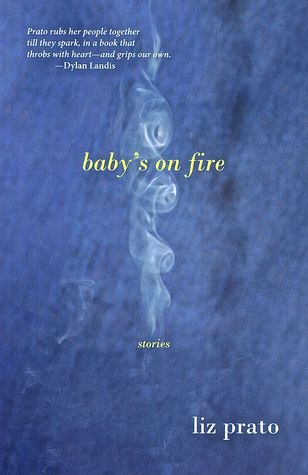
Baby's On Fire

Baby's on FireBaby's On Fire, by Liz Prato

I'm not really much of a short story person. I'd always prefer reading a novel. In fact, I didn't actually know this was fiction until I reached the beginning of the second story!! (Yes, I know it says "Stories" on the front!)

My first exposure to Liz Prato was when I heard her read at a book launch for Brave on the Page, an anthology of essays by and interviews with Oregon writers, in which my husband was also featured. Her autobiographical piece immediately drew me in....full of stark, gut-wrenching detail. I knew she was a writer to watch.

...So I was excited to read Baby's On Fire, the first book she's written (and I didn't know it was short stories). You know you've found a good short story, when you wish it were a novel...and that's how I felt about many of these stories.

One thread runs through these stories: the characters have been scarred by tough times. In the title story, for example, the unemployed, depressed main character arrives home in Portland to discover her family's house had been burned to the ground.

Two other sad stories in particular made me want more: "The Adventures of a Maya Queen" and Riding to the Shore," interestingly, both involving cancer. And one story, "Covered in Red Dirt," takes place in Hawaii, always an intriguing setting for me.

In each story, Prato paints a beautiful, if sometimes heart-breaking, picture of lives lived hard and people who have been through the wars. She too has survived more than one heart should bear, and it shows in her work. A person who hasn't experienced deep losses could not write like this and could not represent these characters' lives and thoughts so well.

Multnomah County Library named Baby's on Fire as one of its best books of 2015. I feel fortunate to know such a talented writer who creates touching stories that stick with you for days.

Monday, December 7, 2015

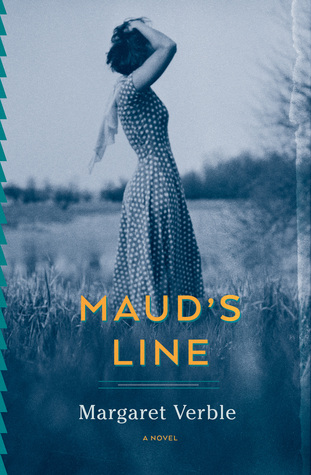
Maud's Line

Maud's LineMaud's Line, by Margaret Verble

I checked this historical novel out of the library because I actually knew a woman who grew up in Oklahoma with Native American roots. She, like Maud Nail, was a spirited spitfire! And she too often found herself dependent on men, much to her chagrin.

Maud lives with two incompetent men...her father is an alcoholic wanderer with a temper, and her brother is a troubled dreamer. Maud essentially keeps their homestead going.

When a peddler stops by, Maud's life changes...not only her own circumstances, but also that of her father and brother. She is a free-spirited heroine of the midwest. I didn't always agree with her decisions, but I enjoyed reading about her adventures.

Thursday, November 26, 2015

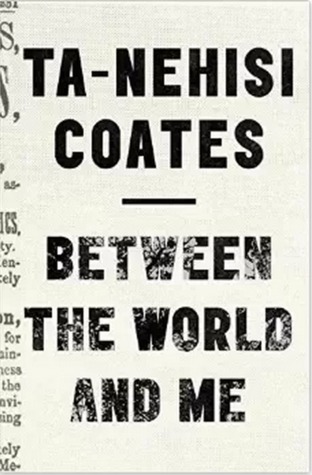
Between the World and Me

Between the World and MeBetween the World and Me, by Ta-Nehisi Coates

Such a hard, beautiful, and important book! Highly acclaimed author Ta-Nehisi Coates wrote Between the World and Me as a letter to his son, and last week it won the National Book Award for nonfiction.

Coates did not write this book for white readers (or as he says, "people who believe they are white," quoting James Baldwin). But that's exactly why we should read it. It's brutally honest, raw, and gut wrenching. He doesn't mince words, and he doesn't sugarcoat history or reality.
"I write you in your fifteenth year. I am writing you because this was the year you saw Eric Garner chocked to death for selling cigarettes; because you know now that Renisha McBride was shot for seeking help, that John Crawford was shot down for browsing in a department store. And you have seen men in uniform drive by and murder Tamir Rice, a twelve-year-old child whom they were oath-bound to protect. And you have seen men in the same uniforms pummel Marlene Pinnock, someone's grandmother, on the side of a road. And you know now, if you did not before, that the police departments of your country have been endowed with the authority to destroy your body. It does not matter if the destruction is the result of an unfortunate overreaction. It does not matter if it originates in a misunderstanding. It does not matter if the destruction springs from a foolish policy ... The destroyers will rarely be held accountable. Mostly they will receive pensions. And destruction is merely the superlative form of a dominion whose prerogatives include frisking, detaining, beatings, and humiliations. All of this is common to black people. And all of this is old for black people. No one is held responsible."
The book brought me to tears several times...when Coates arrives at Howard University and feels comfortable in his own skin for the first time...
"There were the scions of Nigerian aristocrats in their business suits giving dap to bald-headed Qs in purple windbreakers and tan Timbs. There were the high-yellow progeny of AME preachers debating the clerics of Ausar-Set. There were California girls turned Muslim, born anew, in hijab and long skirt. There were Ponzi schemers and Christian cultists, Tabernacle fanatics and mathematical geniuses."
...or when his friend, Prince Jones, is killed by police for the crime of driving while black...or when a white woman rudely pushes his son and he feels helpless to defend him...or when he takes his son to preschool for the first time and wants to warn him not to be so happy and carefree...
“But now I understand the gravity of what I was proposing—that a four-year-old child be watchful, prudent, and shrewd, that I curtail your happiness, that you submit to a loss of time. And now when I measure this fear against the boldness that the masters of the galaxy imparted to their own children, I am ashamed."
This idea, of parenting a child while knowing that you cannot fully protect him...of knowing that Prince Jones' mom gave him every privilege she could, yet all it took was one racist act to destroy everything...this realization of how many white male privileges my sons have that Coates' son does not and will never have...this brought me to tears several times while reading this book.
 “So I feared not just the violence of this world but the rules designed to protect you from it, the rules that would have you contort your body to address the block, and contort again to be taken seriously by colleagues, and contort again so as not to give the police a reason. All my life I’d heard people tell their black boys and black girls to 'be twice as good,' which is to say 'accept half as much.' These words would be spoken with a veneer of religious nobility, as though they evidenced some unspoken quality, some undetected courage, when in fact all they evidenced was the gun to our head and the hand in our pocket. This is how we lose our softness. This is how they steal our right to smile."
Black children are told, either directly or indirectly, to be twice as good and accept half as much, while white children are told to, or allowed to, take more.

I've observed black friends parenting their children in a way that is much stricter than my own, and Coates articulated why that is:
“But you are a black boy, and you must be responsible for your body in a way that other boys cannot know...black people love their children with a kind of obsession. You are all we have, and you come to us endangered...I think we would like to kill you ourselves before seeing you killed by the streets that America made...later, I would hear it in Dad’s voice—'Either I can beat him, or the police.'"
I attended a well-attended book discussion about Between the World and Me this week at my church. Although everyone liked the book a lot, one woman said she was troubled by the anger in this book...because she believes that anger doesn't get you anywhere (e.g., look at the Islamic State). I can understand her perspective, but I can see both sides. 

I am not by nature an angry person, but I understand the anger in Te-Nehisi Coates' soul. I think we need anger at injustice to move forward. We need the nonviolent Martin Luther King Jrs as much as we need the Malcolm Xs. We need the Sandra Blands, who was a Black Lives Matter activist before she was killed, as much as we need the Maya Angelous. And Oh My Gracious God, do black people ever have the right to be angry. 

This country was built on their backs, woven with their arteries, and yet we continue to have racists like Donald Trump claim that racism no longer exists...and fail to understand why Black Lives Matter. We have people use the word "thugs" or decry "black-on-black crime," which Coates says is like shooting a man and then shaming him for bleeding. 

And I cried when I read about Coates' son giving up his hope for the first time:
“That was the week you learned that the killers of Michael Brown would go free. The men who had left his body in the street like some awesome declaration of their inviolable power would never be punished. It was not my expectation that anyone would ever be punished. But you were young and still believed. You stayed up till 11 P.M. that night, waiting for the announcement of an indictment, and when instead it was announced that there was none you said, 'I’ve got to go,' and you went into your room, and I heard you crying. I came in five minutes after, and I didn’t hug you, and I didn’t comfort you, because I thought it would be wrong to comfort you."
This knowledge that it was no use to comfort his son, because he couldn't give any comfort. Damn straight he's angry, and he has a right to be. No more sugarcoating. We all need to wake up.

Wednesday, November 25, 2015

Masterminds and Wingmen

Masterminds and Wingmen: Helping Our Boys Cope with Schoolyard Power, Locker-Room Tests, Girlfriends, and the New Rules of Boy WorldMasterminds and Wingmen, by Roasalind Wiseman

A great book about boys, written by the author of Queenbees and Wannabes, who is actually the mom of boys (rather than girls).

Wiseman wrote this book after interviewing hundreds of boys and trying to figure out how they think. As a woman living in a house with four males (three sons and a husband), I can honestly tell you that their brains are wired differently, and they are also conditioned to behave in a different way. It's called Boy World, and I'm often out of my element!

I learned some helpful tricks from this book, such as not bombarding my sons with questions. I am a detailed person, and they, alas, are less so. When I pepper them with questions at the end of a school day, or when they come home from college, it is less than effective.

Boys are faced with entirely different challenges than girls are, and this book identifies those challenges and helps parents figure out a way to assist their sons in navigating those challenges.

God Is Disappointed in You

God Is Disappointed in YouGod Is Disappointed in You, by Mark Russell and Shannon Wheeler

This is a funny retelling of each of the books of the Bible, in a highly accessible, irreverent, and humorous way. If you're willing to flex the way the Bible is interpreted, and you have a great sense of humor, you'll enjoy this book. It's sort of like a Cliff's Notes told via Tina Fey...written by humorist Mark Russell with cartoons by the New Yorker cartoonist Shannon Wheeler.