Showing posts sorted by relevance for query power of one. Sort by date Show all posts

Monday, February 27, 2012

The Power of One: Glad to have finally finished it!

The Power of One, by Bryce Courtenay

Although originally published in 1989 (in the height of apartheid), I'd never heard of The Power of One until my sister read it for her book group. The plot sounded appealing to me, so I put it on hold at the library. Some actually call this "a classic novel of South Africa," although I think that title should belong to the work of Nadine Gordimer and Doris Lessing instead (whose books I read years ago).

I think my opinion of this novel will shift some as I sit with the ending for a few days...but I wanted to write this review while it was still fresh in my mind. It feels like I've been reading this novel for a long time...although it stuck in my mind when I was not reading it, I was also really ready to be done with it. Not a great sign...

English boy Peekay is sent to boarding school at the age of 5 (!) because he has no father and his mother has had a mental breakdown. He is horribly, mercilessly bullied by his South-African schoolmates, who all see him as the enemy because of the Boer War. Right away, I felt dubious because I kept thinking about my own 5-year-old son and realizing that Peekay seemed more like 10 than 5. His only friend is his pet chicken, Grandpa Chook, who understands Peekay thoroughly and can do magic tricks. (Seriously.) In spite of the bullying, Peekay survives and finds a way to rise above it all. (His extreme genius assisting him in this endeavor.)

The story begins to get more interesting when the school year ends and he's sent on a 2-1/2-day train journey to join his family in their new home. (Yes, a 5-year-old, sent alone on a 2-1/2-day train journey...) Along the way he makes some true friends, among them a train guard named Hoppie, who teaches him all about boxing and inspires him to become a boxing champion one day. (In spite of this great friendship, Hoppie goes off to war and is never mentioned again...which seems odd to me.)

When he arrives in his new home in Barberton (where he is to live with his grandpa and his born-again-crazy mother), he makes more true friends in Doc (a German professor of music) and Mrs. Boxall (the town librarian). When Doc is interned in a nearby prison because of his German ancestry, Peekay develops friendships in the prison and begins taking boxing lessons there. Biracial prisoner Geel Piet becomes his dedicated boxing coach and teaches him everything he knows.

Years later Peekay goes off to another boarding school, where he becomes friends with a Jewish boy, Morrie Levy. In the final book of the novel, Peekay spends a year working in the mines in Rhodesia. This is a very MALE book...about the world of boxing, boarding schools, prisons, and mines. Few women live in this world, and the black ones do not even have real names.

First, what I liked about the novel:
  • Learning more about the history of English-Boer hostility during World War II
  • Reading about life in South Africa during that period--especially as a former coworker was visiting South Africa while I was reading the book and blogging about her adventures and perspectives on the country's crime and racism
  • Peekay's unlikely friendship and adventures with Doc
  • Some of the earlier stories during the train journey, and the colorful characters such as Hoppie and Big Hettie
  • Peekay's efforts to transcend his difficult beginnings and become his own person
  • The imagery of the African singing and the music Doc wrote as a tribute to the African tribes (in fact, I really enjoyed all the musical bits, especially the prison concert)
Well. My biggest beef with this novel is that Peekay is too damn perfect. For example (spoilers below!):
  • He is several classes ahead of all his peers, wherever he goes, because of his sheer genius.
  • He knows several African languages, in addition to Latin.
  • Everywhere he goes (after the initial boarding school disaster), people come to worship him.
  • He develops a highly successful scheme to smuggle in tobacco and other goodies into the prison, and smuggle letters to prisoners' families out. All while he is a child.
  • He NEVER loses a boxing bout. Never, ever.
  • He becomes a cactus expert under Doc's tutelage.
  • Peekay and Morrie become chosen for the most select group of students to be tutored by the headmaster. Of course.
  • Peekay and Morrie make a mint in boarding school through various schemes dreamed up by Morrie, all of them rip-roaring successes.
  • He exceeds in every single task he takes on (academics, languages, boxing, rugby, mining), with the one exception of the piano, at which his talent is merely passable.
  • He becomes a virtual god for the African people--referred to as the "tadpole angel."
  • Even the Black Mamba he faces does not bite him.
  • He displays superhuman strength and will as a 17-year-old miner and survives an accident that would have killed anyone else.
  • He gets the opportunity to take revenge on his most bitter enemy.
The book was far too long...it could have lost 100 to 150 pages and been much stronger. Courtenay often resorts to getting preachy and "tells" far more than he shows. The bad people are REALLY bad, and they all get their due in the end...every one of them. Several people lose their lives because of Peekay, and he doesn't seem to have any sort of self-reflection or guilt that he caused their deaths through his arrogance. He takes all his privileges and success for granted.

I believe that Courtenay, who grew up in South Africa but now lives in Australia, had great intentions to write a book that examined the origins of apartheid and criticized the cruel way that blacks were treated. But instead, it's just another book about a white savior--a perfect white boy who triumphs over the odds. The black tribes all come to worship Peekay because he begins smuggling in tobacco to the prison and starts a letter-writing initiative so they can contact their relatives...and they've seen his expertise in the boxing ring. In fact, he becomes legendary across South Africa so that when he moves to his new school in another part of the country, they all know about the "Tadpole Angel."

I thought it would be more about the origins of apartheid and race relations in South Africa, but really, it wasn't. It was about this perfect boy and his life .

I'm not sure I understand the meaning of "The Power of One," especially because of all the friends and supporters Peekay developed throughout his life. They all lifted him up and helped him accomplish what he did. Yet when Morrie tries to help him by lending him the money to go to Oxford, he refuses his aid. This didn't make much sense to me, especially as Morrie wouldn't have had such success over the years without Peekay...and he allowed others to help him before. Instead, he puts aside his academic career to choose a rough, dangerous life in the mines.

And the ending...horrific, unredeeming, and sickening. Any fondness I had for Peekay as a character dissolved in the last few pages. In spite of all the love and support he received, Doc's wise guidance, and all the superhuman success he'd achieved, when he meets his nemesis, he must take revenge in a truly merciless manner? Maybe the message of "The Power of One," in the end, is that each person is alone and must fight to the death to survive? Closing the book, I felt sick to my stomach.

Saturday, June 30, 2012

My Monastery Is a Minivan

My Monastery Is a Minivan: Where the Daily Is Divine and the Routine Becomes Prayer, by Denise Roy

I discovered this book when I read a review for one of Denise Roy's more recent books (Momfulness)...and being a chronological-type reader, I decided to start with this one. Plus as a new (initially reluctant) minivan parent, I liked the title, which comes from Roy's childhood desire to become a nun.

As you might guess, she didn't become a nun--instead she became a mom to three sons and one daughter. She also has an M.Div. and is a psychotherapist and spiritual director. This book is all about finding the divine in our everyday lives.

Roy begins her series of essays with a quote from Frederick Buechner, "There is no telling where God may turn up next--around what sudden bend of the path if you happen to have your eyes and ears open, your wits about you, in what odd, small moments almost too foolish to tell."

Each short essay in this collection is a gem and makes me think more mindfully about my own life and family. She uses wonderful quotes and poems to enhance her points, such as this one by Margaret L. Mitchell:

"Sometimes
When it is all, finally,
Too much,
I climb into my car,
Roll the windows up,
And somewhere between backing out the driveway
And rounding the first corner
I let out a yell
That would topple Manhattan
How do you pray?"

Or this one, another by Frederick Buechner:

"The sacred moments, the moments of miracle,
are often the everyday moments."

And this one by Bapuji:

"Those who do not know how to sing and dance
will never reach God."

In one of my favorite essays, "Potato Stories," Roy shares four stories about potatoes...one was about the Korean custom for washing potatoes. When they want to wash a lot of dirty potatoes, they don't wash them one by one...instead they put them all in a tub of water, put a stick in the water, and move it up and down, and the potatoes bump into each other, helping to clean them. She compares this potato bumping/cleaning exercise to being in a community of faith, "When we join hands, our prayers and our lives bump up against one another, and something holy is made in the process."

One of the other potato stories can be found all over the Internet:

One of my teachers had each one of us bring a clear plastic bag and a sack of potatoes.  For every person we’d refuse to forgive in our life, we were told to choose a potato, write on it the name and date, and put it in the plastic bag.  Some of our bags, as you can imagine, were quite heavy.

We were then told to carry this bag with us everywhere for one week, putting it beside our bed at night, on the car seat when driving, next to our desk at work.

The hassle of lugging this around with us made it clear what a weight we were carrying spiritually, and how we had to pay attention to it all the time to not forget, and keep leaving it in embarrassing places.

Naturally, the condition of the potatoes deteriorated to a nasty slime.  This was a great metaphor for the price we pay for keeping our pain and heavy negativity!

Too often we think of forgiveness as a gift to the other person, and while that’s true, it clearly is also a gift for ourselves!

So the next time you decide you can’t forgive someone, ask yourself… Isn’t MY bag heavy enough?

In "Night," she writes about her neighbor Debbie, whose aging mother has become very ill. She asked her neighbor about the hardest part, and she said, "The middle of the night. Getting up at three in the morning to change Mom's diapers and having her look me in the eyes and ask "Where's Debbie?'" This resonated for me, as I was thinking about my cousin who has been caring for her ill mother (my aunt, who recently died of cancer) and father with Alzheimer's. I remember those night times when my sons would wake me up to nurse, and we were the only ones awake in the house. Roy shares this passage from Jane Ellen Mauldin, which I love:

"As I trudged alone through the night hallways, I staggered to a call as old as humankind. That night and every night, mothers and fathers around the world awaken to reassure restless children. That night and every night, grown children arise to calm fitful, aging parents. Those night hours are long and lonely. Our burdens and tired bones are ours alone to bear. There are, however, other people out there who are waking even as we are. There are other people who bear similar burdens--whether it is simply to reassure a child for one night, or to help a dying loved one be at peace, week after week, until the end.

We who rise do so because we choose to do it. It is an intense, physical demand; it is also an honor as ancient as human love. We are part of the circle of families and friends who nurture Life from its earthly beginning until its earthly conclusion."

In "Blessing One Another," she shares a story about shopping with her daughter and observing a horrible interaction between an assistant manager and a delightful young child, who had been twirling around and dancing with a butterfly on a stick, much to the assistant manager's horror. Roy is able to intervene on the mother's behalf (the mother is Hispanic, didn't see what happened, and is cowed by the situation) and share the story with the manager, since she observed the interaction. She starts out this chapter with this poem by Galway Kinnell:

The bud
stands for all things,
even for those things that don't flower,
for everything flowers, from within, of self-blessing;
though sometimes it is necessary
to reteach a thing its loveliness,
to put a hand on its brow
of the flower
and retell it in words and in touch
it is lovely
until it flowers again from within,
of self-blessing.

She knows with certainty that the same incident would not have occurred with her own daughter because of the color of her skin. She discusses the effect of prejudice on a small child's ego, and how the mother was "saying words of kindness in the hopes of restoring to the child a sense of her goodness. But I also thought of how different it would be if she had help. What if she had all of us doing this with her, reminding her daughter of her beauty? How different this girl's life would be." She concludes the story by saying that this is how we help God out: "by telling one another in words and in touch that we are lovely and whole and worthy of blessing."

In "Hiding Places," Roy writes about the pain of miscarriage, and her own experiences of having three miscarriages...of which the cause was never determined. Then after letting go of their dream of having another child, suddenly she became pregnant again. In our case, my four miscarriages occurred between our oldest and middle child, and as much as we wanted another child, it was so heart-achingly painful to keep trying. Then finally, it worked--and I had Kieran, my middle son. Roy talks about people's tendency to hide away their pain and grief, deepening their sense of isolation, but "It is only when we have the courage to open the door to the hidden parts of our lives that our suffering can be transformed into wisdom and compassion." This I know is true. Without grieving for each baby I had lost, I never would have been able to be happy in the world.

Another gem I found in this book is a ritual that Denise Roy has in her family. When a boy reaches the age of 13, he goes on a camping trip with other men in the family as a rite of passage. In her appendix, Roy shares some of the questions they discuss:

"Who are my heroes?
What is my philosophy of life?
What do I feel about work?
What gives meaning to my life?
What are the qualities of my mother I admire? Of my father?
What qualities do I value in a relationship?
What does intimacy mean?
What are my dreams for myself?
What does success mean for me?
What brings me joy?
For what, or whom, would I sacrifice my time, energy, health, or life?
What is my idea of power? What is the source of my power?
What are my gifts?
What do I fear?
What is sacred?
Who are my people?
How do I most enjoy life?"

This is the best thing I got out of this book: in a family full of male children, I want to start this ritual. My oldest son (and the oldest grandson) turns 16 this summer, and I've asked my husband, dad, and brother-in-law if they would be willing to take him on such a trip. I love the idea of rites of passage, and this could be a truly meaningful one. They might even take some drums! :)

I really enjoyed this book and it gave me a lot to think about...good reminders of finding the sacred in everyday life, not taking things for granted, and remembering that prayer and meditation comes in many forms.

Monday, April 20, 2020

Catching Up: Great Fiction Reads

I have gotten really behind with my book reviews, and it's hanging over my head! So in this post and the upcoming ones, I will attempt to catch up with what I've read in the past several months. First, a fiction roundup!

The Testaments, by Margaret Atwood

Judging from some of the reviews on Goodreads, many readers believe that this sequel to The Handmaid's Tale was unnecessary, similar to what they said about To Kill a Mockingbird. A writer always takes a huge risk writing a sequel to a beloved, highly acclaimed novel. Even when they write a different type of book (e.g., JK Rowling writing A Casual Vacancy after Harry Potter), they are skewered in the reviews because it was not what readers expected. I find that reaction to be tiresome!

I actually really liked The Testaments and found it to be a suitable conclusion to The Handmaid's Tale, and it complemented the Hulu series well. The story takes place 15 years after the founding of Gilead, and it is told from the perspectives of three different people, including Aunt Lydia. If you prefer endings that are unresolved, stay away from The Testaments. If you'd like to see a resolution for Offred and others, and get some hope, read this sequel.

Sweet Bean Paste, Durian Sukegawa

I loved this sweet story of Sentaro, an ex-con who runs a doriyaki shop, and Tokue, a woman who has Hansen's disease, otherwise known as leprosy. Although I lived in Japan in the late 1980s, I was not aware that people with leprosy were isolated in sanitoriums and not allowed to mingle with the public until 1996. Japan was one of the last developed countries to quarantine leprosy patients for life. Tokue was wise and resilient in spite of lingering discrimination and prejudice, and Sentaro's life was so much richer for his relationship with her. She shared her friendship so freely in spite of the way people treated her. I discovered recently that this book has been made into a movie (available on Kanopy), which I look forward to watching.

On the Come Up, Angie Thomas


I love Angie Thomas, author of The Hate U Give, especially after having her seen her in person when she was promoting this novel. On the Come Up is about Starr Carter, who has a true gift for rap, taking after her dad who was gunned down in the streets. She traverses a world of gang violence and school, where she feels like she can never get ahead. She's damned if she tells her truth through rap, and she's damned if she doesn't. Generally not drawn to rap because of the misogny in much of it, I now have a much greater appreciation for the art of hip hop. It is poetry, and rappers are gifted artists, even if I don't always like what they are saying. I will read everything Angie Thomas writes.

Women of Juarez, Sam Hawken

After seeing the gripping play "La Ruta" at the Artist's Repertory Theater in November, I was determined to read more about the missing and dead women of Ciudad Juarez. That's how I found The Dead Women of Juarez, a gut-wrenching, dark story narrated by a washed-up addict American boxer Kelly Courter who is love with a Mexican woman, Paloma, and gets wrapped up in organized crime and drug dealing. It's difficult to read, violent, and sad, but I would expect nothing less given that it's about the feminicide in Ciudad Juarez, one of Central America's great tragedies of this century. This book stuck with me for a very long time.


A Man Called Ove, Fredrik Backman


It took me a while to appreciate Ove and like him as a character. I don't have a lot of patience for curmudgeons who only like things to be done a certain way and who can't abide change. I appreciated the way Backman gradually peeled the layers back on Ove's character, so we could understand what contributed to his difficult personality. In the end, I was cheering for him along with all the other readers.


I Am Not Your Perfect Mexican Daughter, Erika L. Sanchez

As a Mexican-American girl, Julia feels that she can never measure up to her sister Olga, now dead. She does not feel loved by her grief-stricken, stressed-out parents, and as an adolescent, she's actually not very lovable at times. As she unravels the love-hate relationship she had with her "perfect" sister Olga, she also unravels the truth of Olga's life. She wasn't as perfect as everyone thought.

I chose this book as the first in a series of "Voices from the Margins" for a book group I led. This is a strong young adult novel about contemporary Mexican-American girlhood and an easy read.


Before We Were Yours, Lisa Wingate

Before We Were Yours is based on the Tennessee Children's Home Society, a horrible case in which director Georgia Tann kidnapped and sold children. Always fascinated by historical cases like this, I was gripped by this story.

I did find one of the main characters, Avery Stafford, to be supremely annoying. This was one of these southern books I felt really lacked understanding or awareness of race (like The Help). For example, one scene takes place in a slave cabin...and the characters (and presumably, the author) didn't seem to see any parallels between all the Black children that were kidnapped and sold...a far bigger scandal than the Tennessee Children's Home Society. This lack of awareness tainted the book for me.

The Satapur Moonstone, Sujata Massey

The Satapur Moonstone is another great book by one of my favorite authors, Sujata Massey! The second in her Perveen Minstry series, The Satapur Moonstone follows up The Widows of Malabar Hill. As Bombay's only woman lawyer, Perveen is given special access to women in purdah. Set in 1922, this adventure takes Perveen up into the remote mountains, where she acts as a liaison between the royal family, beset by tragedy, and the British agent there. I read everything Massey writes, whether it takes place in Japan or India, and I'm never disappointed! Minstry is a strong, independent, and bright professional woman in a man's world, and she bristles against British colonial rule and patriarchal traditionalism while knowing she must be careful to not be too obvious about her views, lest she lose clients. I look forward to the next book in the series.

The Great Alone, Kristin Hannah

Compulsively readable, The Great Alone is about a family who ventures off to the wilds of Alaska, completely unprepared, and once there, is forced to face the demons of PTSD, domestic violence, and mental illness. I really enjoy Kristin Hannah's writing, and this book was hard to put down. It reminded me of Jon Krauker's Into the Wild...a man who doesn't fit into the Lower 48, seeking his fortunes and answers in the wilds of Alaska. Not an easy book to read, though, because of the domestic violence.

We Have Always Lived in the Castle, Shirley Jackson

Most people know Shirley Jackson for her short story, "The Lottery," like me. From what I've read about Jackson, she was a fascinating, quirky person. This short novel fits that description as well. It's the story of two sisters, Mary Catherine and Constance, who appear to be agoraphobic and highly unusual. Their family has been struck by great tragedy. Jackson brilliantly unravels the mystery, one layer at a time. Spooky, mysterious, weird...another book group choice by my friend Katie. This is a great example of why I like being in a book group...I had never even heard of this book, and Katie had read it as a y oung person. I liked it!

My oldest son, Christopher, just watched Jackson's "The Haunting of Hill House" on Netflix, and liked it. Adding it to my list!


The Sun Is Also a Star, Nicola Yoon

The Sun Is Also a Star was another young adult read I chose for the "Voices from the Margins" book group, and all of us enjoyed this day in the life of a Jamaican-American girl, Natasha, whose family was due to be deported. She meets a romantic, idealistic Korean-American boy, Daniel, whose views of the world sharply contrasted with her own science- and reality-focused beliefs. As children of immigrants, both Daniel and Natasha are far more American than their parents, and certainly far more American than Jamaican or Korean.

This is the kind of book that makes you almost cringe at the number of coincidences...but outside of that, I loved it. It reminded me a bit of The Fault in Our Stars, but the immigrant version...so even more interesting.

“I don't believe in love."
"It's not a religion," he says. "It exists whether you believe in it or not.”
― Nicola Yoon, The Sun Is Also a Star

The Power, Naomi Alderman

This book blew my mind. The Power is a dystopian novel, imagining what it would be like if women had a course of power running through their collarbone, capable of great strength and power. I read it for my book group, and it produced an outstanding discussion.

Some found the book to be highly disturbing (there is a great deal of violence), and all of us found it incredibly creative and thought-provoking.

As women, we would like to think that if we were in power, the world would be a more compassionate, gentle, and civilized place. This book turns that theory on its heel...but as I argued in our book group, the women who were most likely to use their power for harm were the ones who had been horribly abused by men or male power structures. So it's not an apple-to-apple comparison. The book lays bare the broad, damaging effects of the patriarchy, and does it in sometimes subtle, sometimes overwhelming ways. This book will stick with me for a very long time, much like The Handmaid's Tale. It's actually an antithesis to The Handmaid's Tale.

Wednesday, April 3, 2013

The Little Book

The Little Book, by Selden Edwards

I'd been looking forward to reading The Little Book for my book group this month, and in the beginning I was sure I would love it--time travel fascinates me. But love it I did not. I would give it a solid three stars, but I felt bogged down by some of the plot. It took me a few weeks to finish it.

Edwards took 30 years to finish this book, and in some ways it felt like he was overambitious. He tackles fin de siecle Vienna, the life of Sigmund Freud and Gustav Mahler, World War II, Mark Twain, and Adolf Hitler...oh, and baseball and rock music and supposedly the beginning of the feminist movement, too.

Wheeler Burden is the protagonist--a character so perfect (star baseball player and brilliant rock musician) that he reminds me of Peekay in that dratted book The Power of One (although I liked this book better than that one). His father was perfect too, and even a war hero worshipped in several different countries. The book starts when Wheeler is 47 in 1988, and he goes back to fin de siecle Vienna in the year 1897, where he falls in love with his grandmother and befriends his now-dead father. (Yes, he was in love with his grandmother...is that weird and creepy or what??? Who cares if he's not technically related by blood? Still creepy.)

I enjoyed the descriptions of Vienna during the turn of the century, and many of the characters were colorful and interesting (I would have liked to have seen more of Wheeler's mother, though). I learned more about the formation of Sigmund Freud's ideas and the rise of fascism in Europe...and I find it intriguing to consider: what would I do if I could change the course of the world by pre-empting an evil dictator's rise to power?

But the book also had some serious flaws. Enough of the baseball...boring, and I couldn't really see how it was important for the story. The ramblings about "the Venerable Haze" and the "Little Book" got tiresome too. What was so brilliant about the "Little Book"? It was entirely unclear to me. As Ron Charles writes in his review in The Washington Post, "We never hear anything from this book ourselves, but we're told again and again how great it is."

Charles sums up my thoughts:

"In fact, Edwards makes so many hyperbolic claims that The Little Book begins to sound rather flat, like a tall tale told without a wink. Edwards can't stop petting Wheeler and reminding us how wonderful he is. Of course, he's incredibly good looking and sexually athletic, but he also writes a foundational work of 20th-century philosophy and inspires "the beginning of the American feminist movement." (You didn't think women could do that on their own, did you?) And he throws the fastest pitch in college baseball (at Harvard, naturally). Then he writes "the most famous song of the 1970s" and becomes "one of People magazine's Most Recognizable." Then he publishes a bestselling book in the 1980s. The whole narrative is soggy with hero-worship, like the fantasy of a skinny teenage boy staring into a mirror."
What finally makes my head hurt in this whole time travel adventure is that we never really learn how they are able to time travel. Is it hereditary? Or perhaps sort of afterlife experience? And supposedly they are in an endless loop, ever meeting again...so the world will never end? I just can't get my head around it. I wanted some sort of resolution to how this weird time travel thing happened, but I never got one.

This book was wildly inventive and wacky, and I give kudos to Selden Edwards for dreaming it up. Perhaps if he had worked on the book for fewer years and not tried to make it so full of meticulous research, I would have found it less frustrating. And what the heck would they do with a wooden frisbee? Find fame and fortune? The characters were just too damn perfect for my liking (except for that incest grandmother-grandson thing...which I still find incredibly odd that the author thought this was romantic), while at the same time I didn't feel that sympathetic or connected to Wheeler. I liked his mother better.

Wednesday, September 25, 2013

The Year of Living Biblically: One Man's Humble Quest to Follow the Bible as Literally as Possible

The Year of Living Biblically: One Man's Humble Quest to Follow the Bible as Literally as Possible
The Year of Living Biblically: One Man's Humble Quest to Follow the Bible as Literally as Possible, by A.J. Jacobs

I finally got around to reading this book, one of the grand one-year experiments that I am fascinated by. (I actually first read the book that Jacobs' protege wrote, The Unlikely Disciple: A Sinner's Semester at America's Holiest University.) After reading the entire encyclopedia from start to finish during one year, A.J. Jacobs spent a year of his life trying to follow as many biblical tenets as possible. As a secular Jew, he didn't really know much about the Bible, but this made him an especially objective participant in trying to follow the bible's many rules.

One of the first things I was delighted to discover, a few pages in, was that A.J. Jacobs consulted a number of biblical and theological experts during his journey...and one of the subject matter experts he consulted several times was Rev. Eldon Richards, a retired pastor who calls himself a "pastor out to pasture," and who happens to be the mentor and friend of my own Lutheran pastor. So that was very exciting! Pastor Eldon says all sorts of inspirational things such as (discussing that some people will not take him seriously in his quest, because he's not a practicing Jew or Christian): "You just have to tell them that you have a hunger and a thirst, and you may not sit at the same banquet table as them, but you have a hunger and a thirst. So they shouldn't judge you."

Jacobs focuses most of his year on the Old Testament, since it does have more rules, and only a few months on the New Testament. He cataloged a long list of archaic commandments and laws to follow. He stopped shaving his face and cutting his beard, resulting in this unruly hair growth:


He and his poor, long-suffering wife were trying to get pregnant again during this biblical year, and the task of being fruitful and multiplying was made more difficult by the fact that he couldn't touch her for several days after her menstrual period. (I think I would have gotten so fed up with him during that year that it would have taken any romance right out of the marriage!) He carried a little stool around everywhere he went so he wouldn't have to occupy the space where a menstruating woman had previously sat. One of the best anecdotes in the book was when he returned home one day to be informed that his (menstruating) wife had sat on every single sitting space in his apartment, just to annoy him! 

Jacobs in full biblical regalia
Some laws, of course, were impossible to follow (such as sacrificing animals and offspring!), although he gets as close as he can to doing these things. He (sort of) stones an adulterer, dresses all in white, writes the Ten Commandments on his door frame, gets a slave intern (the aforementioned protege, Kevin Roose), tries to discipline his son more effectively and honor his parents, does what he can to avoid lying, tries to stop coveting other people's things (a constant challenge), wears clothing without mixed fibers, changes his eating habits, circumcises his sons (not just because of the experiment, but mostly because of his Jewish heritage), tithes 1/10th of his income, visits the Holy Land, consults with many spiritual advisers, explores a wide variety of biblical rule-following traditions (Amish, hardcore creationists, polygamists, Orthodox Jews, Jehovah Witnesses, etc.), and prays and meditates, among other activities. 

At first it felt like he was just going along with the motions, but eventually he actually felt something when he would pray. He wasn't sure what exactly, but something: 


“I'm still agnostic. But in the words of Elton Richards, I'm now a reverent agnostic. Which isn't an oxymoron, I swear. I now believe that whether or not there's a God, there is such a thing as sacredness. Life is sacred. The Sabbath can be a sacred day. Prayer can be a sacred ritual. There is something transcendent, beyond the everyday. It's possible that humans created this sacredness ourselves, but that doesn't take away from its power or importance.” 

Throughout this experiment, Jacobs proves the point that you cannot really understand the true spirit of the Bible simply by following rules and laws. I felt that the focus on the New Testament was seriously lacking in this book...along with the words and actions of Jesus that instruct us to love our neighbors, practice radical compassion, care for the poor and downtrodden, and stand up for justice. 

Here's an example: one day he and his wife ran into an old college acquaintance of hers in a coffee shop. After they had caught up for several minutes, the woman mentioned getting the families together again in the future. Jacobs, called to be totally honest and not lie, flatly said he wasn't interested...he already had enough friends and he doesn't want any new ones. His wife, of course, was horrified and embarrassed. Part of me wished I had the guts and honesty to speak this kind of thing aloud (because I must admit that I have often thought this myself--I am very selective about my friendships!), but on the other hand, would this have been what Jesus would have done? No way. 

Even though Jacobs recognizes that life is sacred in the end, he doesn't really seem to grasp the prophecy of Jesus through his little experiment. But maybe that is the point after all. The bible, taken at face value and literally, is worthless without the spirit and grace flowing throughout it.

Saturday, December 11, 2010

Get Real: What Kind of World Are You Buying?

My rating: 4 out of 5 stars

When I picked this up at the library, I didn't realize it was geared toward teenagers. But it's worth a read for adults too. Get Real consists of tips for shopping with your conscience. The back of the book says "Can you really change the world with your wallet?"

Author Mara Rockliff includes chapters on the excessive consumption of the developed world; the power of advertising; the dark side of cheap clothing, especially cotton; what's really in fast food (and meat); the toxic components of cell phones and other high-tech toys; what's happening with genetically modified and pesticide-laden foods; the importance and power of buying local; the evils of mass-produced and -farmed chocolate; opportunities for recycling and reuse; and how to look out for green washed products. The book is full of web sites, article citations, and other information about how to take action.

I was aware of some of the information, but I learned many new things. Here's one small example: apparently TerraCycle will "upcycle" used Clif bar wrappers into backpacks. I eat Clif bars regularly, and I have always thrown away the wrappers.

I can see how some people might view Rockliff as hitting the reader over the head with some of this information. She is passionate about pushing teens (and everyone) to use their money wisely to live out their beliefs and save the planet (and our health).

The other day I went to one of my favorite kaiten-sushi restaurants near my office with some coworkers. We were surprised when the bill came, because they were offering a special of $1.50 per plate of sushi. Although we were delighted at the unexpectedly lower price, I found myself wondering where they get their fish and how they can offer it so cheaply. I find myself pondering this question a lot more lately.

The book has pages and pages of resources at the back, but here are a few I took special note of:

Movies or TV specials:
The Merchants of Cool (about advertising to the youth culture)--a PBS Frontline special
China Blue (about young people working in Chinese sweat shops)
Wal-Mart: TheHigh Cost of Low PriceMcLibel: The Story of Two People Who Wouldn't Say McSorry
King Corn
Black Gold (about the real price of coffee)

Books:
Made You Look: How Advertising Works and Why You Should Know
So Yesterday (about fads)
Feed (a cyberpunk novel about a future that might not be far away)
The Ear, the Eye, and the Arm (about a future Africa, where mutant kids mine toxic dumps for plastic)
What the World Eats (25 families around the world and what they eat)

Web sites:
http://www.storyofstuff.com/
http://www.thinkoutsidethebottle.org/
http://www.behindthelabel.org/
http://www.greenpages.org/
http://www.responsibleshopper.org/
www.sweatfree.org/shoppingguide
http://www.studentsagainstsweatshops.org/
http://www.meatrix.com/
http://www.greenphone.com/ (cell phone recycling)
http://www.electronicstakeback.com/
http://www.centerforfoodsafety.org/
http://www.farmtoschool.org/
http://www.bigboxtoolkit.com/
http://www.reversetrickortreating.com/ (this organization gives you free trade chocolate to pass out in lieu of trick or treating)
www.equalexchange.coop/fair-trade-fundraiser-program-pen-pals (sign up to be a cocoa farmer's kid's pen pal)
http://www.usft.org/ (United Students for Fair Trade)
http://www.world-changing.com/
http://www.betterworldshopper.org/
http://www.greenerchoices.org/
http://www.greenwashingindex.com/
http://www.newdream.org/ (for a free credit card or money pouch that asks you several questions about consumption)

Saturday, September 25, 2010

Rethinking Thin: Dieting doesn't do much good...

Rethinking Thin: The New Science of Weight Loss--and the Myths and Realities of DietingRethinking Thin: The New Science of Weight Loss--and the Myths and Realities of Dieting by Gina Kolata

My rating: 3 of 5 stars

Rethinking Thin is not a diet book, despite the title. Gina Kolata is a science writer for the New York Times, and she set out to study the science and history of dieting.

She follows a group of dieters who were recruited for a research study by three universities. The study aimed to compare the effectiveness of the Atkins diet to a low-fat diet.

Kolata intersperses chapters containing anecdotes of the dieters' experience with reports of previous dieting studies and the history of diets through the ages.

It turns out that Atkins was not the first person to come up with the notion that a high-protein, low-carb diet results in weight loss: that idea actually began with a French gourmet in the 18th century.

One chapter, titled "Epiphanies and Hucksters" discusses the dieting trends since the 1800s. Another chapter, titled "Oh, to Be as Thin as Jennifer Aniston (or Brad Pitt)" covers the extreme obsession of weight loss in the U.S. today.

Did you know that Jennifer Aniston, who is 5 feet 5 inches tall, and weighs 120 pounds, has a body mass index (BMI) of 20? Some Miss America winners have had BMIs as low as 16.9. She then discusses the more relaxed standards for men, who can be critical of women for their weights. They are actually the "fatter" sex, if that is defined by BMI. "Just 36 percent of men over 18 are at a healthy weight, and a mere .09 percent are underweight." In comparison, 49.5 percent of American women aged 18 or older have a "normal" BMI. Furthermore, Brad itt is 6 feet tall and weighs 159 pounds. If he had the same BMI as Aniston, he would weigh only 135 pounds. Revealing, isn't it?

After delving in to multiple research studies (the ones that revealed the difficulty of permanent weight loss rarely reaching the light of day because of the lobbying power of the diet industry), Kolata reaches some difficult conclusions:

-One's weight is largely determined by one's genetic makeup. If your parents or relatives are overweight, you are more likely to be.

-Although environment is important (and having healthy foods available), it's not as critical as your genes.

-It is nearly impossible for people who are extremely overweight to lose the weight permanently, without resorting to surgery.

-People who are overweight and then lose great amounts of weight usually are never sated, no matter how much they eat.

-Our notions of weight and overweight are not always grounded in science. Being overweight does not always mean you are less healthy.
Generally, each person has a destined weight range, and will generally be able to gain or lose 5 to 20 pounds, but probably will not be able to take off more than that permanently.

This could be perceived as a depressing book by people defined as obese. On the other hand, it could give some encouragement because it discusses the sheer futility people feel when trying to diet over and over again, and not reaching long-term success.

One of my dear college friends lost a huge amount of weight when she turned 40 by becoming an amazing running machine. I've never seen anything like that. And she's kept it off for about 5 years now. But she can never let up on the vigilance. That's what Kolata found.


Many of the dieters thought that once they reached their ideal weight, they'd be able to let their guards down. It doesn't work that way. According to Kolata, if you start out overweight and you are able to lose weight through dieting and exercise, it's a HUGE lifelong commitment to keep it off. And multiple studies (rarely covered in the media) have confirmed this.

Very few people are successful, making my friend's success story ever more sweet. I will never be a runner like her. But she's my inspiration!
View all my reviews >>

Tuesday, September 14, 2010

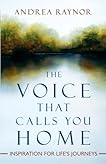
The Voice That Calls You Home: Inspiration for Life's Journeys

The Voice That Calls You Home: Inspiration for Life's Journeys The Voice That Calls You Home: Inspiration for Life's Journeys by Andrea Raynor


My rating:
5 of 5 stars

I got the opportunity to read this book before it is officially published, because the author's publicist sent me an advance review copy. Raynor has worked as a chaplain, both in hospice care and caring for people during the 9/11 recovery efforts, and she is a cancer survivor. Knowing these facts, I was intrigued. What I didn't expect, however, was how much this book would deeply move me.

In recent years, I rarely keep books that I've read unless I think I will read them again someday. Even then, I try to keep books moving along--I will post them to Paperbackswap.com or give them away instead of keeping them on our many bookshelves--but this one is a keeper and a loaner. I can already think of a long list of people who would appreciate this book.

I found myself needing to pause occasionally at the end of the chapter, because not only did the book make me cry several times (and I admit, I'm very emotional since becoming a mother, especially after surviving the NICU for 4 months), but I also needed to absorb the power of the message.

Much to Mike's disgust, I'm sure, I've dog-eared this book several times to mark the passages that touched me most. I'm not sure whether I can get him to read it now, since he will be so disturbed by the dog ears!

Raynor opens her book with the story of a Buddhist tale about a woman named Kisagotami who is grieving the loss of her baby. She goes to the Buddha, begging him to bring her son back to life. The wise Buddha tells her that he will do what she asks, if she will do one thing. She must return to her village and get a single mustard seed from one household that has not known death. Kisagotami returns to the Buddha without a mustard seed, but she has experienced healing because she heard the stories of her community and realized she was not alone.

After becoming an advocate of family-centered health care and coming to know so many people who have grieved their children's deaths, two incidents in the book highlighted the need for continuing work and education in this area. Raynor describes the death of an older Italian man, and the nurse who told her that she was going to ask the family to leave so she could prepare the body. Raynor suggested to the nurse that they ask the man's wife to stay (something she herself would never have asked for because of her limited English and respect for medical authority). The nurse assented, and she and Raynor watched as the wife cleaned her husband's body so tenderly and lovingly that they both felt blessed by the experience. But it never would have occurred to the nurse to ask the wife to participate. It reminds me of the time that an NICU nurse proudly informed me, when we arrived in the unit, that she had given tiny baby Christopher his first bath, even though she knew we would be arriving soon...and forever eliminating our opportunity to experience that first milestone. (And consequently she will forever remain in my mind as "that nurse.")

Another moment desperately needing family- and patient-centered care was when Raynor went in for her second lumpectomy and was treated like she didn't even exist, by the technician, nurse, anesthesiologist, and surgeon. When she woke up from surgery, the nurse was plying her with coffee so she'd be able to get up and leave. When Raynor found out that she would have to have a mastectomy, she wisely sought a new surgeon and a new hospital, one that would care for her spirit as well as her body.

Raynor's memoir is unusual in the sense that she was raised in a warm, loving family environment, by wise, spiritual parents. She appears to be the kind of person who has always had a transcendental connection with spirits and death. Her parents used to have seances when she was young, and her Methodist father had a unique ability to connect with spirits. Her father's mother died when he was young, and Raynor's daughter was born on the anniversary of her grandmother's death, transforming that day for her father into a happy, doubly meaningful one.

In the dark weeks and months after 9/11, Raynor volunteered at Ground Zero, going down to New York at night time, after spending all day doing hospice work and caring for her own family. When bodies or fragments of bodies were recovered, she would say prayers over them in the morgue. She ministered to the police officers, fire fighters, and other workers, and she tried to find meaning, somehow, in the wasteland.

She writes openly and honestly about her own battle with breast cancer, and the circle of friends and family who lifted her up during her darkest days. She writes about well-meaning friends who tell her "at least you're here" or "at least you've got your health" without understanding how discounting that is. (I can remember similar feelings when Chris was in the NICU, or when I had miscarriages.) I loved the story of her "buzz party" surrounded by women friends, and how her son asked her whether she'd rather die of cancer or be bald for a little while so she could stay with him.

Raynor writes beautifully of her experiences seeing people through to the other side. Although she witnesses and supports the deepest kind of pain and grief imaginable, she tries to find meaning and mystery in this sadness and suffering. She does not offer easy answers or platitudes, but suggests that the best we can do is to keep calling out for help, and "keep believing that there is One who hears, and to be open to the ways in which God comes to us. As the German theologian Dorothee Solle wrote: 'God has no other hands than ours.'" What I valued most about this book were the underlying themes of being God for one another and helping each other through the scariest moments of life.

The ultimate message of Raynor's book is that we can be each other's angels on earth. The most important thing we can do for someone who is suffering is to be present, to listen, and to be present again. We cannot take away another person's pain and we should not even try, but we can be present. We can be ministers to each other, and be the voice that calls each other home.

View all my reviews >>

Saturday, November 27, 2021

What I Read in 2021

Starting my own business has severely dented my ability to keep up with my personal writing, in addition to my habit of regularly writing book reviews of what I've read! I've written very few book reviews this year, but I have read some amazing books, especially by writers of color. 

Yet again this year, I've read more nonfiction than fiction! This is a turn-up for the books! (See what I did there..LOL!)

You can see my other book lists, dating back to 2001, on this page. Here's a summary of 2021:

Fiction


The Alice Network, by Kate Quinn

I loved the intertwining stories of two women, a British woman who was a spy in France during World War I, and an American woman who is looking for her beloved cousin. I love a great woman spy story! I chose this book for our trip back east for parents' weekend, and it was the perfect choice for a trip!


Transcendent Kingdom, by Yaa Gyasi

I haven't yet read Gyasi's more famous Homegoing; I guess I started backwards. This novel explores the immigrant story while also touching on science, animal research, mental illness, grief and loss, and opioid addition. A beautiful book.


The Bombay Prince, by Sujata Massey

I read everything Sujata writes, especially after getting the joy of interviewing her on my podcast this years as a resilient writer. When I interviewed her earlier in the year, this book hadn't been published yet. Of course, it did not disappoint. With Book #3, we are getting to know Perveen Mistry, India's only female lawyer back in the '20s, much better. This time she finds herself in the midst of the famed riots in Mumbai, then known as Bombay. It's hard to imagine what it would feel like to not be able to talk to a man who was not your husband without casting shame on yourself. Sujata does an excellent job helping the reader learn what things were like in India in 1921, especially for women. 


Chains, by Laurie Halse Anderson

I chose this book for our trip to Boston and Connecticut to drop our son off at college. It was a perfect choice, since we were surrounded by Revolutionary War sights. Chains deepened my understanding of that time by sharing the perspective of an enslaved teen who is caught up in the revolutionary fever. "Give me liberty or give me death" did not apply to everyone...only to white people, particularly men. I found Isabel to be a captivating character, and I definitely want to read the next book in the series!


The Distant Dead, by Heather Young

This book will make you look at poverty, drug addiction, and childhood trauma in a new way. It's the story of a high school teacher with a sketchy past, who gets acquainted with an outcast, in a small Nevada town. When the teacher shows up dead, a fellow teacher begins following the breadcrumbs.


The Pearl Thief, by Elizabeth Wein

A prequel to one of my favorite books, Code Name Verity, it's the story of Julia Beaufort-Stewart, a spunky 15-year-old Scotswoman. And it's the story of river pearls, Scottish travelers, and deep friendship. I love Wein's characters.


The Water Dancer, by Ta-Nehisi Coates

This was a beautifully written, lyrical book, as we should expect no less from Ta-Nehisi Coates. It's the story of Hiram, who is enslaved, and who has visions and special powers. It kept reminding me of Kindred by Octavia Butler, a sort of sci-fi look at slavery. 


Anne of Green Gables, by L.M. Montgomery

When my friend Catherine heard I'd never read Anne of Green Gables, this book soon appeared on my doorstep...with this gorgeous cover. And now I'm a convert. My husband and I watched all three seasons of "Anne with an E" on Netflix this year. I love Anne Shirley Cuthbert...she is a redhead after my own heart!


Leave the World Behind, by Rumaan Alam

This was an interesting piece of speculative fiction, a little bit too close to home with COVID. It certainly made me think a lot. Some of the plot seemed implausible, and somehow I expected more (especially with the Black couple arriving at the home they own, which was being rented by a clueless white family). 


Wench
, by Dolen Perkins-Valdez

An eye-opening novel about a haven for slave owners and their enslaved concubines in Ohio before the Civil War. It was the author's first novel and it was lacking in some areas, but it was a memorable story and setting.


Woman in Cabin 10, by Ruth Ware

Lo Blacklock is a bit of a mess. A travel journalist who has been burgled and has PTSD, she's been given an opportunity to go on a luxury cruise in Norway...but nothing seems as it is. This was meant to be a thriller, but I found it not as effective as some other thrillers I've read. It started out well, but seemed like it had a ton of plot holes.


China Room, by Sunjeev Sahota

My husband really liked this book, but I was less enamored. I have read a lot of Indian fiction, so I am comparing this novel to many others. This story was not believable to me and it felt like it was a male fantasy. I found it difficult to fathom that a young girl would not know which of the three brothers was her husband...and then when he raped her without her consent, she fell in love with him. The story of Mehar's descendant was interesting at times before I lost interest. Overall, I found this book lacking.

Nonfiction


The Three Mothers: How the Mothers of Martin Luther King, Jr., Malcolm X, and James Baldwin Shaped a Nation, by Anna Malaika Tubbs

This book was recommended to me by one of my podcast guests, and I loved it. It's a classic example of a herstory untold. Each one of these women had a fascinating story and I'm glad to finally learn about them.

Broken Horses, by Brandi Carlile

When I first published this list, I somehow forgot one of my favorite books this year!! I absolutely loved this memoir by my all-time favorite singer-songwriter. Raw, honest, vulnerable, and beautifully written. I read the book as soon as it came out, and now I'm reliving it by listening to the audio. The audio book has songs on it!! (The paper book does too, but they are just lyrics.) There's also a gorgeous playlist that goes with the book on Spotify.


Eloquent Rage: A Black Feminist Discovers Her Superpower, by Brittney Cooper

Black feminism, scholarship, and fierce rage: what could be more powerful? Brittney Cooper is an associate professor of Women's and Gender Studies and Africana Studies at Rutgers University, but this is not an academic tome. It is a manifesto. I listened to this as an audio book, and it's one of the few books I've listened to this year that I want to actually read again on paper.


You'll Never Believe What Happened to Lacey: Crazy Stories About Racism, by Amber Ruffin & Lacey Lamar

I happened across this in the Wesleyan bookstore on parents' weekend, and I downloaded the audio book to listen to as we were driving back into Boston for a few days before flying home. I finished the book when I arrived home. You probably know Amber Ruffin from Seth Meyers, and Lacey is her sister who still lives back home in Nebraska. And you'll never believe the stories they tell. Every white person needs to read/listen to this one to realize how racist this country is.


Black Magic: What Black Leaders Learned from Trauma and Triumph, by Chad Sanders

Chad Sanders worked in the tech world and learned how much more included he felt if he code switched (acted white, essentially). When he realized how that was eating him up inside, he decided it would be better to just act his true self...use his Black magic of resilience. This book includes Chad's story and interviews with his friends and colleagues. He asked these people, how have their experiences of trauma helped them be more successful in their careers? This theme of course is appealing to me, since I have a podcast about finding fertile ground through adversity.

Nice White Ladies: The Truth About White Supremacy, Our Role in It, and How We Can Help Dismantle It, by Jessie Daniels

Another excellent non-academic book about race and racism by an academic. Daniels is a professor of sociology at Hunter College. She will shake up what you think about white women. If you're a white woman, this is a must-read. 


The Body Is Not an Apology: The Power of Radical Self-Love, by Sonya Renee Taylor

A friend recommended this book to me when I was having some body image doubts after someone rudely told me I had a crooked face. (Yes, thanks to a cleft lip, ma'am!) This book shakes up our culture's mores and beliefs about beauty and needs to be read again and again. Much of the book is about Black women's bodies, but it is affirming for all!


Man Enough: Undefining My Masculinity, by Justin Baldoni

I loved Justin Baldoni in "Jane the Virgin," and when I saw he had a podcast about masculinity, I decided to read his book. As the mom of three boys, I felt this was an important book to read. It's the only book I'm aware of that really examines the kinds of pressures men are under and how these pressures can affect their relationships with the women in their lives. Highly recommended.


Hidden Valley Road: Inside the Mind of an American Family, by Robert Kolker

This was an outstanding narrative nonfiction book about the Catholic Galvin family with 12 children in middle America (10 boys and 2 girls). Six of the boys had schizophrenia. Kolker alternates the Galvin story with the history of schizophrenia and attempts to treat it. This book is gripping and educational. 


How to Raise an Adult: Break Free of the Overparenting Trap and Prepare Your Kid for Success, by Julie Lythcott-Haims

I got the honor of interviewing Julie on my Finding Fertile Ground podcast during my "Resilient Writers" series. At the time, I hadn't read this book but had watched her TED talk about it. She is a former Stanford dean and has become famous for helping parents not be helicopter parents...and for helping kids become independent. This was her first book on the subject, and I highly recommend it for any parent! 


Conflict Resolution for Holy Beings: Poems, by Joy Harjo

I began listening to Harjo's book of poems as I took a walk on Thanksgiving this year. Ever more aware of the racist history of Thanksgiving, I wanted to soak up some indigenous wisdom. Harjo did not disappoint.


Women of the Blue & Gray: True Civil War Stories of Mothers, Medics, Soldiers and Spies, by Marianne Monson

I read this book in preparation for my interview with Marianne Monson on my "Resilient Writers" series on the Finding Fertile Ground podcast. I loved reading about these badasses of history.


My Sister: How One Sibling's Transition Changed Us Both, by Selenis Leyva & Marizol Levya

I received this in my book group holiday swap, and I really enjoyed it. Selenis Leyva was on "Orange Is the New Black." She and her adopted sister write about their childhoods, how Marizol slowly transitioned,  and how their family reacted. It's a sister love story.


Surviving the White Gaze: A Memoir, by Rebecca Carroll

Rebecca Carroll grew up feeling isolated as an adopted girl of a white family in New Hampshire. She hoped meeting her birth mother would help her heal from that trauma, but it only multiplied her stress and sense of self-worth. This is an excellent memoir of the complexity of raising a child of another color in a mostly white environment. 


Consent: A Memoir, by Vanessa Springora

I have always passionately disliked Lolita. As an English major, I had to read it more than once! This book is about a real life Lolita story, about celebrated French writer Gabriel Matzneff, who sexually exploited the 14-year-old Springora. Being France, and with him being famous, people went along with this bizarre "relationship." The #metoo movement made Springora realize how f*cked up this situation was and she decided to tell her story. Lolita takes charge of her life again.


Work Your Way: Reinvent Yourself, Create the Life You Want, and Thrive as a Consultant, by Lisa Hufford

My business coach bought this book for each of us and brought Hufford onto Zoom for a master class. Lisa Hufford was climbing the ladder at Microsoft until she realized she couldn't have high-quality time with her kids and continue working at the pace she had been. She quit and became a consultant, and years later, she now has a thriving consulting business. She lays out how she did that in this book.