Monday, February 25, 2013

Bruce

Bruce, by Peter Ames Carlin

Somehow, I'm not sure why, I was late to the Bruce Springsteen train. I knew his more popular songs and liked them, but it wasn't until I went to my first Springsteen concert with my teenage son last November that I became a convert.

Peter Ames Carlin, a writer for the Oregonian and author of several musician bios, interviewed Bruce and his colleagues and pored over the albums, articles, and interviews to create this exhaustive (and some say, exhausting) biography. At times Carlin uses sentence fragments, which I'm not crazy about, and he does tend to go on at times...perhaps a more diehard Springsteen fan would have gotten more out of the long stories about various concert tours and people who helped him along the way. It was interesting to read about how Bruce made it big, gradually and with a lot of hard work and a loyal fan base in New Jersey.

Younger Bruce
One reviewer (and local New Jerseyite) wrote about how this book was book-ended by death...starting out with the childhood death of Bruce's aunt, which affected his whole family forevermore, and ending with the death of his beloved friends and bandmates Danny Federici and Clarence Clemons. Reading about Clarence's death (and Bruce bringing his guitar into the hospital room to sing Clarence out during the last 3 hours of his life) brought me to tears, as did the poignant description of how Bruce's dad asked him to sit on his lap one night (as an adult) after a lifetime of conflict and tense silence between the two of them.

With Clarence
I'm still amazed that I'm a Springsteen newbie. He stands for so much of what I believe in. From representing the common American working person to singing a song for the movie "Philadelphia," before most of Hollywood became gay friendly, from engaging with and advocating for Vietnam vets and Amnesty International, to continuing to sing about the underprivileged even after he hit it big, and for showcasing a local charity at each of his concerts...he is a strong voice of social justice.

Carlin's book does not paint him as a perfect man...he can be narcissistic, demanding and selfish. He hurt the members of his band when he cut them off for several years to pursue his solo work. He has exacting standards for everyone who works with him.

With Steve Van Zandt
But he is clearly a musical genius, prolific in his song writing and creative in his musical arrangements, and a true poet of the people.

The one thing the book was lacking was more about his family. Carlin writes about the birth of Bruce and Patti's first son, but doesn't go beyond that. I'm guessing that Bruce asked Carlin to keep his family out of the book...but it would have made this bio much more comprehensive. We hear about his initial relationship with Patti, but in later years not much.

Bruce Springsteen Pictures & Photos
With his family at the Kennedy Center Honors
Now I'm going to go listen to the albums painstakingly described in the book, and they will mean much more to me.

For fun, watch this clip of Bruce yukking it up with Jimmy Fallon, imitating Neil Young, in "I'm Sexy and I Know It."

Sunday, February 17, 2013

The Burning

The Burning, by Jane Casey

I read Jane Casey's first novel, The Missing, and was not as nearly taken with it as her second, The Burning, which felt similar to BBC's "Prime Suspect" (with Helen Mirren), but with a young Irish detective named Maeve.

One reason why I didn't like her first novel was that I didn't find her main character, Sarah Finch, to be very likable. She ended up being a teacher after she hated school, and she didn't seem to get any enjoyment out of her job. I cannot relate to this, but my husband tells me that he thinks it sounds British...he thinks that more people in the UK go into teaching without really being called to do so. That might be true.

At any rate, I prefer Maeve. She has to put up with her English colleagues' misogyny and crap about her Irish ancestry, but she is a strong and complex character. She's working on a case to catch a London serial killer who likes to beat his female victims to a pulp and then set their bodies ablaze. It's more of a police procedural (hence the Prime Suspect comparison) than a mystery book, but I liked it.

The other thing I appreciated about this book was the publisher didn't dumb it down for Americans...as in, they didn't change the British terms and language (like they did in Harry Potter, for example). Most Americans will not know what a bacon buttie is...but that's okay! They can look it up if they want to know.

I will keep reading Casey's books (she has three more Maeve Kerrigan books published with another one on the way), and I'm so glad she redeemed herself after the first one.

Wednesday, February 6, 2013

The Very Thought of You


The Very Thought of You,
by Rosie Alison


Last year Mike and I watched a short British made-for-TV movie called "Good Night, Mister Tom," and I became interested in the history of English children evacuated to the country during World War II...so this book intrigued me.

It's the story, in part, of Anna, an eight-year-old girl who is evacuated from London and sent to a stately home in Yorkshire in 1939. Wise beyond her years, she soon becomes aware of the adult secrets around her. Thomas and Elizabeth Ashton, who have opened up their home, are deeply unhappy with each other. Soon they each start affairs. In the meantime, Anna's mother (whose husband is fighting in Africa) starts up her own affairs in London, for no particular reason except that the war is on. Every adult in this book is unhappy and unfaithful....even Anna herself when she grows up.

Unfortunately, none of the characters are sympathetic with perhaps the exception of Thomas. Anna was more likable as a child, but when she grew up I found myself getting irritated with her choices and the way she let her life fall to ruin. This book, unfortunately, does a great deal of telling rather than showing. In fact there's little dialogue. The writer is a documentary film maker, and in many ways that shows.

I felt this book had promise--the setting in Yorkshire, the time it happened, the idea of children being sent away from home, the war--but I feel let down. I think I will have to read Good Night, Mister Tom (also a book) instead.

Friday, February 1, 2013

Somewhere Inside

Somewhere Inside: One Sister's Captivity in North Korea and the Other's Fight to Bring Her Home,
by Laura Ling and Lisa Ling


This is the first book I've read since my surgery that has really compelled me. Any story about or by sisters always interests me, and this one--about Asia--did in particular.

As you might recall, Laura Ling was captured with her colleague, Euna Lee, and imprisoned in North Korea from March to August 2009. They worked for Current TV (cofounded by Al Gore) and were making a documentary about North Korean defectors who escaped into China, some of whom ended up in forced marriages or sex trafficking. They traveled into China on tourist visas instead of admitting they were journalists because they were not going to be portraying either China or North Korea in glowing terms. They hired a guide to take them to the Chinese-North Korean border, and one morning the guide encouraged them to go onto the frozen river that serves as the boundary between the countries. They followed him, and they came to regret it. Although they went back into China, guards from North Korea pursued them and captured them.

For five months, they were interrogated about their intentions and actions and kept isolated from one another. At the same time, Laura's sister Lisa (who works for Oprah and used to appear on "The View") took advantage of her media and government connections and did everything she could to get her sister out of North Korea. She was in contact with Al Gore, New Mexico Governor Bill Richardson, Oprah Winfrey, the U.S. State Department, and media and entertainment celebrities. At one point, Michael Jackson even offered to perform for Kim Jong Il (if it would help), right before he died so suddenly.

It's clear that Laura Ling had powerful people working for her, trying to get her out. If her sister hadn't used all her connections and if she hadn't been working for Al Gore's company, who knows whether they would have been able get former president Bill Clinton to make a visit to Pyongyang to retrieve her and Euna Lee (who had left a 5-year-old daughter at home in the U.S.).

Clearly, they made an error in judgment by taking the risk to cross into North Korea...whether they were persuaded to take the risk by their guide or not. But that doesn't detract from this story.

I was touched by the very close relationship between the sisters, who are best friends. I cried several times, as I did again when watching the video of Laura Ling's speech as she got off the airplane in Burbank, California. I'm always deeply affected by stories of sisters being separated or reunited.

I also found it touching to read about the relationships she developed with some of her guards, translators, and even her primary interrogator. Even though she was being held in captivity, she was treated well for the most part. Even though the North Koreans felt angry at the United States, most of them did not treat her unkindly.

It's clear, as is mentioned in the epilogue, that many political prisoners do not have the resources Laura Ling and Euna Lee had...working incessantly to free them. But evident in the book, too, is Laura Ling's keen intelligence and political and media savvy. She handled the imprisonment professionally, wisely, and diplomatically, in spite of her own health problems and severe stress.

Here's an extensive Fresh Air interview with the Ling sisters, as well as the trailer of the book:


Monday, January 28, 2013

The Miracle Life of Edgar Mint

The Miracle Life of Edgar Mint, by Brady Udall

When I picked up this book, I wasn't aware that it was by the author of The Lonely Polygamist, which has been on my list for awhile (although my husband tried to read it and couldn't get into it). Brady Udall comes from a political Mormon family, and many of his books have Mormon themes or characters.

This book has taken me, literally, weeks to get through.  I started it back in December before my surgery and put it aside for a bit while recovering because it is quite heavy. This was not an easy read--not only does it take some time to get into (Udall tends to have a meandering writing style) but also because it is so sad. It reminded me a lot of The Power of One, but I liked this one better.

Edgar Mint was born to an Apache mom and a white dad, both of whom abandoned him. When he was seven years old, the mailman ran over his head...he miraculously survived, but his life deteriorated from there. He traverses a series of temporary homes, from a long-term stay in a decrepit hospital and a horrible boarding school for Native Americans to a foster home of kind but dysfunctional Mormons. He has a few people who are looking out for him, but they are all totally screwed up. Edgar finds comfort in typing out his angst every evening on his classic typewriter.

One thing I found really bizarre and a bit offputting was Udall's style of alternating between first person and third person, often in the same paragraph and sometimes even in the same sentence. I guess it was to show how Edgar was trying to distance himself from his own life and experiences...I'm not sure.

Although I found this book to be sad and a bit slow, it is a classic reminder of how desperately children need nurturing, comfort, and wise guidance. I am happy to say that it has an ending of redemption.

Saturday, January 12, 2013

Fifty shades of meh

fiftyshadesofmeh

No, I haven't read it and I do not plan to. I'm a book snob. Once I heard it was Twilight fan fiction, I couldn't bear the thought...even though my mother-in-law has read it! (Ten Reasons I Hate Twilight)

This wonderful review on thepessimist.com is all I need!

This fifty-shades-of-gray phenomenon is completely ridiculous, if you ask me:


We love to joke about it at my book group...but no, we are not reading it! One of our book group members has a coworker (a man!) who gave her the book to read.


Really, wearing handcuffs on a necklace?


The writer is British (which, from what I've read, is obvious in the book, as she doesn't know the U.S. very well). I love this line in the review linked above,
"In fact, the book from whence he sprang, steely and sleek with enigmatic man-sweat, is now the best-selling book in British history.  AND THEY INVENTED ENGLISH! (Both the language AND the wimpy accent!)" 
Who are you calling wimpy?

But it's also extremely popular in the U.S., especially New England.


Here's a fun parody.


I ask you, just like I couldn't understand what Bella saw in Edward, why on earth would a woman want a man to "boss her around, treat her like a foolish child, tell her she’s your “property” and basically take her completely and totally for granted"? What is so attractive or sexy about that? I just don't understand!


And I ask you:


Loud in the House of Myself

Loud in the House of Myself: Memoir of a Strange GirlLoud in the House of Myself: Memoir of a Strange Girl, by Stacy Pershall

I picked this one up at random at the library...I had never heard of Stacy Pershall...little did I know she was an Internet sensation (and not necessarily in a good way).

Pershall grew up in the small town of Prairie Grove, Arkansas, and she never really fit in there. Pershall's mom pours all of her attention on her brother. She refers to her father's anger, but we don't get much detail on that.

Fast forward to adolescence, when she develops anorexia and bulimia, followed by (or concurrent with) bipolar and borderline personality disorder. She becomes highly self-destructive and somehow, amazingly successful given the self-destructive behavior (she lands a job as adjunct professor at the School of Visual Arts after earning her M.A., somehow!).

Each time she seemed to pull her life together, her mental illness struck again. (She even got married for awhile.) As one of the Internet's first "camgirls," Pershall broadcast one of the first online suicide attempts (and only one of many of hers) before shutting down her site. She found comfort by making tattoos of the things that scared or saddened her.

This book shed a lot of light for me on mental illness, particularly bipolar and borderline diseases. I would have liked to have learned more about her childhood and any thoughts she had about what led her to these illnesses. (Was it genetic? Environment?) She seems to have a tenuous relationship with her parents now, but what happened to her brother?

This was a raw, terribly honest memoir about all the mistakes Pershall has made in her life. I'd expect nothing less from someone who bared her soul (and clothing) for the Internet.

Most of the book is about her illness, and only an epilogue provides some closure. She seems to have it together now...but I felt that we were missing something in the journey to success. Maybe there's a Part 2 in progress?

View Stacy's book trailer to get a clearer picture of her.


Monday, January 7, 2013

Maisie Dobbs: Cross between Downton Abbey and Sherlock Holmes

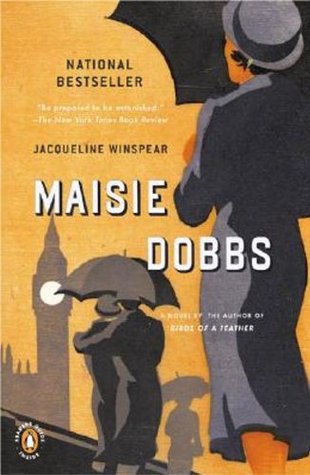
Maisie Dobbs (Maisie Dobbs, #1)Maisie Dobbs, by Jacqueline Winspear

A friend recommended I try out Maisie Dobbs for my post-surgery recovery because I find I lack mental energy when I'm in pain and on pain meds. (My brain just doesn't work right!) After my Joanna Trollope waste of time, I finally dove into Maisie Dobbs. I was beginning to worry that I'd lost my passion for reading from the brain surgery I had, but I'm happy to report that I'm getting back into the swing of things. Maisie Dobbs was just the ticket, although it took a little getting into in the beginning.

Maisie Dobbs is the daughter of a costermonger (a street seller of fruits and vegetables) and after her mother dies, she's taken into service because her dad cannot afford to take care of her. Soon Lady Rowan (lady of the house) takes her on as a project after noting Maisie's keen intelligence. She's tutored by Rowan's friend Maurice, who helps her prepare for Cambridge entrance exams. However, after a year of studying at Cambridge's women's college (in those days they didn't actually bestow degrees on women, but they were allowed to study), she decides her country needs her. She signs up as a nurse and is sent to France. After returning from France, she sets up her own business as a private investigator.

Much of this first book in the series is used to set up the character of Maisie. She takes on a case that requires her to delve into her own sad history in the war and her one true love. The book starts in the present (well, 1929), but then flashes back to her childhood, life in service, and time during the war. I found those pieces the most interesting because I wanted to get to know more about Maisie. Winspear slowly unravels the secrets of Maisie's past and her own tragic life.

Like Downton Abbey, it tackles themes of British class mores and the impact that World War I had on its participants. For example, both the show and the book feature stories about soldiers who deserted in cowardice and were shot.

I'm not sure how realistic this series is...how likely is it for the aristocracy to actually invest in one of their young housemaids to help them better themselves? She seems to fit in well at Cambridge, but all we really see about that part of her life is her close friendship with her roommate. How did she do with her studies? Not sure.

I really enjoyed this novel but it wasn't perfect. I found some details lacking, but I will keep reading in the hopes that it will only improve! I'm curious to learn more about Maisie--she's an interesting character.


Saturday, December 22, 2012

Daughters-in-law

Daughters-in-LawDaughters-in-Law, by Joanna Trollope
I picked this book up at the library because I was stocking up on some lighter fiction to read after my brain/ear surgery. I've read a few Joanna Trollope books in the past (my mother-in-law likes her), but I hadn't read her for a number of years. I should have known better...I gave the last two books I read only two stars. This was definitely light, but it was not interesting. I wish I'd given up halfway in, but I finished it.

It's about a couple (Anthony and Rachel) who have three sons. Rachel struggles in her relationships with her daughter-in-laws. Her son Luke's wife Charlotte challenges her authority and their conflict spreads throughout the family. When Charlotte announces that she is pregnant, Rachel reacts in a rude, critical way. 

I asked my husband what he thinks about the British view of apologies. Luke calls his father Anthony to see if he will get his mother to apologize, and Anthony is horrified that Luke would suggest that, even though they all agree that Rachel was in the wrong. This seemed preposterous to me. 

The characters were shallow and unmemorable, and very little happens in the plot. Trollope is known for writing about relationships, but the relationships in this book are shallow and weak. The brothers cannot be distinguished from each other, and Rachel rarely interacts with her daughters-in-law in the book. 

Trollope said she wanted to write about the relationships between mothers-in-law and daughters-in-law because she believes they are more difficult than relationships with sons-in-law. But this book missed the mark.

Some light reads are enjoyable or memorable, but this book is neither. It was a waste of time.

Best books of 2012

With my book group (and our holiday book exchange)
Here are the best books I read in 2012. Click the title to read my review. These are listed in approximate order of how much I liked them (#1 being the best). I'd love to hear what you thought of any of these books. If you've read any, please leave me a comment.

You can also refer to best books lists back to 2001 here. Enjoy!


This is cross-posted in Every Day Is a Miracle.

Fiction
1.  The Invisible Bridge, Julie Orringer
2.  The Book Thief, Markus Zusak
3.  Marcelo in the Real World, Francisco X. Stork
4.  Wonder, R.J. Palacio
5.  Sing You Home, Jodi Picoult
6.  The Casual Vacancy, J.K Rowling
7.  All Passion Spent, Vita Sackville West
9.  The Kitchen House, Kathleen Grissom
10. The Descendants, Kaui Hart Hemmings
11. This Beautiful Life, Helen Schulman
12. Shutter Island, Dennis Lehane
13. Everyone Is Beautiful, Katherine Center
14. Naoko, Keigo Higashino
15. The Wishing Trees, John Shors
16. The Girl Next Door, Elizabeth Noble
17. Song Yet Sung, James McBride
18. Second Fiddle, Rosanne Parry
19. Saving CeeCee Honeycutt, Beth Hoffman
20. Shine, Lauren Myracle
21. Glow, Jessica Maria Tuccelli
22. The Family Fang, Kevin Wilson
23. How It All Began, Penelope Lively
24. The Book of Dahlia, Elisa Albert
25. The Treasure Map of Boys, E. Lockhart

Nonfiction
8. Crazy Enough, Storm Large
13. Poster Child, Emily Rapp
14. Moonwalking with Einstein, Joshua Foer
15. Happy Accidents, Jane Lynch
17. You Say Tomato, I Say Shut Up, Annabelle Gurwitch and Jeff Kahn

Sunday, December 9, 2012

The Lacuna

The Lacuna, by Barbara Kingsolver

I had to give up on this one. I got up to page 207, after putting it down to read a lighter book group selection, and tried to pick it up again. I will never forget my delight in reading my first Barbara Kingsolver novel (The Bean Trees) back before she was very well known. I have loved so many of her novels.

I am interested in Mexico, Frida Kahlo, and Diego Rivera and loved a biography of Frida I read several years ago. So I really, really wanted to stick this one out. But I must give up.

I just can't get connected or drawn in.

Thursday, December 6, 2012

The Treasure Map of Boys

The Treasure Map of Boys, by E. Lockhart

I read this book because my book group chose it for this month. We didn't have much time between book group meetings, because they very kindly moved up the meeting by one week so I could attend. (Otherwise I would have missed it because of my impending surgery.) What I didn't know until I read the reviews was that this was the third in a series!

I'm one of those people who really, really likes to start with the first book in a series. So after I got over my unsettled feelings I finally settled into the book. I put down The Lacuna by Barbara Kingsolver to read this, and it was much, much more readable than that tome. I usually love Kingsolver but it's taking me forever to slog through The Lacuna.

I don't read much young adult (YA), but from what I understand from my middle-grade writer husband, YA is often full of a lot of angst and dysfunctional relationships. Ruby Oliver, the protagonist, struggles with making and keeping friends and has a lot of stress around relationships with boys. In the book preceding this one, Ruby's boyfriend Jackson takes up with one of her friends, and she becomes what she believes is a social pariah. (It's not really as bad as she makes it out to be, though.) In this book, Jackson is back in the picture again, possibly. Reading this book made me SO GLAD I do not ever have to do high school or junior high ever again.

Ruby's parents are well-meaning hippies, and she actually does have some friends worth keeping. The stories about her teachers and baking were amusing...also her time working in the Birkenstocks store at Pike Place Market. (After reading about her adventures fitting bare feet into Birkenstocks, of all sizes, shapes, and smells, I realized that I could NEVER do that!)

But who goes to the Pike Place Market to buy supplies for a bake sale? That seemed completely unrealistic for local Seattle high schoolers! Ruby is a smart, well-meaning girl, and she really doesn't want to screw up her friendships, but somehow she has a knack for that.

After I said that I don't read much YA, I now realize that this is actually the fourth or fifth YA book I've read all year...and it was fine but it's my least favorite. The others--Wonder, Marcelo in the Real World, and Shine--focused on much more serious issues, and this was like marshmallow fluff in comparison. It was a good distraction from the current stress in my life...a cute read...but not sure I will be reading any more of the series. There's just not enough here to draw me back in.

Now I'm back into The Lacuna for awhile...but when I go into the hospital I'm planning to wade into something much lighter!

Saturday, November 24, 2012

Everyone Is Beautiful

Everyone Is Beautiful, by Katherine Center
Everyone Is Beautiful is a sweet, easy read, about a Texan woman of Colombian origin who's transplanted to Boston because of her husband's job. She has three young boys who are extremely close together and full of mischief. She feels bereft at leaving behind her supportive parents in Houston. She hardly ever has any alone time with her husband, and she has no romance in her life.

When a stranger at the park supposes her to be pregnant, she decides she must make a change. She begins going to the gym every day and she also takes up photography. As expected, soon her marriage is in jeopardy.

I appreciated the fact that this was a story about a stay-at-home mom with a brain and a mission to bring meaning to her life. She has a true friend who supports her and accepts her for all her faults. Her husband loves her and although we do not see it at the beginning, he adores her. She comes to peace with her body and appreciates the beauty in women of all shapes and features around her.

It's a simple message and a simple story, and I actually cried at the end...as she realizes how much she loves her husband and how lucky she is.

Wednesday, November 21, 2012

Wild

Wild: From Lost to Found on the Pacific Crest Trail, by Cheryl Strayed

Oh my...what a wonderful book! I first heard about Wild when I was at Holden Village this summer, when two friends were reading it at the same time. I remember April telling me about how crazily misinformed and naive Strayed was about backpacking the Pacific Crest Trail...she didn't even test out the weight of her backpack until the morning she set out. She packed such strange choices as a full-size camera and fancy lens, even though she's not a photographer. She included items like a foldable saw, just in case she needed to cut wood. The only thing she included for protection from predators (man or beast) was a loud whistle. And she set off completely alone.

In the beginning, Strayed (a name she chose for herself) was not a particularly likable character. After her beloved mother dies suddenly of cancer (described in a completely heart-wrenching, daringly vulnerable chapter), she went off the rails. Married way too soon at 19, she began having irrational flings, cuckolding her wonderful husband and best friend, feeling guilty but unable to keep herself from doing it. She started shooting heroin with a guy she hooked up with in Portland while visiting a friend. Her siblings and stepfather, to whom she previously felt close, scattered and grieved in their own ways. In another heart-wrenching chapter, Strayed and her brother had to shoot their mother's neglected horse because she was too old and sick and they couldn't afford to hire a vet. She was a complete mess.

But something about the Pacific Crest Trail called to her. At the age of 22, wracked by grief, Strayed set out on a 1,100-mile hike all by herself...woefully unprepared for what she would face. Beginning in the Mojave Desert, she hiked up through California and Oregon, concluding at the Bridge of the Gods on the Oregon-Washington border. She hiked through blazing heat, record snow levels (when she couldn't find the trail), and drenching rain...and faced down severe dehydration, treacherous conditions, bears, rattlesnakes, coyotes, and a predatory hunter.

Strayed lives in Portland now and has become a local celebrity writer. She's moved beyond the devastating grief and wretched self-destruction of her early 20s and now has a husband and two school-age daughters. In this interview with Happiness Project author Gretchen Rubin, Strayed talks about how happy she is now and challenges anyone who is feeling unhappy to get out and walk for 20 minutes:
Gretchen: What’s a simple activity that consistently makes you happier?
Cheryl: Walking. Doesn’t it make everyone happier? I challenge you to walk for twenty minutes and not feel better by the end of it. It’s the cheapest, healthiest cure on earth.
Gretchen: What’s something you know now about happiness that you didn’t know when you were 18 years old?
Cheryl: That we can survive anything, even if we don’t want to. Even in the face of great suffering, there is joy.
Masterfully and honestly told, Wild is a story I will remember for a long time. Check out this book trailer with photos and Strayed's description of the book:

Tuesday, November 13, 2012

Let's Pretend This Never Happened

Let's Pretend This Never Happened: A Mostly True Memoir, by Jenny Lawson (The Bloggess)

You need to avoid this book if:

--You are easily offended by foul language.
--You are an ardent animal lover.
--You are a literalist. (Did it bother you that Dan Brown took liberties with history in The DaVinci Code?)
--You take things or life too seriously.

Jenny Lawson, otherwise know as The Bloggess, has written a hilarious memoir about what it's like to:

  • Grow up in the wilds of Texas, with a father who is a taxidermist
  • Be so poor she wore bread sack shoes (still trying to picture those)
  • Become completely accustomed to running into the interior of a deer carcass, acquiring pet raccoons, having a just-killed squirrel turned into a puppet named Stanley, and having your dad throw a baby bobcat at your prospective husband on his first visit
  • Be spoiled rotten by her grandma
  • Feel socially awkward and like an outcast throughout school
  • Be loved intensely by her parents and have a happy, although extremely crazy, childhood
  • Try to rescue her just-died dog from swarming vultures
  • Lock her husband out of the car while he battles a supposedly dead but very alive rattlesnake--and then get mad at him!
  • Battle an anxiety disorder
  • Try to convince her husband to pee around the house to keep out the snakes
  • Set her oven on fire at least twice
  • Keep her beloved dead dog from being devoured by hungry, aggressive vultures
  • Buy a huge metal chicken because she's so annoyed with her husband who didn't want her to buy more towels
  • Be diagnosed with rheumatoid arthritis and struggle with treatment
  • Suffer from three miscarriages before carrying a baby to term
  • Have silly, nonsensical fights with her husband via post-it notes

As Lawson describes herself in her author bio, "Author Jenny Larson relaxes at home. Her husband glares off camera and asks whether that's his toothbrush. Her husband should probably get his priorities straight. And go get her a margarita. Even if it's three a.m. Seriously, Victor, go get me a margarita. Also, the people who published this book probably shouldn't have let the author write her own biography. Poor planning on their part, I'd say."

If she's to be believed (which is questionable), she and Victor treat each other horribly, frequently with foul language. But I don't really believe much of that. After telling many a wild story, she confesses that only one tiny piece of the story is true. I tried this exaggeration-of-the-truth tactic recently myself, and it's not easy! It seems to come fairly easily to Lawson, though. She's a master!

The writing style is very casual (ADD-like, really), with frequent parenthetical phrases, postscripts, and notes from "the editor." She talks about her vagina fairly frequently and has a sentimental yearning for tacky taxidermy such as dead Cuban baby alligators and mice in Shakespeare outfits (see cover). She also has a tendency to tell wild, inappropriate stories at dinner parties, especially those involving her husband's employer or colleagues.

I really enjoyed this book, but it's not for everyone! Check out her blog if you're curious. If it makes you laugh, you'll like the book.

Friday, November 9, 2012

The Book of Dahlia

The Book of Dahlia, by Elisa Albert

Dahlia Finger, a selfish, shallow, foul-mouthed, and stoner Jewish American princess who was conceived on a kibbutz, has been diagnosed with an inoperable brain tumor at the young age of 29.

In search of answers, she finds a self-help guide in an effort to help her grapple with her cancer and impending demise. And she begins looking back on her shambles of a life.

Dahlia is not particularly likable, but as her childhood memories come forth, it's clear why she got to be the way she is. When her flaky Israeli mother and American father break up, her previously loving and adoring older brother Dan turns on her. He becomes her worst tormentor, treating her horribly and humiliating her constantly, while she only wants his approval and love. She feels abandoned and confused, and along with the absence of her mother during her formative years, this abandonment and cruelty shapes her life and personality.

There's no question where the story is headed, and if you're looking for an upbeat, happy story, this isn't it. I wouldn't even say it has much redemption in it. But it does make you think about your own life and where it's headed. Are you making the most of each hour you have?

Sunday, October 28, 2012

Death Comes to Pemberley

Death Comes to Pemberley, by P.D. James

I didn't have high expectations for this book, because the reviews were lukewarm at best. Interestingly, the New York Times gave it a good review while actual readers were less impressed.

The unpopular Wickham is accused of murdering his best friend on the Pemberley estate, and Darcy is forced to come to his aid. The novel moves along at a fairly slow pace, and James introduces some new characters. The upshot is that this is a book mostly about the male characters of Pride and Prejudice, with Darcy mostly in the spotlight.

The female characters are very weak and lackluster, including our previously spunky, independent Elizabeth. Now a wife, mother, and mistress of Pemberley, her life consists mostly of managing the large household. Jane is her closest friend, and she features some in the book. In fact, perhaps because of the popularity of Downton Abbey and the like, Death Comes to Pemberley contains more details about the servant class at Pemberley. We see Elizabeth and Darcy interacting with the servants, and the servants actually play a role in the plot.

The biggest difference, however, between this book and the original Pride and Prejudice is the complete lack of comedy, which was one of the most memorable bits about P and P. Absent (except through letters) are Mrs. Bennett, Mr. Collins, and Lady Catherine DeBurgh, which brought great comic relief through their ridiculous words and actions. Elizabeth's reactions to their snobbish, outlandish behavior helped the reader appreciate her even more.

I have never read a P.D. James book before, but I'm told that this book is very different than her usual ones. One major gap I noticed was the absence of Lydia throughout Wickham's stay in the jail before his trial. Where did she go, and what was happening with her? Altogether, this book just didn't hold together well, and I missed Elizabeth Bennett.


Tuesday, October 23, 2012

Audition

Audition, by Ryu Murakami

Meh. That's my review.

My husband asked me how I had heard about this book, and I can't remember. I had it out of the library for awhile before I finally picked it up.

Audition is the story of a documentary film maker, Aoyama, who was widowed seven years before. His teenage son Shige suggests that he think about remarrying, so he decides to do just that.

He hatches a plan with his friend, Yoshikawa, to hold auditions for a movie so that he can screen dozens of women in the hopes of finding someone suitable for a wife. Through these fake film auditions, he meets Yamasaki Asami, and he becomes completely obsessed with lust. All he knows about her is that she had a difficult childhood. Of course, being Japan, the search for a wife means that he must find a docile, beautiful, elegant, obedient, and submissive woman. On the surface, Yamasaki Asami appears to fit the bill, but of course she turns out to be a sadistic murderer. This book was made into a cult film in Japan, which apparently was highly regarded as a great, creepy horror film (gets four stars on Amazon).

I was not impressed, for several reasons:
  • Shige seemed to be way too mature for a 16-year-old, in fact more mature than his father!
  • The first 3/4 of the book moves along very slowly, with seemingly unimportant details. In fact, it was boring. All of the action happens in the last two chapters, and of course you know what's going to happen. No suspense whatsoever.
  • The two male characters are completely shallow and misogynistic, which might have been part of Murakami's point...or they were just written as typical Japanese men with no irony whatsoever.
  • Yamasaki Asami compares having to give up ballet (because of an injury) to experiencing a death, and Aoyama finds this touching. I can't imagine that someone who has experienced the death of a loved one would find this comparison to be touching. On the contrary, it's heartless and clueless, like comparing the death of an animal to a death of a human child--to the grieving parent's face.
  • None of the characters were sympathetic. I didn't care what happened to any of them.
  • Aoyama was naive and disregarded all weird signs that something wasn't right. He was single-minded in his pursuit and no one could convince him to be suspicious. It just didn't seem realistic.
Ryu Murakami is called "Japan's master of the psycho-thriller," but I don't buy that. I've been disappointed in the Japanese fiction I've read recently, but even Out by Natsuo Kirino or Naoko by Keigo Higashino were stronger books than this one. Perhaps I'd prefer Murakami's other books, but I'm not rushing out to try them!

Friday, October 19, 2012

The Casual Vacancy

The Casual Vacancy, by J.K. Rowling

Do not read this if you are expecting anything like Harry Potter! I have described this book to a few people as a story about a town full of Dursleys. None of the characters, really, are likable. Some are despicable. I found this book to be very timely during our American election season, as it depicts the battle between the "47 percent" and those that support them, and those who do not wish to help the less fortunate.

When Barry Fairbrother dies suddenly in his 40s, his death opens up a seat on the Pagford Parish Council. (Pagford is apparently a mashup of the towns of Padstow and Chagford.) Soon a war of factions begins in the town, between those who want to keep the idyllic town of Pagford pure (not in my backyard), and those who believe in lending a hand to the poor, addicted, and disadvantaged.

J.K. Rowling is, as always, a great storyteller. This book starts off slowly because it's a great character study of the town's residents as well as those in the council flats in "the Fields," on the edge of Pagford. At first I had a hard time keeping all the characters straight. One of the most vivid and tragic characters is Krystal, who lives in the Fields but attends school in Pagford. Barry Fairbrother had taken an interest in her and coached her on the school rowing team. Krystal's mom is a heroin addict and she adores her neglected, developmentally delayed 3-year-old brother. She's trying to keep her family together at all costs.

It's clear that Rowling has major parent issues. The teenagers are at war with their parents, and many of the parents treat their children with scorn, apathy, or even hatred. Apparently Rowling's mum died when she was a teenager and she has had a highly strained relationship with her father (and did not speak to him for nine years after he sold off several first-edition Harry Potter books). The character of Simon (one of the most hateful in the book) is purported to be based on her father.

It's an intensely political book, based much on the fact that Rowling was living on the dole before she struck it big, and her husband once worked as a doctor in an addiction clinic. She has said, "The poor are discussed as this homogeneous mash.To me, it’s heartbreaking. This is a book about responsibility, how responsible we are for the poor, the disadvantaged, other people’s misery.”

The book tackles drug abuse, child abuse, obsessive-compulsive disorder, cutting (self-mutilation), theft, Internet bullying, infidelity, racism, homophobia, cruelty, and marital unhappiness. In fact, none of the couples are happily married. The teenagers take revenge on their horrible parents. It's not an easy book to read. But it has an important message about how we live our lives and our responsibility to help people by giving them a lift out of their miserable lives. Those who refuse to do so do not come across very well in this book.

The Casual Vacancy is not fine literary fiction, but it's a good story. I found the book to be highly British...not just in usage and culture but also in the way people interact with each other. Much is below the surface, never to be expressed aloud.

Some say that Rowling had too much of an agenda for this book, but I think this is an important book for our day and age. Mitt Romney is a much suaver, more handsome and trim Howard Mollison, believing that the hangers-on are to be cut off, as they are sucking on the teats of society. How you feel about that idea will probably indicate how you feel about this novel.

If you're interested, take a look at Jon Stewart's recent interview with J.K Rowling.

!!!!
The Daily Show with Jon StewartMon - Thurs 11p / 10c
J.K. Rowling
www.thedailyshow.com
Daily Show Full EpisodesPolitical Humor & Satire BlogThe Daily Show on Facebook

Monday, October 8, 2012

All Passion Spent

All Passion Spent,
by Vita Sackville-West


I'd heard of Vita Sackville-West but didn't know much about her before my book group chose this for October's selection. Sackville-West was married to Sir Harold Nicholson and spent most of her life at their estate at Sissinghurst Castle. She and Nicholson had an open marriage, and both of them carried on extensive same-sex relationships. Sackville-West's most famous lover was Virginia Woolf. Some describe this novel as the fictional version of A Room of One's Own.

The story begins with the death of Lady Slane's husband, who had been prime minister and Viceroy of India during his prime. Suddenly, Lady Slane is presented with freedom for the first time in her life...at the ripe age of 88. Her scheming children devise a plan by which she would be passed around from family to family, but she has other ideas. She retires to a modest cottage in Hampstead and directs them that she is to live on her own, and she doesn't want her grandchildren or grandchildren to visit her (no one under 60)...and doesn't much want her children around either.

Vita Sackville-West, later in life
Lady Slane reflects back on her life and her regrets, chief among them the fact that she was never able to pursue her artistic ambitions. She is quite happy with her little circle--her French maid, Genoux; her landlord, Mr. Bucktrout; and Mr. FitzGeorge, a reclusive, wealthy collector who fell in love with her in India, in another time, and saw immediately what she had given up.

My copy from the library was published in 1931
She revels in the precious time she has left, finding pleasure in sitting outside in her back garden, going for brisk winter walks, and quietly reflecting back on her life, mistakes, and relationships. It's a beautiful, feminist story about what women in those days (and still, now) give up to pursue marriage and family. Lady Slane never really enjoyed motherhood, being a wife, or being a grandmother. She just wanted time to reflect and paint, and she never got it. She comes to peace with her realization that she did not really love her husband and she had given up everything to be with him.
It even had a hole-punched watermark
 saying "Library Association of Portland Ore."!

And she realizes that she doesn't, really, want to be completely alone. She just wants to carefully choose her companions and how she will spend the remainder of her time.

I enjoyed this book very much and plan to view the BBC miniseries about Vita Sackville-West's relationship with her husband, "Portrait of a Marriage," based on their son Nigel's book of the same name.

To hear Vita's own voice, listen to this recording of her talking about Virginia Woolf and Orlando.


Saturday, October 6, 2012

In One Person

In One Person, by John Irving

As a long-time John Irving fan (one year I even gave my husband tickets to go see/hear him at Portland's Wordstock, and he was great, talking about his novel about tattoo addicts [Until I Find You]!), I have never failed to finish one of his books. But I could not bear to go on.

I read up until about page 95 and put it aside to read my book group book (All Passion Spent by Vita Sackville-West), hoping that I'd be more interested once I got back to it.

This morning I picked up the book again, read a few pages, and gave up. Life's too short to read a book I'm not enjoying The premise sounded intriguing, but as one reviewer put it, Irving manages to make the life of bisexual Billy seem completely boring and uninspired. He fails to elicit any kind of sympathy for his main character because Billy is so detached. 

Even the early theater and Shakespeare descriptions bored me (and I'm a theater lover!). The sexual proclivities and lust were tiresome and hard to comprehend...perhaps because I've never been drawn (sexually or otherwise) to people who were horrible to me.

I'll quote another Goodreads reviewer (Robyn Roscoe), who described my feelings well:

"I long for the well-crafted story, the characters that made you care, and the experiences that both surprised and satisfied. In this novel, Irving spoils his own story over and over again, essentially telling us what is going to happen well in advance and then dragging out the actual reveal through page after page of tedious description and narrative. I know Irving can write a story with characters I care about, so either he needs to listen to his editors or get some new ones. Since I didn't get through more than about a third of this book, I don't know what actually happens to Billy through his life. Sadly, I don't really care. If this story was meant to develop understanding of the tribulations of the LGBT community, it fails to accomplish that. It also fails to interest or entertain."

So disappointed. I think I'll go back and reread one of his earlier books.