Showing posts with label childhood. Show all posts

Wednesday, September 22, 2010

All the Fishes Come Home to Roost: An American Misfit in India

All the Fishes Come Home to Roost: An American Misfit in IndiaAll the Fishes Come Home to Roost: An American Misfit in India by Rachel Manija Brown

My rating: 4 of 5 stars

I loved this memoir of a girl who was dragged off to an ashram in India by her parents at the young age of 7. Funny, well written, and evocative...

View all my reviews

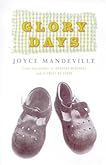
Glory Days: Wonderful depiction of small town life

Glory DaysGlory Days by Joyce Mandeville

My rating: 4 of 5 stars

I read this book in one day because I was laid up with a stomach bug. It's the story of Glory, growing up in Kansas in the 30s, and her family, community, and best friend Pammy. I loved the depiction of girl best friendhood--alternately bonding and calling each other "poo face." Glory was born out of wedlock, and Pammy was a Catholic in the midwest, so they were both oddballs of a sort.

Glory and Pammy think they have seen an apparation (of the Virgin Mary or Glory's grandmother), and soon all sorts of miracles start happening in their town.

It was a wonderful depiction of small-town life during the depression and also addressed the horrible grief of infertility and other losses.


View all my reviews

The Little Friend: Excellent story telling but unsatisfying ending

The Little FriendThe Little Friend by Donna Tartt

My rating: 4 of 5 stars

Harriet, akin to Scout of To Kill a Mockingbird, is a bright, tough tomboy of a 12-year-old growing up in Mississippi. The death of her older brother 11 years previously casts a shadow over her whole family and life. Her parents are essentially separated, and she lives with her mother and sister and African-American housekeeper, in a household swathed in grief. She receives more care from her grandmother and maiden aunts than her own parents give her.

She and her friend Hely decide to track down her older brother's murderer (the case was never solved) and they begin to stalk a family of low-life brothers, "country folk."

Overall, this is a deeply sad story, with race and class implications. Anytime I read about a child who grows up lacking love and attention, it makes me sad.

Tartt does an excellent job of setting the scene and describing the many characters in depth. Many readers believe that this novel moves too slowly, but I thought it was a very interesting read.

I have two quibbles with this book. One is that a character, presumed to be dead, is not dead...and the circumstances are way too far-fetched. Second, I found the ending to be highly unsatisfying. I prefer books with more conclusion to them--I think that's another reason why other readers have been unhappy with this book.

So if you like plots to be wrapped around in a nice package at the end, you should probably avoid this book. But if you enjoy excellent story telling and command of language, and don't mind a slow-moving plot, you should give it a try.

View all my reviews

Thursday, September 16, 2010

The Short Bus: Road trip in a special ed bus

The Short Bus: A Journey Beyond NormalThe Short Bus: A Journey Beyond Normal by Jonathan Mooney

My rating: 3 of 5 stars

Jonathan Mooney, diagnosed dyslexic and ADD, after graduating from Brown University with honors and cowriting a book about his personal journey, decided to embark on another journey in a vehicle symbolic of all that's labeled outside of "normal." Short buses historically (and sometimes currently) transported students who were labeled with disabilities. Mooney's adventure takes him to meet all sorts of unusual people, most of whom were labeled with disabilities somewhere along the way.

He meets others of all ages with ADD and LD--some friends, some acquaintances, and some strangers, joins up with his sister and girlfriend (who he proposes to during the journey) among others, meets a blind-deaf girl who swears in sign language, gets to know a young adult woman with Down Syndrome who is far more normal than he had expected, meets a transgendered individual with a different type of reality in Kennebunkport, Maine, attends "Burning Man" in Nevada, gets to know an alienated 15-year-old named Miles Davis, meets a middle-aged man named Jeff who appears to have Asperger's or autistic tendencies, and reconnects with his extremely conservative and eccentric priest uncle.

Although he graduated from an Ivy League school (as he is obviously proud of, since he mentions it several times), Mooney still struggles with a lot of anger and identity issues. The short bus journey is his attempt to exercise those demons. Although he seems to want to embrace others who have been labeled with disabilities, he also sets himself apart and honestly talks about his discomfort with some of them. He seems to feel energized and redeemed by the whole experience in the end.

Mooney combined his adventure tales with historical facts about various disability labels, and he reveals his youth by getting drunk and swearing a lot. I was not aware that the first victim of eugenics (forced sterilization) was a woman with epilepsy. I am reminded of how my son might be if he didn't have medication to control his own seizure "disorder" (not to mention that he probably wouldn't have survived or at least done as well had he been born even 10 years previously, since he was born at 24 weeks gestation).

I'm also reminded of the way we treat people in our society who are not considered to be "normal"...the impact that a look, a comment, or a sneer can have on a person, especially in the formative years of childhood. So many people have been damaged by encounters with teachers, parents, peers, or strangers. Who's to say that we are not the "abnormal" ones?


View all my reviews

Dharma Girl: Hippie childhood memoir

Dharma Girl: A Road Trip Across the American GenerationsDharma Girl: A Road Trip Across the American Generations by Chelsea Cain

My rating: 3 of 5 stars

After hearing Chelsea Cain speak at a writers' conference banquet this summer and reading the first two of her thriller novels, I decided to go back to her very first book, which she published at the tender age of 23.

When I was a young girl, I always felt that I'd been born in the wrong era and was fascinated with "hippie" culture. Not so much the drugs, rock and roll, and sex, but more the living on a farm, growing vegetables, commune type of experience. In reality, I probably would have hated the communal living.

When Cain's mother is diagnosed with melanoma, she decides she'd like to move back to Iowa, where she was born and raised on a commune farm. She and her mother drive from Portland to Iowa City, where she sets up camp for awhile. The book chronicles their road trip and their early days in Iowa. It turned out to be a quick read, and I enjoyed the stories about the early days of "Snowbird" and how she remembers her childhood.


View all my reviews

Stitches: Illlustrating a disturbing childhood

StitchesStitches by David Small

My rating: 4 of 5 stars

David Small, in his graphic memoir, prompts his readers to question how a person can grow up with such a disturbing childhood and turn out "normal."

Small was not physically or sexually abused; instead he was neglected and treated with disdain by his parents.

He wakes up from what was supposed to be routine surgery with a massive scar and a missing vocal chord, rendering him silent for many years.

This is an upsetting story, depicted by stark, gloomy illustrations. It's a quick read--I read it in a couple of hours, and I'm not a fast reader--I suspect I might have given it more stars had it been longer. Very well done though not my favorite graphic memoir.

View all my reviews