Showing posts with label dystopia. Show all posts

Monday, April 20, 2020

Catching Up: Great Fiction Reads

I have gotten really behind with my book reviews, and it's hanging over my head! So in this post and the upcoming ones, I will attempt to catch up with what I've read in the past several months. First, a fiction roundup!

The Testaments, by Margaret Atwood

Judging from some of the reviews on Goodreads, many readers believe that this sequel to The Handmaid's Tale was unnecessary, similar to what they said about To Kill a Mockingbird. A writer always takes a huge risk writing a sequel to a beloved, highly acclaimed novel. Even when they write a different type of book (e.g., JK Rowling writing A Casual Vacancy after Harry Potter), they are skewered in the reviews because it was not what readers expected. I find that reaction to be tiresome!

I actually really liked The Testaments and found it to be a suitable conclusion to The Handmaid's Tale, and it complemented the Hulu series well. The story takes place 15 years after the founding of Gilead, and it is told from the perspectives of three different people, including Aunt Lydia. If you prefer endings that are unresolved, stay away from The Testaments. If you'd like to see a resolution for Offred and others, and get some hope, read this sequel.

Sweet Bean Paste, Durian Sukegawa

I loved this sweet story of Sentaro, an ex-con who runs a doriyaki shop, and Tokue, a woman who has Hansen's disease, otherwise known as leprosy. Although I lived in Japan in the late 1980s, I was not aware that people with leprosy were isolated in sanitoriums and not allowed to mingle with the public until 1996. Japan was one of the last developed countries to quarantine leprosy patients for life. Tokue was wise and resilient in spite of lingering discrimination and prejudice, and Sentaro's life was so much richer for his relationship with her. She shared her friendship so freely in spite of the way people treated her. I discovered recently that this book has been made into a movie (available on Kanopy), which I look forward to watching.

On the Come Up, Angie Thomas


I love Angie Thomas, author of The Hate U Give, especially after having her seen her in person when she was promoting this novel. On the Come Up is about Starr Carter, who has a true gift for rap, taking after her dad who was gunned down in the streets. She traverses a world of gang violence and school, where she feels like she can never get ahead. She's damned if she tells her truth through rap, and she's damned if she doesn't. Generally not drawn to rap because of the misogny in much of it, I now have a much greater appreciation for the art of hip hop. It is poetry, and rappers are gifted artists, even if I don't always like what they are saying. I will read everything Angie Thomas writes.

Women of Juarez, Sam Hawken

After seeing the gripping play "La Ruta" at the Artist's Repertory Theater in November, I was determined to read more about the missing and dead women of Ciudad Juarez. That's how I found The Dead Women of Juarez, a gut-wrenching, dark story narrated by a washed-up addict American boxer Kelly Courter who is love with a Mexican woman, Paloma, and gets wrapped up in organized crime and drug dealing. It's difficult to read, violent, and sad, but I would expect nothing less given that it's about the feminicide in Ciudad Juarez, one of Central America's great tragedies of this century. This book stuck with me for a very long time.


A Man Called Ove, Fredrik Backman


It took me a while to appreciate Ove and like him as a character. I don't have a lot of patience for curmudgeons who only like things to be done a certain way and who can't abide change. I appreciated the way Backman gradually peeled the layers back on Ove's character, so we could understand what contributed to his difficult personality. In the end, I was cheering for him along with all the other readers.


I Am Not Your Perfect Mexican Daughter, Erika L. Sanchez

As a Mexican-American girl, Julia feels that she can never measure up to her sister Olga, now dead. She does not feel loved by her grief-stricken, stressed-out parents, and as an adolescent, she's actually not very lovable at times. As she unravels the love-hate relationship she had with her "perfect" sister Olga, she also unravels the truth of Olga's life. She wasn't as perfect as everyone thought.

I chose this book as the first in a series of "Voices from the Margins" for a book group I led. This is a strong young adult novel about contemporary Mexican-American girlhood and an easy read.


Before We Were Yours, Lisa Wingate

Before We Were Yours is based on the Tennessee Children's Home Society, a horrible case in which director Georgia Tann kidnapped and sold children. Always fascinated by historical cases like this, I was gripped by this story.

I did find one of the main characters, Avery Stafford, to be supremely annoying. This was one of these southern books I felt really lacked understanding or awareness of race (like The Help). For example, one scene takes place in a slave cabin...and the characters (and presumably, the author) didn't seem to see any parallels between all the Black children that were kidnapped and sold...a far bigger scandal than the Tennessee Children's Home Society. This lack of awareness tainted the book for me.

The Satapur Moonstone, Sujata Massey

The Satapur Moonstone is another great book by one of my favorite authors, Sujata Massey! The second in her Perveen Minstry series, The Satapur Moonstone follows up The Widows of Malabar Hill. As Bombay's only woman lawyer, Perveen is given special access to women in purdah. Set in 1922, this adventure takes Perveen up into the remote mountains, where she acts as a liaison between the royal family, beset by tragedy, and the British agent there. I read everything Massey writes, whether it takes place in Japan or India, and I'm never disappointed! Minstry is a strong, independent, and bright professional woman in a man's world, and she bristles against British colonial rule and patriarchal traditionalism while knowing she must be careful to not be too obvious about her views, lest she lose clients. I look forward to the next book in the series.

The Great Alone, Kristin Hannah

Compulsively readable, The Great Alone is about a family who ventures off to the wilds of Alaska, completely unprepared, and once there, is forced to face the demons of PTSD, domestic violence, and mental illness. I really enjoy Kristin Hannah's writing, and this book was hard to put down. It reminded me of Jon Krauker's Into the Wild...a man who doesn't fit into the Lower 48, seeking his fortunes and answers in the wilds of Alaska. Not an easy book to read, though, because of the domestic violence.

We Have Always Lived in the Castle, Shirley Jackson

Most people know Shirley Jackson for her short story, "The Lottery," like me. From what I've read about Jackson, she was a fascinating, quirky person. This short novel fits that description as well. It's the story of two sisters, Mary Catherine and Constance, who appear to be agoraphobic and highly unusual. Their family has been struck by great tragedy. Jackson brilliantly unravels the mystery, one layer at a time. Spooky, mysterious, weird...another book group choice by my friend Katie. This is a great example of why I like being in a book group...I had never even heard of this book, and Katie had read it as a y oung person. I liked it!

My oldest son, Christopher, just watched Jackson's "The Haunting of Hill House" on Netflix, and liked it. Adding it to my list!


The Sun Is Also a Star, Nicola Yoon

The Sun Is Also a Star was another young adult read I chose for the "Voices from the Margins" book group, and all of us enjoyed this day in the life of a Jamaican-American girl, Natasha, whose family was due to be deported. She meets a romantic, idealistic Korean-American boy, Daniel, whose views of the world sharply contrasted with her own science- and reality-focused beliefs. As children of immigrants, both Daniel and Natasha are far more American than their parents, and certainly far more American than Jamaican or Korean.

This is the kind of book that makes you almost cringe at the number of coincidences...but outside of that, I loved it. It reminded me a bit of The Fault in Our Stars, but the immigrant version...so even more interesting.

“I don't believe in love."
"It's not a religion," he says. "It exists whether you believe in it or not.”
― Nicola Yoon, The Sun Is Also a Star

The Power, Naomi Alderman

This book blew my mind. The Power is a dystopian novel, imagining what it would be like if women had a course of power running through their collarbone, capable of great strength and power. I read it for my book group, and it produced an outstanding discussion.

Some found the book to be highly disturbing (there is a great deal of violence), and all of us found it incredibly creative and thought-provoking.

As women, we would like to think that if we were in power, the world would be a more compassionate, gentle, and civilized place. This book turns that theory on its heel...but as I argued in our book group, the women who were most likely to use their power for harm were the ones who had been horribly abused by men or male power structures. So it's not an apple-to-apple comparison. The book lays bare the broad, damaging effects of the patriarchy, and does it in sometimes subtle, sometimes overwhelming ways. This book will stick with me for a very long time, much like The Handmaid's Tale. It's actually an antithesis to The Handmaid's Tale.

Wednesday, April 29, 2015

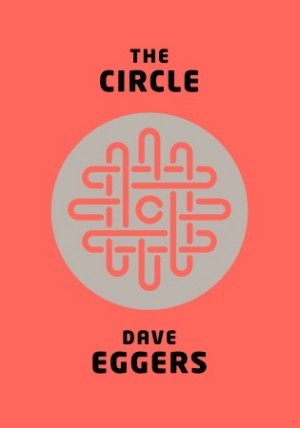
The Circle

The Circle, by Dave Eggers
The CircleAn excellent choice for a book group discussion, The Circle is like a 1984, updated to the Internet age.

Young Mae Holland is thrilled to land a job at The Circle, which is like a combination Facebook/Google...a company for the cool kids. As a main character, she falls a little flat. She's unlikable and no reader could affirm the choices she makes in her life, especially as the story progresses. She is completely desperate for attention and selfish.

But this book is not so much about character development as it is biting satire and a parable for our like-and-tweet-obsessed, voyeuristic culture. As each of The Circle's projects are unveiled, what initially sounds like a good, democratic, society-improving idea turns out to be creepy and sinister, reducing any shred of privacy we have left. Life = work, and work = life. And nothing is secret any more, anywhere.

This book made me question the time I spend on the Internet and how I too have gotten sucked into wanting "likes" or shares. It's about our need for instant gratification, coupled with our desire to know everything about everyone. Sinister and thought-provoking. I recommend it.

Tuesday, March 25, 2014

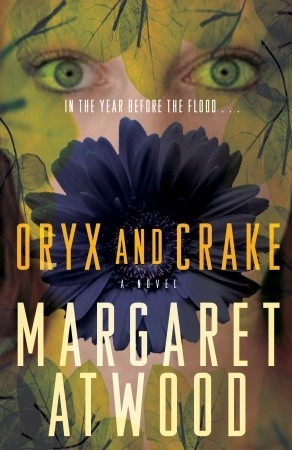
Oryx and Crake

Oryx and CrakeOryx and Crake, by Margaret Atwood

It is telling that I didn't realize Oryx and Crake was a trilogy and was upset to discover its open ending...even though two of my friends (including the book group member who nominated this book) had told me it was the first in a trilogy. I think I heard "science fiction," and I just blocked out the rest. :) But it's the kind of science fiction I'm drawn to: dystopia.

In fact, Margaret Atwood prefers to call this "speculative fiction" rather than science fiction, because science fiction involves things that are unlikely to happen or impossible, while speculative fiction is about things that could actually happen or were possible on earth...not about outer space. And that is exactly why this book is so frightening.

Oryx and Crake are actually minor characters in this book...the protagonist is Jimmy, or Snowman, and much of it takes place after most of humanity has been decimated by a plague brought on by humans' obsession with genetically engineering everything that moves (and doesn't). Cloning has gone wild, as has the pharmaceutical industry. Corporations run the world, and the powerless live in the "Pleeblands," like the "districts" in The Hunger Games. Crake has invented a new breed of (sort of) humans, who are like an open book--they are innocent and dull, and they lack drama or sexual longing. In short, they are incredibly boring, and they are all Snowman has for company in the end of the world.

The characters are deeply flawed and did not experience childhood love, and as we discussed at my book group meeting, brilliant scientist Crake and ethereal, distant Oryx are not particularly likeable or easy to understand. Jimmy/Snowman's and Crake's love for Oryx, whom they first encounter while watching kiddie porn (yes!), reminded me of the shallow foreign men who went to Japan to meet women, and often stayed there...they sought the type of woman who adored them unquestioningly, were more submissive, and didn't question their actions or words. I have a difficult time understanding men who fall for these types of women, like Jimmy and Crake. And I found it all too disturbing and depressing that kiddie porn and sexual trafficking would exist into the future. But as we know, desperate times call for desperate measures...and sex is a commodity.

While I was toward the end of this novel, I read about a timely, depressing NASA-funded study that predicts the collapse of civilization in a few decades and warns about the depletion of the world's resources and society dividing into the elite and commoners (all of which are essential elements of this book). (Now NASA is trying to distance itself from this study, probably because the agency doesn't want to be accused of being fatalistic, even though Margaret Atwood doesn't mind that.)

I've been reading Margaret Atwood for 30 years, and she is an exceptional writer. I've heard that the books only get better as they progress...and now that she's gotten me hooked, I will be reading the rest of the trilogy. But I might have to recover from this one first. It makes me truly worried for my children and grandchildren, because I can see these things happening so easily.

Monday, October 11, 2010

Mockingjay: Real, or not real?

My rating: 4 of 5 stars

This morning I finished Book #3 of the Hunger Games trilogy, Mockingjay. Suzanne Collins has crafted an amazing allegorical story, full of vivid imagery and memorable characters. As I mentioned in my review of Catching Fire, the world in these books is not as far from our modern-day world as we might think. We are the privileged ones in the Capitol, and the developing world produces much of our goods and services. Their compensation is unfair and their conditions are often untenable. We are aware of this yet we do little about it.

Some readers found Mockingjay to be a highly satisfying end to the series, while others were sorely disappointed. I found myself feeling greatly relieved to be finished with the series, as brilliant as it is. (This is why I gave it four stars rather than five--it's brilliant stuff but I reserve five stars for books that make me feel good.) I feel that way each time I read a dystopian book--with the exception of the Harry Potter series, they seem to be the types of fantasy novels I read (The Handmaid's Tale,The Left Hand of Darkness, The Road, etc.). I felt tainted and disturbed after reading each one of these books. They stick with me for days afterward. That's the point.

Many of the disappointed readers note that Katniss is not her feisty, fiery self in this final book. She seems to be broken and lacking in choices throughout the book. She's often on the edge of the action instead of in the middle of it. That's true...but I think her lack of choice--and her exhaustion--is exactly the point Collins is trying to make. She's still a child, and she's seen and experienced more horror and tragedy than any person should have to bear.

SPOILER ALERT

***************************************************************************


Some reviewers have commented that Prim's and Finnick's deaths were too slapdash, and it's true--they were. However, that reflects the nature of war. Soldiers cannot take much time to mourn their loved ones lest they let their guard down and make themselves vulnerable.

President Coin's complicity in the violence and betrayal disillusioned me. I wanted to believe that the rebels were fighting against the evil, not seeking to continue it. And Plutarch chose to join the rebel cause for what, if not to fight for a higher, more noble cause? In the end, he is no better than those in the Capitol because he joins in Coin's plot.
When Katniss votes to let the Hunger Games continue, I was so disappointed in her. Then after she tricks everyone and kills Coin instead of Snow, it left me wondering whether this was a split-second decision or a calculated move. Collins illustrates the human tendency to perpetuate the violence a person suffers, just as abuse victims do.

Gale's choices did not surprise me in the end, although the love triangle was resolved passively for Katniss instead of her taking a stand and making a choice for Gale or Peeta. This is why some readers have said that Katniss didn't make active choices in this final book. Things happen to her (with a few exceptions) instead of her happening to things.

After all that death and destruction at the end, it was somewhat surprising to have a relatively "happy" ending, although Katniss will always be haunted by the Hunger Games. I'm a happy ending sort of person, so I liked the way it ended.


View all my reviews

Saturday, September 25, 2010

Catching Fire: Dystopian world with scary parallels to our own

Catching Fire (Hunger Games, #2)Catching Fire by Suzanne Collins

My rating:
4 of 5 stars

Just finished Catching Fire this evening, and now I can get back to my life! :)

Catching Fire is an outstanding sequel to The Hunger Games--Collins really knows how to spin a thought-provoking tale. At times the storyline got slightly bogged down by the author's attempts to tie back to the events that occurred in The Hunger Games, which I appreciated most of the time--because it's been awhile since I read it, and I also tend not to have a great retention rate. This often happens in sequels, although I can't imagine why anyone would want to start a series with Book #2.

These books are best read by mature middle schoolers on up who can discuss them with a teacher or a parent. They are full of violence and disturbing imagery, akin to novels or memoirs about the Holocaust...or Cormac McCarthy's The Road.

Katniss is a truly multilayered heroine and an unwilling inspiration for the boiling rebellion in the districts. These books cannot help but make readers wonder about the nature of evil, the influence and power of privilege, and the ethical question of "what would I do if I were in this same situation?"

A reviewer on Goodreads pointed out that we--the developed world--are the Capitol, and powerless people in the developing world are the people in the districts. The politicians seem to have all the power and be pulling the strings. Victims of violence, oppression, and injustice day in and day out...we might not be cheering on their deaths, but are we doing anything to try to prevent their oppression?

It's interesting that Collins hasn't tackled the idea of big business and corporations influencing the politicians--where is big business in Panem?

This is political commentary at its best. That's why teenagers need to be able to discuss this book with adults. And why I wish I were in a book group now so I could discuss this with other people. My 14-year-old son has read both of the first two books, so I will be having a discussion with him.

I just put Mockingjay (Book #3 in the series) on hold at the library, and it's going to take a long time to get here...which is good. I need to recover from this book before I sink into the next one. It's hard not to read these books without feeling culpable in our privileged existence.

I just read this evening that there are plans to put these books into film. I find that idea disturbing. Some people believe that kids are attracted to these books because of the violence. The idea of having kids watch this story on the screen is too much akin to the whole idea behind these books--a captive audience watching innocents pitted against each other to the death.

If you have not read these books and you know me, I can imagine you might be surprised that I would like this series. Collins is an imaginative, creative writer. If you can stand reading dystopic books, I highly recommend this series. The violence is upsetting and disturbing, but so was Nazi Germany, Rwanda, Bosnia, and so many other evil acts of genocide in our modern-day world. If anything, these books are cautionary tales for all of us.

V
iew all my reviews

Thursday, September 23, 2010

The Road: Emotionally exhausting but touching book

The RoadThe Road by Cormac McCarthy

My rating: 4 of 5 stars

This was an extremely compelling, chilling book. Saying "I really liked it" (four stars) doesn't seem to fit, but it was definitely an extremely well-written and crafted novel.

I had a hard time putting "The Road" down, but I also couldn't wait to finish it because I found it so incredibly disturbing. I remember seeing the movie "Soylent Green" as a high school student and finding it similarly disturbing...although "The Road" is even more desolate than Soylent Green or the movie "Delicatessen."

At first I found the writing style a bit jarring--it reminded me a lot of Hemingway and I was never much of a Hemingway fan--but it grew on me after awhile and really seemed to fit the plot and the setting.

One of my Goodreads friends strongly recommended this to me because of the intense father-son relationship in the book. That tender relationship was what haunted me most about this book. I couldn't help but imagine with horror the prospect of wandering a post-apocalyptic earth with one of my own sons. That was what kept me awake at night, and also what made me desperate to finish the book. I kept thinking that if I were in the same situation, I would want to be dead. But one thing kept both father and son alive: their love for each other. How could one of them bear the thought of no longer being together? They cherished their time together, even though they were aware it probably would not last much longer.

This book will haunt me for some time to come. McCarthy is a master. I look forward to reading something a bit more hopeful next!


View all my reviews