Towelhead, by Alicia Erian
This book's been on my bookshelf for some time--I must have picked it up at a used book sale--and I was intrigued by the title. It takes place in the 1980s, when Bush sets us on our first war in Iraq. Jasira, age 13, is sent to live with her Lebanese dad in Texas after her mom becomes concerned that her boyfriend is more interested in her daughter than he is in her.
Everywhere she goes, Jasira craves love and affection, but she gets it nowhere. She's bullied at school (Texas, after all) and has no friends. Her father is strict, unaffectionate, and cold. Her mom is a drama queen and wants everything to be about her.
Jasira seeks out affection in the unhealthiest of places--with the racist neighbor next door (twice her age or older) and by developing a sexual relationship with a boy at school.
I found this story to be extremely sad and disturbing, evidence of what happens when a child does not experience healthy love and affection. Jasira has no understanding of what is good, healthy, and loving, and she makes bad choices constantly.
The end brings some positive resolution, but I can't help but think that if she were real, Jasira would continue to make bad choices and seek out love in the wrong places.
Tuesday, June 4, 2013
Thursday, May 23, 2013
Banished: Surviving My Years in the Westboro Baptist Church
Banished: Surviving My Years in the Westboro Baptist Church, by Lauren Drain and Lisa Pulitzer
I feel ambivalent about this book, which I finished several days ago. Lauren Drain's family moved to Kansas to join the Westboro Baptist Church (WBC) after her father, an atheist libertarian, was making a documentary about the group. He soon become absorbed and went full bore. They were one of the few families who were not part of the Fred Phelps dynasty.
Lauren became an enthusiastic picketer, truly believing that WBC had a straight line to heaven...even though they apparently believe in predestination. A couple of things about the WBC surprised me: they highly value education and encourage all members to pursue careers...even women, although in many other ways, women are treated as second-class citizens. Conversely, the second in command at WBC is Shirley Phelps-Roper, one of Fred Phelps' daughters. Another thing I learned is that WBC pickets and protests not to convert or save people from hell, but only to proclaim what they believe.
Some reviewers have commented that Lauren should have waited a few more years to write her memoir--she comes across as a teenager, even though she's now a young woman. I don't think she would have left the church on her own volition--she seemed to love it too much, even though she was beginning to chafe against the favoritism shown to the Phelps family. She did not leave because she disagreed with the church's teachings. Essentially, she was kicked out because she was asking lots of challenging questions and she was drawn to have relationships with men. The WBC rules forbid any contact with people outside the church, and Drain had only one marital prospect within the church. She says now that she stayed in the church because she couldn't bear to leave her family.
In the epilogue, Drain apologizes to gay people for being so hateful, saying the classic "some of my friends are gay" (can't believe her cowriter actually included this staple of prejudice!). But it didn't feel completely genuine to me...I think I might have felt more convinced had the writing been stronger. When I finished the book, I had the impression that if Lauren's family wanted her back in the church...and she could still have freedom to have a relationship with a man outside the WBC...she would be back in a heartbeat. It just didn't ring true to me. She seemed to get such a high level of enjoyment out of the picketing and didn't seem to realize, even later, the depth of hatred she espoused.
However, when I watched an interview with her, I felt more convinced that she was glad she was out. Drain describes the WBC as like a gang. When you are part of it, you feel a sense of belonging. But if you leave, they pray for your doom and destruction.
Drain was treated horribly by her family and the rest of the church...and she is still scarred from that treatment. She hasn't seen her parents or siblings for 5 years.
I did find it interesting to get inside of the WBC and try to understand their hate and evil...but the book itself could have been better.
I feel ambivalent about this book, which I finished several days ago. Lauren Drain's family moved to Kansas to join the Westboro Baptist Church (WBC) after her father, an atheist libertarian, was making a documentary about the group. He soon become absorbed and went full bore. They were one of the few families who were not part of the Fred Phelps dynasty.
Lauren became an enthusiastic picketer, truly believing that WBC had a straight line to heaven...even though they apparently believe in predestination. A couple of things about the WBC surprised me: they highly value education and encourage all members to pursue careers...even women, although in many other ways, women are treated as second-class citizens. Conversely, the second in command at WBC is Shirley Phelps-Roper, one of Fred Phelps' daughters. Another thing I learned is that WBC pickets and protests not to convert or save people from hell, but only to proclaim what they believe.
Some reviewers have commented that Lauren should have waited a few more years to write her memoir--she comes across as a teenager, even though she's now a young woman. I don't think she would have left the church on her own volition--she seemed to love it too much, even though she was beginning to chafe against the favoritism shown to the Phelps family. She did not leave because she disagreed with the church's teachings. Essentially, she was kicked out because she was asking lots of challenging questions and she was drawn to have relationships with men. The WBC rules forbid any contact with people outside the church, and Drain had only one marital prospect within the church. She says now that she stayed in the church because she couldn't bear to leave her family.
In the epilogue, Drain apologizes to gay people for being so hateful, saying the classic "some of my friends are gay" (can't believe her cowriter actually included this staple of prejudice!). But it didn't feel completely genuine to me...I think I might have felt more convinced had the writing been stronger. When I finished the book, I had the impression that if Lauren's family wanted her back in the church...and she could still have freedom to have a relationship with a man outside the WBC...she would be back in a heartbeat. It just didn't ring true to me. She seemed to get such a high level of enjoyment out of the picketing and didn't seem to realize, even later, the depth of hatred she espoused.
However, when I watched an interview with her, I felt more convinced that she was glad she was out. Drain describes the WBC as like a gang. When you are part of it, you feel a sense of belonging. But if you leave, they pray for your doom and destruction.
Drain was treated horribly by her family and the rest of the church...and she is still scarred from that treatment. She hasn't seen her parents or siblings for 5 years.
I did find it interesting to get inside of the WBC and try to understand their hate and evil...but the book itself could have been better.
Wednesday, May 8, 2013
Vanishing Acts
Vanishing Acts, by Jodi Picoult
Wow--this is the 11th book I've read by Jodi Picoult. Some are definitely better than others. The only two I've given five stars to have been Keeping Faith and Sing You Home. This one I would put in the "average" category.
I like Picoult's books because she always poses ethical dilemmas and creates complex characters, many of whom have deep flaws but good intentions. They often have courtroom drama and surprising twists at the end.
The main character, Delia Hopkins, raised by her widowed father in New England, is now a mother and is engaged to her daughter's father, Andrew. Then she discovers that she was kidnapped by her own father when she was just four...and her mother is still alive. Andrew is an alcoholic and just happens to also be a lawyer, so she asks him to represent her father, even though he doesn't have much experience with trials...and is not licensed to practice in Arizona, where the case goes to court.
As usual, Picoult's books are highly readable and accessible...but this one will not stand out in my memory. The plot seemed to meander. The characters frustrated me at times. The "surprise" wasn't really much of a surprise. I found it hard to understand why Delia made the decisions she did, and I didn't like what happened to the most intriguing character in the book. The prison scenes were awful and implausible...her dad is supposed to be this great guy, yet he helps manufacture meth and shoots a staple into someone's eye??? And I know prison can be awful, but is it typically this brutal? And are alcoholics never allowed to have happy endings?
In summary, this book was okay...but Jodi Picoult has done so much better.
Wow--this is the 11th book I've read by Jodi Picoult. Some are definitely better than others. The only two I've given five stars to have been Keeping Faith and Sing You Home. This one I would put in the "average" category.
I like Picoult's books because she always poses ethical dilemmas and creates complex characters, many of whom have deep flaws but good intentions. They often have courtroom drama and surprising twists at the end.
The main character, Delia Hopkins, raised by her widowed father in New England, is now a mother and is engaged to her daughter's father, Andrew. Then she discovers that she was kidnapped by her own father when she was just four...and her mother is still alive. Andrew is an alcoholic and just happens to also be a lawyer, so she asks him to represent her father, even though he doesn't have much experience with trials...and is not licensed to practice in Arizona, where the case goes to court.
As usual, Picoult's books are highly readable and accessible...but this one will not stand out in my memory. The plot seemed to meander. The characters frustrated me at times. The "surprise" wasn't really much of a surprise. I found it hard to understand why Delia made the decisions she did, and I didn't like what happened to the most intriguing character in the book. The prison scenes were awful and implausible...her dad is supposed to be this great guy, yet he helps manufacture meth and shoots a staple into someone's eye??? And I know prison can be awful, but is it typically this brutal? And are alcoholics never allowed to have happy endings?
In summary, this book was okay...but Jodi Picoult has done so much better.
Labels:
book review,
fiction
Sexist book covers
What if my husband's beloved Game of Thrones series had been written by a woman? Yesterday author Maureen Johnson tweeted "I do wish I had a dime for every email I get that says, "Please put a non-girly cover on your book so I can read it. Signed, A Guy." So she challenged her 77,000 followers. A challenge that she called Coverflip.

Labels:
authors,
book covers,
sexism
Thursday, May 2, 2013
A Tale for the Time Being
A Tale for the Time Being, by Ruth Ozeki
A Tale for the Time Being is the first full-price hardcover book I remember purchasing for myself, ever. As I wrote in February, Ozeki has long been one of my favorite authors, and I was thrilled when I read that she had finally published her third novel. I went to see/hear Ozeki read from this book at Powell's, and I was enchanted. In the intervening time since she published All Over Creation, she became a Zen Buddhist priest. Clearly, this experience informs this novel.
She explained that she has always wanted to do the audio recordings of her books, but publishers prefer not to have authors read their own books. She realized that if she put enough Japanese words in the book, they would let her do her own reading. After listening to her read, I think I might like to listen to the audio book too. This is a highly unusual reaction for me, as I don't often read books twice--at least not until many years have passed. Take a look at this beautiful trailer for the book--you can see what I mean when you hear Ozeki's voice:
I found myself reading this book very slowly--it took me most of April to read, in fact. Ozeki is a poetic, lyrical writer. I am often drawn to her books because they are set in Japan or the United States (or both) and feature Japanese or Japanese-American characters. This was no different.
It's the story of 16-year-old Nao, who is living in Tokyo but spent much of her childhood in Sunnyvale, California. She is mercilessly bullied by her classmates and even her teachers. Some might find it difficult to believe, but bullying is an extreme problem in Japan, and it's even tolerated and sometimes encouraged by the adults in charge. Her father, who lost his job in California and has become unemployable back in Japan, keeps attempting suicide, which is considered an honorable out in Japan. The only bright spot in Nao's life is her 104-year-old great-grandmother, who is an anarchist, feminist, novelist Buddhist nun, who she calls Old Jiko. She decides that she's going to commit suicide, but first she wants to tell the story of Old Jiko's life in her diary.
Ruth, a Japanese-American novelist living on an island in British Columbia, finds Nao's diary washed up on the beach. The resemblance between Ruth the character and Ruth the novelist is more than just their name, ancestry, and location. Ozeki has actually put herself, and her husband Oliver, into the novel.
As Ruth begins reading the book, she becomes captivated by Nao's life and begins to care very deeply about what happens to her. Not too long after the Japanese earthquake and tsunami, initially Ruth believes that this is what has caused the diary to come into her hands.
I loved so many things about this novel...the way that Nao finds such deep solace and healing in writing down her pain, the wisdom of old Jiko and the way she connects with her young great-granddaughter, the connections between Japan and North America--present in each of Ozeki's novels, the way Ozeki describes the sparsely populated island on which she and Oliver live, the poignant reflections of Nao's great-uncle's time in the Japanese army and Nao's connections with him, and the spiritual, symbolic activities of the crow, cat, and the sea. So many things have changed since I left Japan, and so many things remain the same.
As Nao goes to visit Old Jiko up on the mountaintop, I envisioned the monastery to look something like Koya-san, where I visited while I lived in Japan. I could picture Nao riding the bus up that mountain and communing with the trees and spirits while she visited there.
So many things about this story were deeply sad, but ultimately, the novel had great redemptive power and spiritual meaning. I highly recommend it--A Tale for the Time Being will definitely be at the top of my book list for the year. It was worth the full price, as the story will stick with me for a long time.
Ruth, a Japanese-American novelist living on an island in British Columbia, finds Nao's diary washed up on the beach. The resemblance between Ruth the character and Ruth the novelist is more than just their name, ancestry, and location. Ozeki has actually put herself, and her husband Oliver, into the novel.As Ruth begins reading the book, she becomes captivated by Nao's life and begins to care very deeply about what happens to her. Not too long after the Japanese earthquake and tsunami, initially Ruth believes that this is what has caused the diary to come into her hands.
I loved so many things about this novel...the way that Nao finds such deep solace and healing in writing down her pain, the wisdom of old Jiko and the way she connects with her young great-granddaughter, the connections between Japan and North America--present in each of Ozeki's novels, the way Ozeki describes the sparsely populated island on which she and Oliver live, the poignant reflections of Nao's great-uncle's time in the Japanese army and Nao's connections with him, and the spiritual, symbolic activities of the crow, cat, and the sea. So many things have changed since I left Japan, and so many things remain the same.
As Nao goes to visit Old Jiko up on the mountaintop, I envisioned the monastery to look something like Koya-san, where I visited while I lived in Japan. I could picture Nao riding the bus up that mountain and communing with the trees and spirits while she visited there.
So many things about this story were deeply sad, but ultimately, the novel had great redemptive power and spiritual meaning. I highly recommend it--A Tale for the Time Being will definitely be at the top of my book list for the year. It was worth the full price, as the story will stick with me for a long time.
Labels:
fiction,
Japan,
novel,
Ruth Ozeki
Thursday, April 4, 2013
50 reasons you should be a bookworm
Book lovers need to check this out: 50 reasons you should be a bookworm, by Qwiklit.com, which looks like a great web site to add to my list. I'm always looking for reliable sources for book recommendations.
Labels:
book lovers,
book recommendation,
bookworm
Wednesday, April 3, 2013
The Little Book
The Little Book, by Selden Edwards
I'd been looking forward to reading The Little Book for my book group this month, and in the beginning I was sure I would love it--time travel fascinates me. But love it I did not. I would give it a solid three stars, but I felt bogged down by some of the plot. It took me a few weeks to finish it.
Edwards took 30 years to finish this book, and in some ways it felt like he was overambitious. He tackles fin de siecle Vienna, the life of Sigmund Freud and Gustav Mahler, World War II, Mark Twain, and Adolf Hitler...oh, and baseball and rock music and supposedly the beginning of the feminist movement, too.
Wheeler Burden is the protagonist--a character so perfect (star baseball player and brilliant rock musician) that he reminds me of Peekay in that dratted book The Power of One (although I liked this book better than that one). His father was perfect too, and even a war hero worshipped in several different countries. The book starts when Wheeler is 47 in 1988, and he goes back to fin de siecle Vienna in the year 1897, where he falls in love with his grandmother and befriends his now-dead father. (Yes, he was in love with his grandmother...is that weird and creepy or what??? Who cares if he's not technically related by blood? Still creepy.)
I enjoyed the descriptions of Vienna during the turn of the century, and many of the characters were colorful and interesting (I would have liked to have seen more of Wheeler's mother, though). I learned more about the formation of Sigmund Freud's ideas and the rise of fascism in Europe...and I find it intriguing to consider: what would I do if I could change the course of the world by pre-empting an evil dictator's rise to power?
But the book also had some serious flaws. Enough of the baseball...boring, and I couldn't really see how it was important for the story. The ramblings about "the Venerable Haze" and the "Little Book" got tiresome too. What was so brilliant about the "Little Book"? It was entirely unclear to me. As Ron Charles writes in his review in The Washington Post, "We never hear anything from this book ourselves, but we're told again and again how great it is."
Charles sums up my thoughts:
This book was wildly inventive and wacky, and I give kudos to Selden Edwards for dreaming it up. Perhaps if he had worked on the book for fewer years and not tried to make it so full of meticulous research, I would have found it less frustrating. And what the heck would they do with a wooden frisbee? Find fame and fortune? The characters were just too damn perfect for my liking (except for that incest grandmother-grandson thing...which I still find incredibly odd that the author thought this was romantic), while at the same time I didn't feel that sympathetic or connected to Wheeler. I liked his mother better.
I'd been looking forward to reading The Little Book for my book group this month, and in the beginning I was sure I would love it--time travel fascinates me. But love it I did not. I would give it a solid three stars, but I felt bogged down by some of the plot. It took me a few weeks to finish it.
Edwards took 30 years to finish this book, and in some ways it felt like he was overambitious. He tackles fin de siecle Vienna, the life of Sigmund Freud and Gustav Mahler, World War II, Mark Twain, and Adolf Hitler...oh, and baseball and rock music and supposedly the beginning of the feminist movement, too.
Wheeler Burden is the protagonist--a character so perfect (star baseball player and brilliant rock musician) that he reminds me of Peekay in that dratted book The Power of One (although I liked this book better than that one). His father was perfect too, and even a war hero worshipped in several different countries. The book starts when Wheeler is 47 in 1988, and he goes back to fin de siecle Vienna in the year 1897, where he falls in love with his grandmother and befriends his now-dead father. (Yes, he was in love with his grandmother...is that weird and creepy or what??? Who cares if he's not technically related by blood? Still creepy.)
I enjoyed the descriptions of Vienna during the turn of the century, and many of the characters were colorful and interesting (I would have liked to have seen more of Wheeler's mother, though). I learned more about the formation of Sigmund Freud's ideas and the rise of fascism in Europe...and I find it intriguing to consider: what would I do if I could change the course of the world by pre-empting an evil dictator's rise to power?
But the book also had some serious flaws. Enough of the baseball...boring, and I couldn't really see how it was important for the story. The ramblings about "the Venerable Haze" and the "Little Book" got tiresome too. What was so brilliant about the "Little Book"? It was entirely unclear to me. As Ron Charles writes in his review in The Washington Post, "We never hear anything from this book ourselves, but we're told again and again how great it is."
Charles sums up my thoughts:
"In fact, Edwards makes so many hyperbolic claims that The Little Book begins to sound rather flat, like a tall tale told without a wink. Edwards can't stop petting Wheeler and reminding us how wonderful he is. Of course, he's incredibly good looking and sexually athletic, but he also writes a foundational work of 20th-century philosophy and inspires "the beginning of the American feminist movement." (You didn't think women could do that on their own, did you?) And he throws the fastest pitch in college baseball (at Harvard, naturally). Then he writes "the most famous song of the 1970s" and becomes "one of People magazine's Most Recognizable." Then he publishes a bestselling book in the 1980s. The whole narrative is soggy with hero-worship, like the fantasy of a skinny teenage boy staring into a mirror."What finally makes my head hurt in this whole time travel adventure is that we never really learn how they are able to time travel. Is it hereditary? Or perhaps sort of afterlife experience? And supposedly they are in an endless loop, ever meeting again...so the world will never end? I just can't get my head around it. I wanted some sort of resolution to how this weird time travel thing happened, but I never got one.
This book was wildly inventive and wacky, and I give kudos to Selden Edwards for dreaming it up. Perhaps if he had worked on the book for fewer years and not tried to make it so full of meticulous research, I would have found it less frustrating. And what the heck would they do with a wooden frisbee? Find fame and fortune? The characters were just too damn perfect for my liking (except for that incest grandmother-grandson thing...which I still find incredibly odd that the author thought this was romantic), while at the same time I didn't feel that sympathetic or connected to Wheeler. I liked his mother better.
Labels:
Europe,
historical fiction,
time travel,
World War II
Thursday, March 14, 2013
Unexpectedly Milo
Unexpectedly Milo, by Matthew Dicks
This was another "scan the library bookshelves" find, a quirky story about a thirtysomething man (Milo Slade) who has an unususal form of obsessive-compulsive disorder. It manifests itself in making strange demands on his brain and taking over his life until he satisfies them. For example, a word will pop into his head and his obsession will not go away until someone spontaneously says this word. Or he will suddenly have the need to pop the seals on grape jelly jars, bowl a strike, see a movie he's watched several times before, let all the air out of his tires, or sing a karaoke version of "99 Luftballons" in German (remember that song from the '80s?) in front of an audience. And he keeps all this a secret from everyone.
As you can imagine, his marriage was not terribly successful. When the novel begins, he and his wife Christine have separated, although it seems that neither of them are convinced that's what they really want. Milo is a home health care nurse and seems to have a stronger relationship with his patients than he does with his wife (who of course knows nothing of his disorder but probably just thinks he's weird).
One day Milo finds a video camera with a bag of tapes under a park bench. He returns the next day to find them still there, so he takes them home and begins watching the videos. They're made by a grieving young woman he initially coins "Freckles," and she has a lot of secrets, too. Milo is determined to help this woman feel better by solving one of her problems. He takes off on a road trip to North Carolina to find a friend of hers, who had vanished 20+ years earlier.
This journey makes Milo realize that he's not the only one who is a bit odd and he's also not the only one hiding secrets. He begins to reveal more of himself and understand what he really wants and doesn't want out of his life.
After awhile, the demands did get a bit annoying to read about...I suppose Milo felt far worse. I wonder if this is a real type of OCD, or if it's something the author made up. I had a hard time understanding why Milo didn't want to get help for this problem of his--it would have driven me crazy! I didn't feel particularly sympathetic to Milo because of the way he detached himself from others through his secrets. My favorite part of the novel was when he met with one of his elderly clients, who were all far more honest and genuine than Milo himself.
This was another "scan the library bookshelves" find, a quirky story about a thirtysomething man (Milo Slade) who has an unususal form of obsessive-compulsive disorder. It manifests itself in making strange demands on his brain and taking over his life until he satisfies them. For example, a word will pop into his head and his obsession will not go away until someone spontaneously says this word. Or he will suddenly have the need to pop the seals on grape jelly jars, bowl a strike, see a movie he's watched several times before, let all the air out of his tires, or sing a karaoke version of "99 Luftballons" in German (remember that song from the '80s?) in front of an audience. And he keeps all this a secret from everyone.
As you can imagine, his marriage was not terribly successful. When the novel begins, he and his wife Christine have separated, although it seems that neither of them are convinced that's what they really want. Milo is a home health care nurse and seems to have a stronger relationship with his patients than he does with his wife (who of course knows nothing of his disorder but probably just thinks he's weird).
One day Milo finds a video camera with a bag of tapes under a park bench. He returns the next day to find them still there, so he takes them home and begins watching the videos. They're made by a grieving young woman he initially coins "Freckles," and she has a lot of secrets, too. Milo is determined to help this woman feel better by solving one of her problems. He takes off on a road trip to North Carolina to find a friend of hers, who had vanished 20+ years earlier.
This journey makes Milo realize that he's not the only one who is a bit odd and he's also not the only one hiding secrets. He begins to reveal more of himself and understand what he really wants and doesn't want out of his life.
After awhile, the demands did get a bit annoying to read about...I suppose Milo felt far worse. I wonder if this is a real type of OCD, or if it's something the author made up. I had a hard time understanding why Milo didn't want to get help for this problem of his--it would have driven me crazy! I didn't feel particularly sympathetic to Milo because of the way he detached himself from others through his secrets. My favorite part of the novel was when he met with one of his elderly clients, who were all far more honest and genuine than Milo himself.
Sunday, March 3, 2013
Veil of Roses
Veil of Roses, by Laura Fitzgerald
I'm easily drawn into stories that take place in different countries or cultures, such as this novel about a young woman who leaves Iran to come to the U.S., determined to find a man to marry so she can immigrate permanently.
Tamila Soroush arrives in Arizona to visit her sister and her husband and study English...although her primary purpose is to get hitched. Her sister is determined to find her a good Persian husband...within 3 months. She befriends the others in her English class and meets Ike, a barista at a nearby Starbucks. As you can guess, she falls in love with Ike...not one of the nice Persian men she's supposed to marry.
What really bothered me about this book was that Tamila seems to speak near-perfect English. She only makes one error in her English conversation, which is to use the word "foots" instead of "feet." What is particularly strange about this is that she also uses words and expressions such as "clandestine," "incorrigible," "somehow I doubt that," corrupted," "what-ever (emphasis on the 'ever'), "that's for sure," and "crazy as a loon." I taught English as a foreign language for three years, and very few new English speakers speak like this...and I'm guessing they don't teach English in school in Iran! The prose is flowery and overdone at times, such as "(My smile) is Julia Roberts huge, only by now, it is all mine and it is for real. And it does not need to be surgically corrected."
The plot is predictable, but that's expected for this kind of book (the cover, after all, is pink), but the ending was a bit different than what I expected. It was an easy read, and sometimes that's okay...but it could have been so much more.
I'm easily drawn into stories that take place in different countries or cultures, such as this novel about a young woman who leaves Iran to come to the U.S., determined to find a man to marry so she can immigrate permanently.
Tamila Soroush arrives in Arizona to visit her sister and her husband and study English...although her primary purpose is to get hitched. Her sister is determined to find her a good Persian husband...within 3 months. She befriends the others in her English class and meets Ike, a barista at a nearby Starbucks. As you can guess, she falls in love with Ike...not one of the nice Persian men she's supposed to marry.
What really bothered me about this book was that Tamila seems to speak near-perfect English. She only makes one error in her English conversation, which is to use the word "foots" instead of "feet." What is particularly strange about this is that she also uses words and expressions such as "clandestine," "incorrigible," "somehow I doubt that," corrupted," "what-ever (emphasis on the 'ever'), "that's for sure," and "crazy as a loon." I taught English as a foreign language for three years, and very few new English speakers speak like this...and I'm guessing they don't teach English in school in Iran! The prose is flowery and overdone at times, such as "(My smile) is Julia Roberts huge, only by now, it is all mine and it is for real. And it does not need to be surgically corrected."
The plot is predictable, but that's expected for this kind of book (the cover, after all, is pink), but the ending was a bit different than what I expected. It was an easy read, and sometimes that's okay...but it could have been so much more.
Wednesday, February 27, 2013
Favorite author: Ruth Ozeki (new book coming out!)
In the days before I started blogging and writing book reviews, I read two books by a Japanese-American writer and film maker named Ruth Ozeki: My Year of Meats and All Over Creation. I got to hear her read at my local bookstore, Annie Bloom's, one evening as well, and I found her to be inspiring and eloquent. I named her as one of my "15 writers who have influenced me."
Ozeki is also a Zen Buddhist priest (ordained in 2010) and is the editor of the Everyday Zen website.
I gave both My Year of Meats and All Over Creation five stars on Goodreads.com and they were #1 and #2 on my "Best Reads of 2004" fiction list, so as you can imagine I was very excited to read that Ozeki FINALLY has another novel out--to be published in early March. Here's why you should read Ruth Ozeki:
My Year of Meats
My Year of Meats tells two parallel stories: that of documentary film maker Jane Takagi-Little, who is assigned to a new Japanese TV show sponsored by a beef export company, "My American Wife," which shows Japanese housewives how to prepare American meat, and of Akiko Ueno, the wife of the Japanese producer, who is bulimic and deeply unhappy. The story explores Japan's fascination with all things American in addition to the sometimes-harsh reality of being a Japanese housewife. Jane soon uncovers information about the American way of producing meat. It's not pretty. This book contributed to my decision to stop eating red meat many years ago. Some have called it a modern-day Upton Sinclair's The Jungle. You have been warned. As I'm always interested in all things Japan and in particular connections between Japanese and American women, this book is one of my all-time faves.
All Over Creation
Moving from meat and onto potatoes, this novel takes place on a farm in Idaho, with another Japanese-American protagonist, Yumi Fuller. She hasn't been home for 25 years, but she brings her three children home to her parents' potato farm when they both become ill. She soon becomes enmeshed in the complexities of agribusiness and genetically modified food. This book has a quirky cast of characters, such as a band of activists who travel the country in a van biofueled by french-fry oil and who try to convince her father to stop planting genetically modified crops. Injected with a strong sense of humor, All Over Creation is intelligent, well researched, and heart warming.
A Tale for the Time Being
This new book is what prompted me to write about Ruth Ozeki, who I'd all but forgotten about (All Over Creation was published in 2004 and My Year of Meats in 1998). This is the Goodreads description:
Early reviews are excellent. Writing about her first two books makes me want to read them again...I don't reread books often (too many new ones to get to). Stay tuned for a review of A Tale for the Time Being! Ozeki is coming to Portland later in March...I hope to be able to go see/hear her again.
Ozeki is also a Zen Buddhist priest (ordained in 2010) and is the editor of the Everyday Zen website.
I gave both My Year of Meats and All Over Creation five stars on Goodreads.com and they were #1 and #2 on my "Best Reads of 2004" fiction list, so as you can imagine I was very excited to read that Ozeki FINALLY has another novel out--to be published in early March. Here's why you should read Ruth Ozeki:
My Year of MeatsMy Year of Meats tells two parallel stories: that of documentary film maker Jane Takagi-Little, who is assigned to a new Japanese TV show sponsored by a beef export company, "My American Wife," which shows Japanese housewives how to prepare American meat, and of Akiko Ueno, the wife of the Japanese producer, who is bulimic and deeply unhappy. The story explores Japan's fascination with all things American in addition to the sometimes-harsh reality of being a Japanese housewife. Jane soon uncovers information about the American way of producing meat. It's not pretty. This book contributed to my decision to stop eating red meat many years ago. Some have called it a modern-day Upton Sinclair's The Jungle. You have been warned. As I'm always interested in all things Japan and in particular connections between Japanese and American women, this book is one of my all-time faves.
All Over CreationMoving from meat and onto potatoes, this novel takes place on a farm in Idaho, with another Japanese-American protagonist, Yumi Fuller. She hasn't been home for 25 years, but she brings her three children home to her parents' potato farm when they both become ill. She soon becomes enmeshed in the complexities of agribusiness and genetically modified food. This book has a quirky cast of characters, such as a band of activists who travel the country in a van biofueled by french-fry oil and who try to convince her father to stop planting genetically modified crops. Injected with a strong sense of humor, All Over Creation is intelligent, well researched, and heart warming.
A Tale for the Time Being
This new book is what prompted me to write about Ruth Ozeki, who I'd all but forgotten about (All Over Creation was published in 2004 and My Year of Meats in 1998). This is the Goodreads description:
A brilliant, unforgettable, and long-awaited novel from bestselling author Ruth Ozeki
“A time being is someone who lives in time, and that means you, and me, and every one of us who is, or was, or ever will be.”
In Tokyo, sixteen-year-old Nao has decided there’s only one escape from her aching loneliness and her classmates’ bullying. But before she ends it all, Nao first plans to document the life of her great grandmother, a Buddhist nun who’s lived more than a century. A diary is Nao’s only solace—and will touch lives in ways she can scarcely imagine.
Across the Pacific, we meet Ruth, a novelist living on a remote island who discovers a collection of artifacts washed ashore in a Hello Kitty lunchbox—possibly debris from the devastating 2011 tsunami. As the mystery of its contents unfolds, Ruth is pulled into the past, into Nao’s drama and her unknown fate, and forward into her own future.
Full of Ozeki’s signature humor and deeply engaged with the relationship between writer and reader, past and present, fact and fiction, quantum physics, history, and myth, A Tale for the Time Being is a brilliantly inventive, beguiling story of our shared humanity and the search for home.Here's a video of Ozeki talking about our bullying culture, suicide, Buddhism, and how she came up with the idea for this novel:
Early reviews are excellent. Writing about her first two books makes me want to read them again...I don't reread books often (too many new ones to get to). Stay tuned for a review of A Tale for the Time Being! Ozeki is coming to Portland later in March...I hope to be able to go see/hear her again.
Monday, February 25, 2013
Bruce
Bruce, by Peter Ames Carlin
Somehow, I'm not sure why, I was late to the Bruce Springsteen train. I knew his more popular songs and liked them, but it wasn't until I went to my first Springsteen concert with my teenage son last November that I became a convert.
Peter Ames Carlin, a writer for the Oregonian and author of several musician bios, interviewed Bruce and his colleagues and pored over the albums, articles, and interviews to create this exhaustive (and some say, exhausting) biography. At times Carlin uses sentence fragments, which I'm not crazy about, and he does tend to go on at times...perhaps a more diehard Springsteen fan would have gotten more out of the long stories about various concert tours and people who helped him along the way. It was interesting to read about how Bruce made it big, gradually and with a lot of hard work and a loyal fan base in New Jersey.
One reviewer (and local New Jerseyite) wrote about how this book was book-ended by death...starting out with the childhood death of Bruce's aunt, which affected his whole family forevermore, and ending with the death of his beloved friends and bandmates Danny Federici and Clarence Clemons. Reading about Clarence's death (and Bruce bringing his guitar into the hospital room to sing Clarence out during the last 3 hours of his life) brought me to tears, as did the poignant description of how Bruce's dad asked him to sit on his lap one night (as an adult) after a lifetime of conflict and tense silence between the two of them.
I'm still amazed that I'm a Springsteen newbie. He stands for so much of what I believe in. From representing the common American working person to singing a song for the movie "Philadelphia," before most of Hollywood became gay friendly, from engaging with and advocating for Vietnam vets and Amnesty International, to continuing to sing about the underprivileged even after he hit it big, and for showcasing a local charity at each of his concerts...he is a strong voice of social justice.
Carlin's book does not paint him as a perfect man...he can be narcissistic, demanding and selfish. He hurt the members of his band when he cut them off for several years to pursue his solo work. He has exacting standards for everyone who works with him.
But he is clearly a musical genius, prolific in his song writing and creative in his musical arrangements, and a true poet of the people.
The one thing the book was lacking was more about his family. Carlin writes about the birth of Bruce and Patti's first son, but doesn't go beyond that. I'm guessing that Bruce asked Carlin to keep his family out of the book...but it would have made this bio much more comprehensive. We hear about his initial relationship with Patti, but in later years not much.
Now I'm going to go listen to the albums painstakingly described in the book, and they will mean much more to me.
For fun, watch this clip of Bruce yukking it up with Jimmy Fallon, imitating Neil Young, in "I'm Sexy and I Know It."
Somehow, I'm not sure why, I was late to the Bruce Springsteen train. I knew his more popular songs and liked them, but it wasn't until I went to my first Springsteen concert with my teenage son last November that I became a convert.
Peter Ames Carlin, a writer for the Oregonian and author of several musician bios, interviewed Bruce and his colleagues and pored over the albums, articles, and interviews to create this exhaustive (and some say, exhausting) biography. At times Carlin uses sentence fragments, which I'm not crazy about, and he does tend to go on at times...perhaps a more diehard Springsteen fan would have gotten more out of the long stories about various concert tours and people who helped him along the way. It was interesting to read about how Bruce made it big, gradually and with a lot of hard work and a loyal fan base in New Jersey.
| Younger Bruce |
| With Clarence |
Carlin's book does not paint him as a perfect man...he can be narcissistic, demanding and selfish. He hurt the members of his band when he cut them off for several years to pursue his solo work. He has exacting standards for everyone who works with him.
![]() |
| With Steve Van Zandt |
The one thing the book was lacking was more about his family. Carlin writes about the birth of Bruce and Patti's first son, but doesn't go beyond that. I'm guessing that Bruce asked Carlin to keep his family out of the book...but it would have made this bio much more comprehensive. We hear about his initial relationship with Patti, but in later years not much.
| With his family at the Kennedy Center Honors |
For fun, watch this clip of Bruce yukking it up with Jimmy Fallon, imitating Neil Young, in "I'm Sexy and I Know It."
Labels:
biography,
Bruce Springsteen,
music,
nonfiction
Sunday, February 17, 2013
The Burning
The Burning, by Jane Casey
I read Jane Casey's first novel, The Missing, and was not as nearly taken with it as her second, The Burning, which felt similar to BBC's "Prime Suspect" (with Helen Mirren), but with a young Irish detective named Maeve.
One reason why I didn't like her first novel was that I didn't find her main character, Sarah Finch, to be very likable. She ended up being a teacher after she hated school, and she didn't seem to get any enjoyment out of her job. I cannot relate to this, but my husband tells me that he thinks it sounds British...he thinks that more people in the UK go into teaching without really being called to do so. That might be true.
At any rate, I prefer Maeve. She has to put up with her English colleagues' misogyny and crap about her Irish ancestry, but she is a strong and complex character. She's working on a case to catch a London serial killer who likes to beat his female victims to a pulp and then set their bodies ablaze. It's more of a police procedural (hence the Prime Suspect comparison) than a mystery book, but I liked it.
The other thing I appreciated about this book was the publisher didn't dumb it down for Americans...as in, they didn't change the British terms and language (like they did in Harry Potter, for example). Most Americans will not know what a bacon buttie is...but that's okay! They can look it up if they want to know.
I will keep reading Casey's books (she has three more Maeve Kerrigan books published with another one on the way), and I'm so glad she redeemed herself after the first one.
I read Jane Casey's first novel, The Missing, and was not as nearly taken with it as her second, The Burning, which felt similar to BBC's "Prime Suspect" (with Helen Mirren), but with a young Irish detective named Maeve.
One reason why I didn't like her first novel was that I didn't find her main character, Sarah Finch, to be very likable. She ended up being a teacher after she hated school, and she didn't seem to get any enjoyment out of her job. I cannot relate to this, but my husband tells me that he thinks it sounds British...he thinks that more people in the UK go into teaching without really being called to do so. That might be true.
At any rate, I prefer Maeve. She has to put up with her English colleagues' misogyny and crap about her Irish ancestry, but she is a strong and complex character. She's working on a case to catch a London serial killer who likes to beat his female victims to a pulp and then set their bodies ablaze. It's more of a police procedural (hence the Prime Suspect comparison) than a mystery book, but I liked it.
The other thing I appreciated about this book was the publisher didn't dumb it down for Americans...as in, they didn't change the British terms and language (like they did in Harry Potter, for example). Most Americans will not know what a bacon buttie is...but that's okay! They can look it up if they want to know.
I will keep reading Casey's books (she has three more Maeve Kerrigan books published with another one on the way), and I'm so glad she redeemed herself after the first one.
Labels:
book recommendation,
detective,
London
Wednesday, February 6, 2013
The Very Thought of You
The Very Thought of You,
by Rosie Alison
Last year Mike and I watched a short British made-for-TV movie called "Good Night, Mister Tom," and I became interested in the history of English children evacuated to the country during World War II...so this book intrigued me.
It's the story, in part, of Anna, an eight-year-old girl who is evacuated from London and sent to a stately home in Yorkshire in 1939. Wise beyond her years, she soon becomes aware of the adult secrets around her. Thomas and Elizabeth Ashton, who have opened up their home, are deeply unhappy with each other. Soon they each start affairs. In the meantime, Anna's mother (whose husband is fighting in Africa) starts up her own affairs in London, for no particular reason except that the war is on. Every adult in this book is unhappy and unfaithful....even Anna herself when she grows up.
Unfortunately, none of the characters are sympathetic with perhaps the exception of Thomas. Anna was more likable as a child, but when she grew up I found myself getting irritated with her choices and the way she let her life fall to ruin. This book, unfortunately, does a great deal of telling rather than showing. In fact there's little dialogue. The writer is a documentary film maker, and in many ways that shows.
I felt this book had promise--the setting in Yorkshire, the time it happened, the idea of children being sent away from home, the war--but I feel let down. I think I will have to read Good Night, Mister Tom (also a book) instead.
Labels:
England,
historical fiction,
World War II
Friday, February 1, 2013
Somewhere Inside
Somewhere Inside: One Sister's Captivity in North Korea and the Other's Fight to Bring Her Home,
by Laura Ling and Lisa Ling
This is the first book I've read since my surgery that has really compelled me. Any story about or by sisters always interests me, and this one--about Asia--did in particular.
As you might recall, Laura Ling was captured with her colleague, Euna Lee, and imprisoned in North Korea from March to August 2009. They worked for Current TV (cofounded by Al Gore) and were making a documentary about North Korean defectors who escaped into China, some of whom ended up in forced marriages or sex trafficking. They traveled into China on tourist visas instead of admitting they were journalists because they were not going to be portraying either China or North Korea in glowing terms. They hired a guide to take them to the Chinese-North Korean border, and one morning the guide encouraged them to go onto the frozen river that serves as the boundary between the countries. They followed him, and they came to regret it. Although they went back into China, guards from North Korea pursued them and captured them.
For five months, they were interrogated about their intentions and actions and kept isolated from one another. At the same time, Laura's sister Lisa (who works for Oprah and used to appear on "The View") took advantage of her media and government connections and did everything she could to get her sister out of North Korea. She was in contact with Al Gore, New Mexico Governor Bill Richardson, Oprah Winfrey, the U.S. State Department, and media and entertainment celebrities. At one point, Michael Jackson even offered to perform for Kim Jong Il (if it would help), right before he died so suddenly.
It's clear that Laura Ling had powerful people working for her, trying to get her out. If her sister hadn't used all her connections and if she hadn't been working for Al Gore's company, who knows whether they would have been able get former president Bill Clinton to make a visit to Pyongyang to retrieve her and Euna Lee (who had left a 5-year-old daughter at home in the U.S.).
Clearly, they made an error in judgment by taking the risk to cross into North Korea...whether they were persuaded to take the risk by their guide or not. But that doesn't detract from this story.
I was touched by the very close relationship between the sisters, who are best friends. I cried several times, as I did again when watching the video of Laura Ling's speech as she got off the airplane in Burbank, California. I'm always deeply affected by stories of sisters being separated or reunited.
I also found it touching to read about the relationships she developed with some of her guards, translators, and even her primary interrogator. Even though she was being held in captivity, she was treated well for the most part. Even though the North Koreans felt angry at the United States, most of them did not treat her unkindly.
It's clear, as is mentioned in the epilogue, that many political prisoners do not have the resources Laura Ling and Euna Lee had...working incessantly to free them. But evident in the book, too, is Laura Ling's keen intelligence and political and media savvy. She handled the imprisonment professionally, wisely, and diplomatically, in spite of her own health problems and severe stress.
Here's an extensive Fresh Air interview with the Ling sisters, as well as the trailer of the book:
by Laura Ling and Lisa Ling
This is the first book I've read since my surgery that has really compelled me. Any story about or by sisters always interests me, and this one--about Asia--did in particular.
As you might recall, Laura Ling was captured with her colleague, Euna Lee, and imprisoned in North Korea from March to August 2009. They worked for Current TV (cofounded by Al Gore) and were making a documentary about North Korean defectors who escaped into China, some of whom ended up in forced marriages or sex trafficking. They traveled into China on tourist visas instead of admitting they were journalists because they were not going to be portraying either China or North Korea in glowing terms. They hired a guide to take them to the Chinese-North Korean border, and one morning the guide encouraged them to go onto the frozen river that serves as the boundary between the countries. They followed him, and they came to regret it. Although they went back into China, guards from North Korea pursued them and captured them.
For five months, they were interrogated about their intentions and actions and kept isolated from one another. At the same time, Laura's sister Lisa (who works for Oprah and used to appear on "The View") took advantage of her media and government connections and did everything she could to get her sister out of North Korea. She was in contact with Al Gore, New Mexico Governor Bill Richardson, Oprah Winfrey, the U.S. State Department, and media and entertainment celebrities. At one point, Michael Jackson even offered to perform for Kim Jong Il (if it would help), right before he died so suddenly.It's clear that Laura Ling had powerful people working for her, trying to get her out. If her sister hadn't used all her connections and if she hadn't been working for Al Gore's company, who knows whether they would have been able get former president Bill Clinton to make a visit to Pyongyang to retrieve her and Euna Lee (who had left a 5-year-old daughter at home in the U.S.).
Clearly, they made an error in judgment by taking the risk to cross into North Korea...whether they were persuaded to take the risk by their guide or not. But that doesn't detract from this story.
I was touched by the very close relationship between the sisters, who are best friends. I cried several times, as I did again when watching the video of Laura Ling's speech as she got off the airplane in Burbank, California. I'm always deeply affected by stories of sisters being separated or reunited.
I also found it touching to read about the relationships she developed with some of her guards, translators, and even her primary interrogator. Even though she was being held in captivity, she was treated well for the most part. Even though the North Koreans felt angry at the United States, most of them did not treat her unkindly.
It's clear, as is mentioned in the epilogue, that many political prisoners do not have the resources Laura Ling and Euna Lee had...working incessantly to free them. But evident in the book, too, is Laura Ling's keen intelligence and political and media savvy. She handled the imprisonment professionally, wisely, and diplomatically, in spite of her own health problems and severe stress.
Here's an extensive Fresh Air interview with the Ling sisters, as well as the trailer of the book:
Labels:
Asia,
book recommendation,
diplomacy,
Korea,
memoir,
nonfiction,
politics
Monday, January 28, 2013
The Miracle Life of Edgar Mint
The Miracle Life of Edgar Mint, by Brady Udall
When I picked up this book, I wasn't aware that it was by the author of The Lonely Polygamist, which has been on my list for awhile (although my husband tried to read it and couldn't get into it). Brady Udall comes from a political Mormon family, and many of his books have Mormon themes or characters.
This book has taken me, literally, weeks to get through. I started it back in December before my surgery and put it aside for a bit while recovering because it is quite heavy. This was not an easy read--not only does it take some time to get into (Udall tends to have a meandering writing style) but also because it is so sad. It reminded me a lot of The Power of One, but I liked this one better.
Edgar Mint was born to an Apache mom and a white dad, both of whom abandoned him. When he was seven years old, the mailman ran over his head...he miraculously survived, but his life deteriorated from there. He traverses a series of temporary homes, from a long-term stay in a decrepit hospital and a horrible boarding school for Native Americans to a foster home of kind but dysfunctional Mormons. He has a few people who are looking out for him, but they are all totally screwed up. Edgar finds comfort in typing out his angst every evening on his classic typewriter.
One thing I found really bizarre and a bit offputting was Udall's style of alternating between first person and third person, often in the same paragraph and sometimes even in the same sentence. I guess it was to show how Edgar was trying to distance himself from his own life and experiences...I'm not sure.
Although I found this book to be sad and a bit slow, it is a classic reminder of how desperately children need nurturing, comfort, and wise guidance. I am happy to say that it has an ending of redemption.
When I picked up this book, I wasn't aware that it was by the author of The Lonely Polygamist, which has been on my list for awhile (although my husband tried to read it and couldn't get into it). Brady Udall comes from a political Mormon family, and many of his books have Mormon themes or characters.
This book has taken me, literally, weeks to get through. I started it back in December before my surgery and put it aside for a bit while recovering because it is quite heavy. This was not an easy read--not only does it take some time to get into (Udall tends to have a meandering writing style) but also because it is so sad. It reminded me a lot of The Power of One, but I liked this one better.
Edgar Mint was born to an Apache mom and a white dad, both of whom abandoned him. When he was seven years old, the mailman ran over his head...he miraculously survived, but his life deteriorated from there. He traverses a series of temporary homes, from a long-term stay in a decrepit hospital and a horrible boarding school for Native Americans to a foster home of kind but dysfunctional Mormons. He has a few people who are looking out for him, but they are all totally screwed up. Edgar finds comfort in typing out his angst every evening on his classic typewriter.
One thing I found really bizarre and a bit offputting was Udall's style of alternating between first person and third person, often in the same paragraph and sometimes even in the same sentence. I guess it was to show how Edgar was trying to distance himself from his own life and experiences...I'm not sure.
Although I found this book to be sad and a bit slow, it is a classic reminder of how desperately children need nurturing, comfort, and wise guidance. I am happy to say that it has an ending of redemption.
Saturday, January 12, 2013
Fifty shades of meh
No, I haven't read it and I do not plan to. I'm a book snob. Once I heard it was Twilight fan fiction, I couldn't bear the thought...even though my mother-in-law has read it! (Ten Reasons I Hate Twilight)
This wonderful review on thepessimist.com is all I need!
This fifty-shades-of-gray phenomenon is completely ridiculous, if you ask me:
We love to joke about it at my book group...but no, we are not reading it! One of our book group members has a coworker (a man!) who gave her the book to read.
Really, wearing handcuffs on a necklace?
The writer is British (which, from what I've read, is obvious in the book, as she doesn't know the U.S. very well). I love this line in the review linked above,
"In fact, the book from whence he sprang, steely and sleek with enigmatic man-sweat, is now the best-selling book in British history. AND THEY INVENTED ENGLISH! (Both the language AND the wimpy accent!)"Who are you calling wimpy?
But it's also extremely popular in the U.S., especially New England.
Here's a fun parody.
I ask you, just like I couldn't understand what Bella saw in Edward, why on earth would a woman want a man to "boss her around, treat her like a foolish child, tell her she’s your “property” and basically take her completely and totally for granted"? What is so attractive or sexy about that? I just don't understand!
And I ask you:
Labels:
50 shades of grey,
twilight
Loud in the House of Myself
I picked this one up at random at the library...I had never heard of Stacy Pershall...little did I know she was an Internet sensation (and not necessarily in a good way).
Pershall grew up in the small town of Prairie Grove, Arkansas, and she never really fit in there. Pershall's mom pours all of her attention on her brother. She refers to her father's anger, but we don't get much detail on that.
Fast forward to adolescence, when she develops anorexia and bulimia, followed by (or concurrent with) bipolar and borderline personality disorder. She becomes highly self-destructive and somehow, amazingly successful given the self-destructive behavior (she lands a job as adjunct professor at the School of Visual Arts after earning her M.A., somehow!).
Each time she seemed to pull her life together, her mental illness struck again. (She even got married for awhile.) As one of the Internet's first "camgirls," Pershall broadcast one of the first online suicide attempts (and only one of many of hers) before shutting down her site. She found comfort by making tattoos of the things that scared or saddened her.
This book shed a lot of light for me on mental illness, particularly bipolar and borderline diseases. I would have liked to have learned more about her childhood and any thoughts she had about what led her to these illnesses. (Was it genetic? Environment?) She seems to have a tenuous relationship with her parents now, but what happened to her brother?
This was a raw, terribly honest memoir about all the mistakes Pershall has made in her life. I'd expect nothing less from someone who bared her soul (and clothing) for the Internet.
Most of the book is about her illness, and only an epilogue provides some closure. She seems to have it together now...but I felt that we were missing something in the journey to success. Maybe there's a Part 2 in progress?
View Stacy's book trailer to get a clearer picture of her.
Labels:
book review,
memoir,
mental illness,
nonfiction
Monday, January 7, 2013
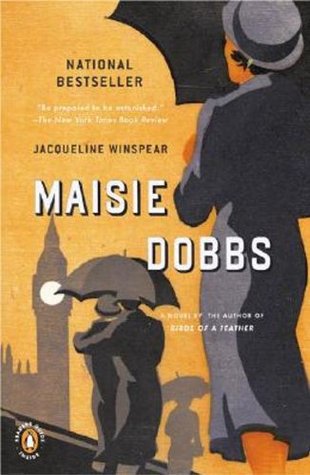
Maisie Dobbs: Cross between Downton Abbey and Sherlock Holmes
A friend recommended I try out Maisie Dobbs for my post-surgery recovery because I find I lack mental energy when I'm in pain and on pain meds. (My brain just doesn't work right!) After my Joanna Trollope waste of time, I finally dove into Maisie Dobbs. I was beginning to worry that I'd lost my passion for reading from the brain surgery I had, but I'm happy to report that I'm getting back into the swing of things. Maisie Dobbs was just the ticket, although it took a little getting into in the beginning.
Maisie Dobbs is the daughter of a costermonger (a street seller of fruits and vegetables) and after her mother dies, she's taken into service because her dad cannot afford to take care of her. Soon Lady Rowan (lady of the house) takes her on as a project after noting Maisie's keen intelligence. She's tutored by Rowan's friend Maurice, who helps her prepare for Cambridge entrance exams. However, after a year of studying at Cambridge's women's college (in those days they didn't actually bestow degrees on women, but they were allowed to study), she decides her country needs her. She signs up as a nurse and is sent to France. After returning from France, she sets up her own business as a private investigator.
Much of this first book in the series is used to set up the character of Maisie. She takes on a case that requires her to delve into her own sad history in the war and her one true love. The book starts in the present (well, 1929), but then flashes back to her childhood, life in service, and time during the war. I found those pieces the most interesting because I wanted to get to know more about Maisie. Winspear slowly unravels the secrets of Maisie's past and her own tragic life.
Like Downton Abbey, it tackles themes of British class mores and the impact that World War I had on its participants. For example, both the show and the book feature stories about soldiers who deserted in cowardice and were shot.
I'm not sure how realistic this series is...how likely is it for the aristocracy to actually invest in one of their young housemaids to help them better themselves? She seems to fit in well at Cambridge, but all we really see about that part of her life is her close friendship with her roommate. How did she do with her studies? Not sure.
I really enjoyed this novel but it wasn't perfect. I found some details lacking, but I will keep reading in the hopes that it will only improve! I'm curious to learn more about Maisie--she's an interesting character.
Labels:
detective,
Downton Abbey,
historical fiction,
World War I
Saturday, December 22, 2012
Daughters-in-law
I picked this book up at the library because I was stocking up on some lighter fiction to read after my brain/ear surgery. I've read a few Joanna Trollope books in the past (my mother-in-law likes her), but I hadn't read her for a number of years. I should have known better...I gave the last two books I read only two stars. This was definitely light, but it was not interesting. I wish I'd given up halfway in, but I finished it.
It's about a couple (Anthony and Rachel) who have three sons. Rachel struggles in her relationships with her daughter-in-laws. Her son Luke's wife Charlotte challenges her authority and their conflict spreads throughout the family. When Charlotte announces that she is pregnant, Rachel reacts in a rude, critical way.
I asked my husband what he thinks about the British view of apologies. Luke calls his father Anthony to see if he will get his mother to apologize, and Anthony is horrified that Luke would suggest that, even though they all agree that Rachel was in the wrong. This seemed preposterous to me.
The characters were shallow and unmemorable, and very little happens in the plot. Trollope is known for writing about relationships, but the relationships in this book are shallow and weak. The brothers cannot be distinguished from each other, and Rachel rarely interacts with her daughters-in-law in the book.
Trollope said she wanted to write about the relationships between mothers-in-law and daughters-in-law because she believes they are more difficult than relationships with sons-in-law. But this book missed the mark.
Some light reads are enjoyable or memorable, but this book is neither. It was a waste of time.
Labels:
disappointing
Best books of 2012
| With my book group (and our holiday book exchange) |
You can also refer to best books lists back to 2001 here. Enjoy!
This is cross-posted in Every Day Is a Miracle.
Fiction
1. The Invisible Bridge,
Julie Orringer
2. The Book Thief,
Markus Zusak
3. Marcelo in the Real World,
Francisco X. Stork
4. Wonder,
R.J. Palacio
5. Sing You Home,
Jodi Picoult
6. The Casual Vacancy,
J.K Rowling
7. All Passion Spent,
Vita Sackville West
8. Miss Peregrine’s Home for Peculiar
Children, Ransom Riggs
9. The Kitchen House,
Kathleen Grissom
10. The Descendants,
Kaui Hart Hemmings
11. This Beautiful Life,
Helen Schulman
12. Shutter Island,
Dennis Lehane
13. Everyone Is Beautiful,
Katherine Center
14. Naoko,
Keigo Higashino
15. The Wishing Trees,
John Shors
16. The Girl Next Door,
Elizabeth Noble
17. Song Yet Sung,
James McBride
18. Second Fiddle,
Rosanne Parry
19. Saving CeeCee Honeycutt,
Beth Hoffman
20. Shine,
Lauren Myracle
21. Glow,
Jessica Maria Tuccelli
22. The Family Fang,
Kevin Wilson
23. How It All Began,
Penelope Lively
24. The Book of Dahlia,
Elisa Albert
25. The Treasure Map of Boys,
E. Lockhart
Nonfiction
1. Wild: From Lost to Found on the
Pacific Crest Trail, Cheryl
Strayed
2. Unorthodox: The Scandalous
Rejection of My Hasidic Roots, Deborah Feldman
4. Unbroken: A World War II Story of
Survival, Resilience, and Redemption,
Laura Hillenbrand
5. The Immortal Life of Henrietta
Lacks, Rebecca Skloot
6. The Mama's Boy Myth: Why Keeping
Our Sons Close Makes Them Stronger,
Kate Stone Lombardi
7. Cinderella Ate My Daughter: Dispatches from
the Frontlines of the New Girlie-Girl Culture,
Peggy Orenstein
Peggy Orenstein
8. Crazy Enough, Storm Large
9. Let’s Pretend This Never Happened:
A Mostly True Memoir, Jenny
Lawson
11. A Complaint-Free World: Take the
21-day Challenge, Will Bowen
13. Poster Child,
Emily Rapp
14. Moonwalking with Einstein,
Joshua Foer
15. Happy Accidents, Jane Lynch
16. The Best Advice I Ever Got:
Lessons from Extraordinary Lives,
Katie Couric, ed.
17. You Say Tomato, I Say Shut Up, Annabelle Gurwitch and Jeff Kahn
Labels:
best books
Sunday, December 9, 2012
The Lacuna
The Lacuna, by Barbara Kingsolver
I had to give up on this one. I got up to page 207, after putting it down to read a lighter book group selection, and tried to pick it up again. I will never forget my delight in reading my first Barbara Kingsolver novel (The Bean Trees) back before she was very well known. I have loved so many of her novels.
I am interested in Mexico, Frida Kahlo, and Diego Rivera and loved a biography of Frida I read several years ago. So I really, really wanted to stick this one out. But I must give up.
I just can't get connected or drawn in.
I am interested in Mexico, Frida Kahlo, and Diego Rivera and loved a biography of Frida I read several years ago. So I really, really wanted to stick this one out. But I must give up.
I just can't get connected or drawn in.
Labels:
Barbara Kingsolver,
didn't finish,
disappointing,
Mexico
Thursday, December 6, 2012
The Treasure Map of Boys
The Treasure Map of Boys, by E. Lockhart
I read this book because my book group chose it for this month. We didn't have much time between book group meetings, because they very kindly moved up the meeting by one week so I could attend. (Otherwise I would have missed it because of my impending surgery.) What I didn't know until I read the reviews was that this was the third in a series!
I'm one of those people who really, really likes to start with the first book in a series. So after I got over my unsettled feelings I finally settled into the book. I put down The Lacuna by Barbara Kingsolver to read this, and it was much, much more readable than that tome. I usually love Kingsolver but it's taking me forever to slog through The Lacuna.
I don't read much young adult (YA), but from what I understand from my middle-grade writer husband, YA is often full of a lot of angst and dysfunctional relationships. Ruby Oliver, the protagonist, struggles with making and keeping friends and has a lot of stress around relationships with boys. In the book preceding this one, Ruby's boyfriend Jackson takes up with one of her friends, and she becomes what she believes is a social pariah. (It's not really as bad as she makes it out to be, though.) In this book, Jackson is back in the picture again, possibly. Reading this book made me SO GLAD I do not ever have to do high school or junior high ever again.
Ruby's parents are well-meaning hippies, and she actually does have some friends worth keeping. The stories about her teachers and baking were amusing...also her time working in the Birkenstocks store at Pike Place Market. (After reading about her adventures fitting bare feet into Birkenstocks, of all sizes, shapes, and smells, I realized that I could NEVER do that!)
But who goes to the Pike Place Market to buy supplies for a bake sale? That seemed completely unrealistic for local Seattle high schoolers! Ruby is a smart, well-meaning girl, and she really doesn't want to screw up her friendships, but somehow she has a knack for that.
After I said that I don't read much YA, I now realize that this is actually the fourth or fifth YA book I've read all year...and it was fine but it's my least favorite. The others--Wonder, Marcelo in the Real World, and Shine--focused on much more serious issues, and this was like marshmallow fluff in comparison. It was a good distraction from the current stress in my life...a cute read...but not sure I will be reading any more of the series. There's just not enough here to draw me back in.
Now I'm back into The Lacuna for awhile...but when I go into the hospital I'm planning to wade into something much lighter!
I read this book because my book group chose it for this month. We didn't have much time between book group meetings, because they very kindly moved up the meeting by one week so I could attend. (Otherwise I would have missed it because of my impending surgery.) What I didn't know until I read the reviews was that this was the third in a series!
I'm one of those people who really, really likes to start with the first book in a series. So after I got over my unsettled feelings I finally settled into the book. I put down The Lacuna by Barbara Kingsolver to read this, and it was much, much more readable than that tome. I usually love Kingsolver but it's taking me forever to slog through The Lacuna.
I don't read much young adult (YA), but from what I understand from my middle-grade writer husband, YA is often full of a lot of angst and dysfunctional relationships. Ruby Oliver, the protagonist, struggles with making and keeping friends and has a lot of stress around relationships with boys. In the book preceding this one, Ruby's boyfriend Jackson takes up with one of her friends, and she becomes what she believes is a social pariah. (It's not really as bad as she makes it out to be, though.) In this book, Jackson is back in the picture again, possibly. Reading this book made me SO GLAD I do not ever have to do high school or junior high ever again.
Ruby's parents are well-meaning hippies, and she actually does have some friends worth keeping. The stories about her teachers and baking were amusing...also her time working in the Birkenstocks store at Pike Place Market. (After reading about her adventures fitting bare feet into Birkenstocks, of all sizes, shapes, and smells, I realized that I could NEVER do that!)
But who goes to the Pike Place Market to buy supplies for a bake sale? That seemed completely unrealistic for local Seattle high schoolers! Ruby is a smart, well-meaning girl, and she really doesn't want to screw up her friendships, but somehow she has a knack for that.
After I said that I don't read much YA, I now realize that this is actually the fourth or fifth YA book I've read all year...and it was fine but it's my least favorite. The others--Wonder, Marcelo in the Real World, and Shine--focused on much more serious issues, and this was like marshmallow fluff in comparison. It was a good distraction from the current stress in my life...a cute read...but not sure I will be reading any more of the series. There's just not enough here to draw me back in.
Now I'm back into The Lacuna for awhile...but when I go into the hospital I'm planning to wade into something much lighter!
Subscribe to:
Posts (Atom)